

Sitting on a La-Z-Boy chair in Tom Green’s house, Joe Rogan vented his woes about mainstream media:
“The thing that f*cked up television is money,” he said. “Because of advertising you can’t just express yourself.”
After a five year stint hosting Fear Factor, Rogan saw firsthand how TV’s business model killed creativity. Until he had an epiphany, “The internet is like radio and television combined. There’s no time constraint.”
Two years later episode #1 of Joe Rogan Experience aired. Like a surfer, he saw the big kahuna wave, caught it, and never looked back.1
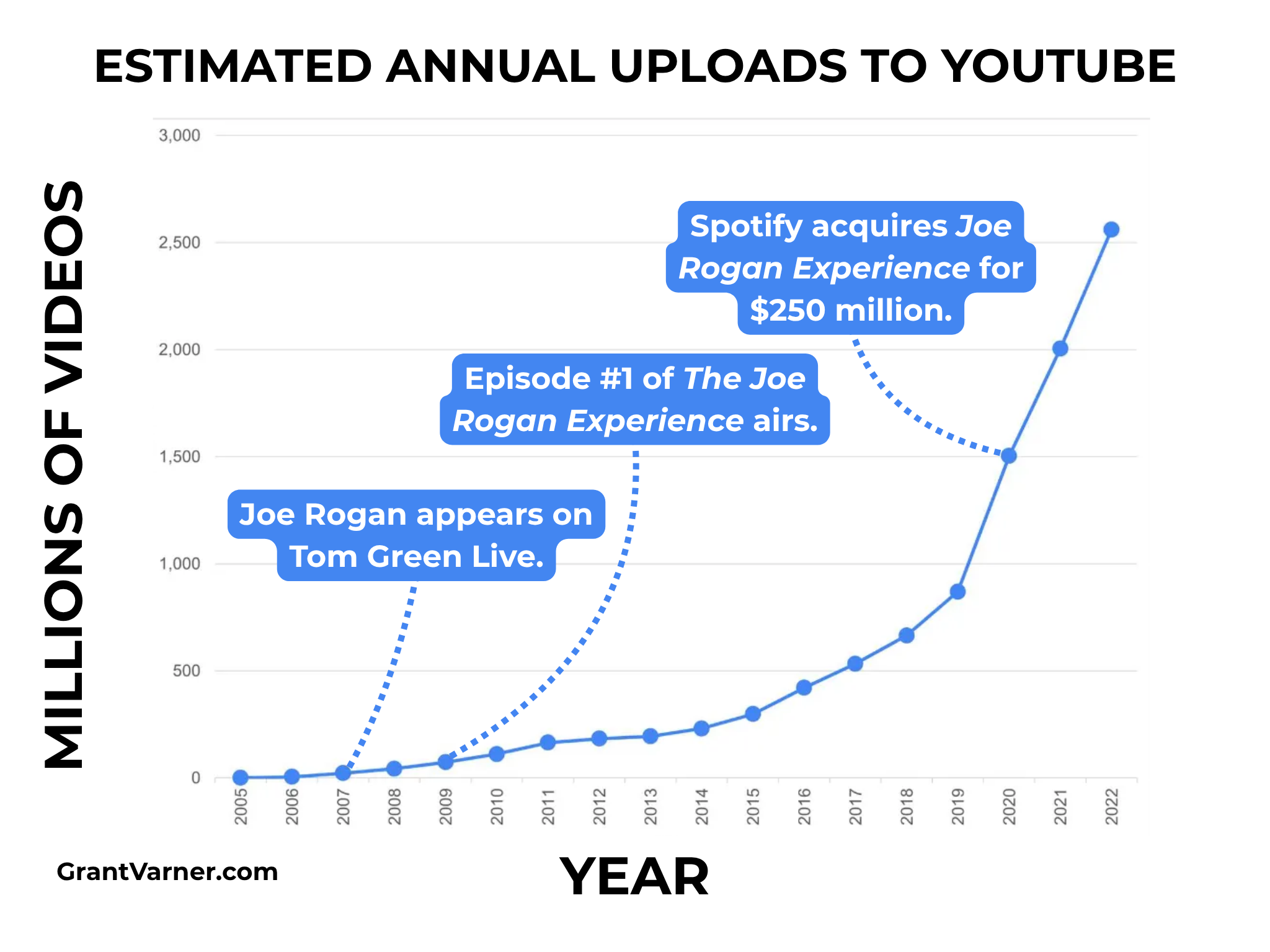
How’d he see the wave of online media before anyone else? How can we do that? What’s the next big media wave?
It all starts with knowing where to look for the next big wave.
Substack Is Accelerating The Spread Of Ideas
Nowadays, ideas found in the depths of Reddit are too half baked to be relied upon for signal. And once that dialogue eventually hits LinkedIn, it’s already entered mainstream discourse. The Goldilocks zone of high signal ideas in 2026 is right here on Substack.
In his essay, “Substack is like the Royal Society of the 21st Century for The New Enlightenment”, Peter Leyden claims that Substack is accelerating the spread of ideas. I agree.
I’ve steadily supplemented my morning WSJ reading to adding the works of talented writers like kyla scanlon, Hanna Horvath, and Nick Maggiulli (here, here, and here). Their perspectives are refreshingly authentic, human, and tap into a higher signal that I’m looking for.
Ideas Spread Through Conversation
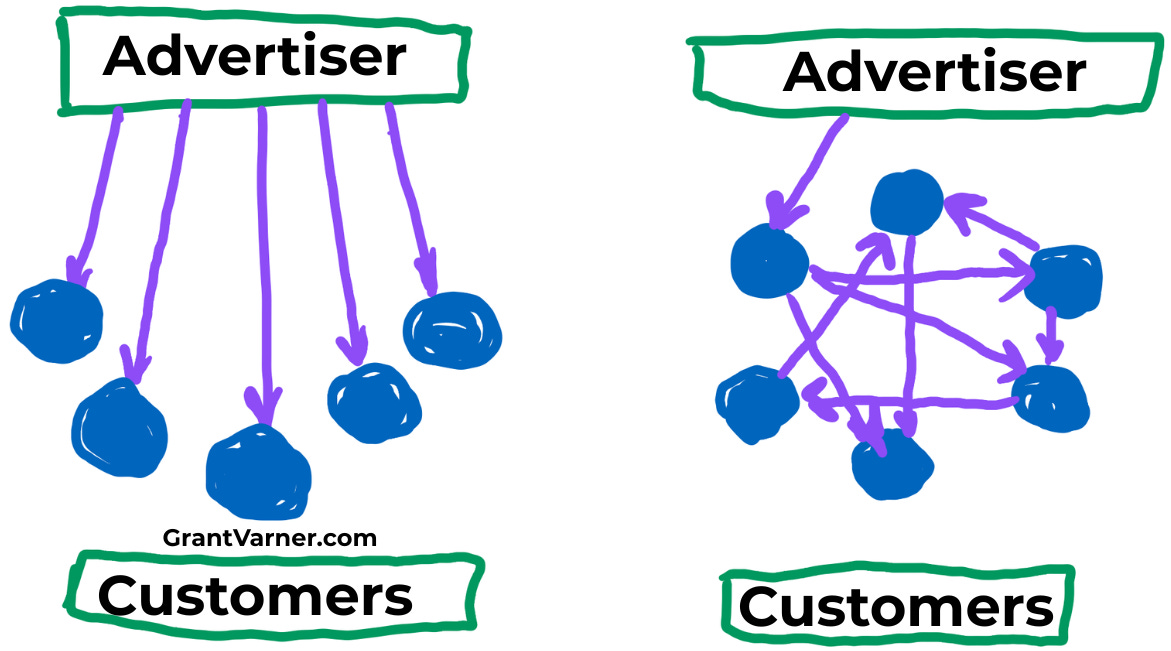
Building awareness for new ideas is hard. Which is exactly why the best ideas are spread organically through dialogue with others.2 That’s how Rogan stumbled upon podcasting — by joining Tom Green’s show, he experienced the future before the rest of the world caught on.
You can use this principle to grow an audience from zero to one. John Coogan, co-founder of TBPN, ran this strategy to a T with his “love letters to Silicon Valley”:
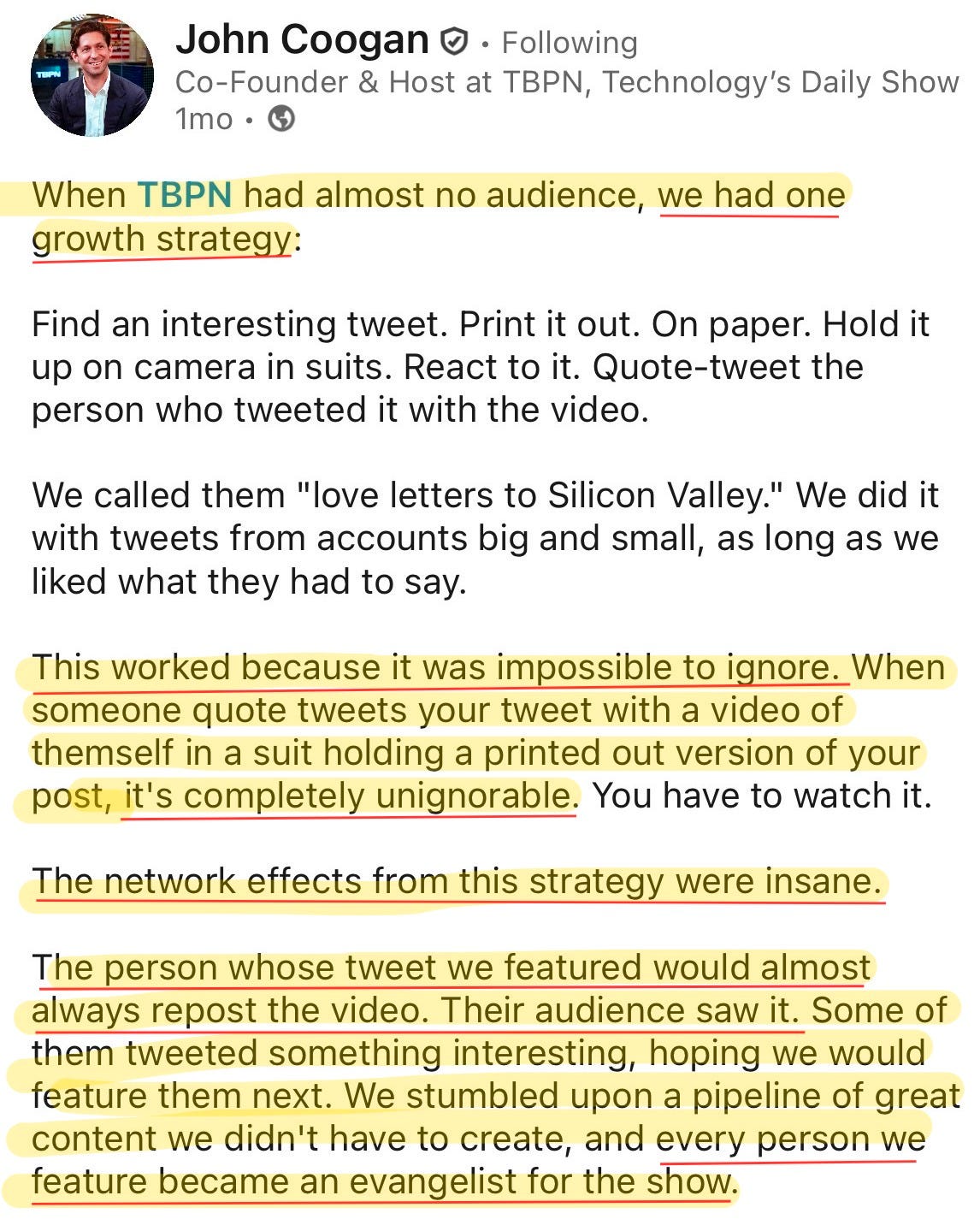
In fact, one goal of this blog post is to spur conversation about human creativity in a world with AI.
The Next Wave: Human Generated Content
Because large language models are trained on several corpuses of existing knowledge, AI struggles to produce anything truly novel — hence, trendslop.
In The Analog World, Joshua Brown writes about an “ick” that I also share about AI-generated content.
“I can always tell when I’m seeing a video that’s been created by AI or reading a paragraph in an article that’s been authored by it. I know it’s AI because I have an instant revulsion to it, almost like an allergic reaction or a mental gag reflex. It’s hard to describe. It’s what the Gen Z girls refer to as “the ick” and it’s real. I click away as soon as I know. And I know quick. I can see it in things I click on, I can see it on social media feeds, I can see it in my email inbox. And it’s an instant “f*** this” - I won’t read or watch any of it.”
Joshua Brown, CEO Ritholtz Wealth Management
A Raptive study of 3,000 U.S. adults found that when people suspect content is AI-generated, their trust drops by nearly 50% — even if the content was actually human written. There mere perception of AI generation was enough to give readers the ick.
I predict that more readers will gravitate towards unapologetically human writers as publishers increasingly use AI in non-creative ways to keep up with falling profit margins.
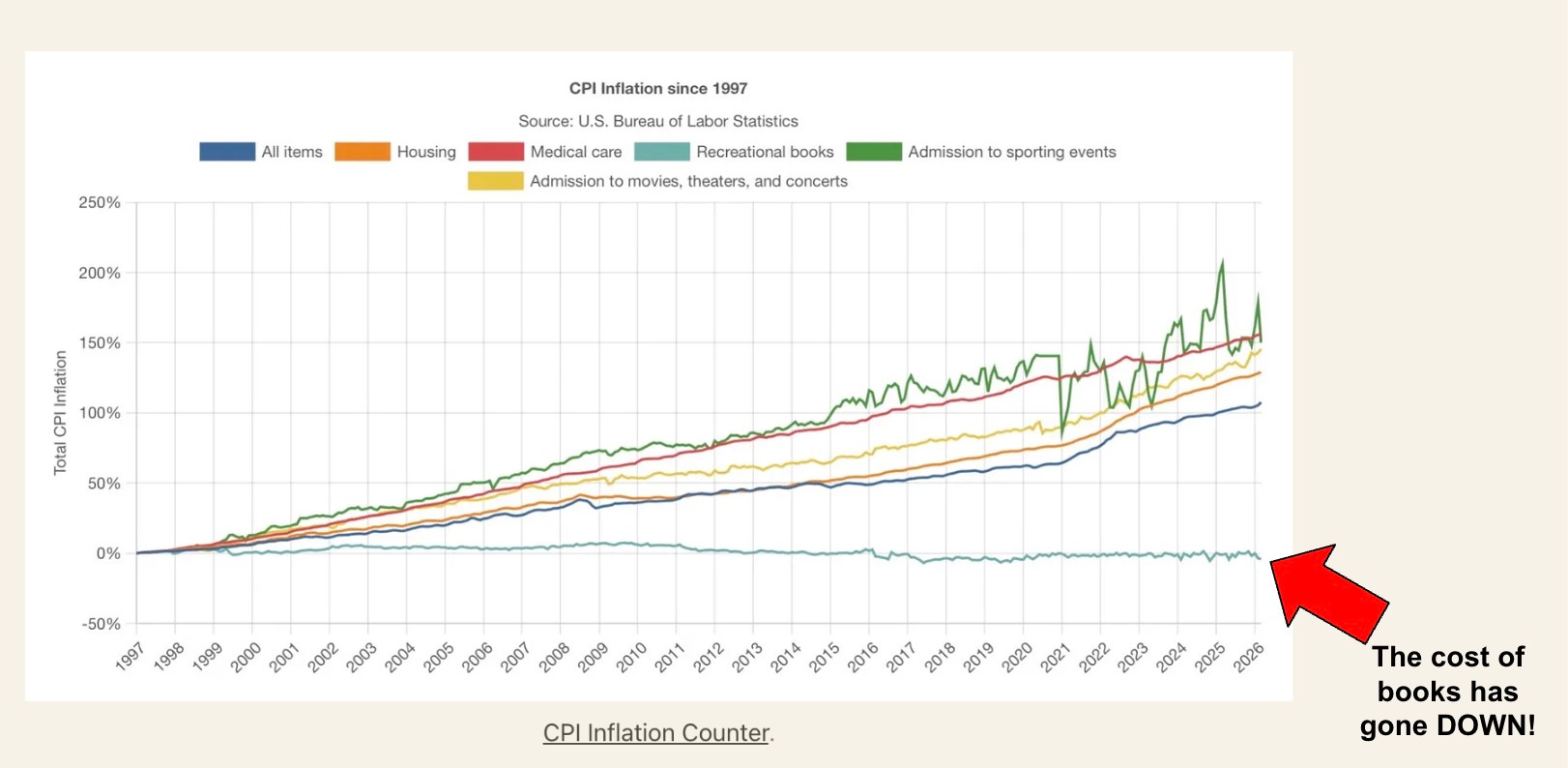
By contrast, high quality human-generated content is high signal and fuels your mind with insights that enable you to see around the corner. The million dollar question is “why?” The pornography research of Gary Wilson gives us a clue.
Observe Real Conversations Between Real People
In 2006, the late Gary Wilson observed something peculiar: a growing number of young men were congregating in online communities to share strategies to overcome porn addiction.
Although the addictive qualities of online pornography weren’t yet publicly known, Gary had the foresight to hypothesize that high speed internet made porn more accessible, affordable, and anonymous than ever before.
Since then, his Ted Talk The Great Porn Experiment has been viewed nearly 20 million times. 17 states have issued statements declaring pornography a public health crisis. The World Health Organization formally recognizes compulsive sexual behavior disorder (CSBD) as an impulse control disorder.
Gary Wilson saw the future before it came (pun intended) because he paid attention to real conversations between real people — back when Reddit was the center of human-to-human discourse.
Create, Consume, And Converse With Humans
If you take away anything from this essay:
Create more human-generated content.
Consume more human-generated content.
Converse more with human-generated humans.
In doing so, we can accelerate the spread of good ideas.
As always, thanks for reading!
— Grant Varner
Hat tip to Shane Parrish, whose essay “Ride the Waves” was the inspiration for the wave theme of this essay!
Tom Green Live was way ahead of its time. When Joe Rogan joined, you can literally see the gears in his head turning.
If there was ever an internet museum, this video deserves to be there. (Looking at you, Internet Anthropology 🙂)
This is also why in 1919, John Wanamaker said that, “Half the money I spend on advertising is wasted. The trouble is I don’t know which half.”