

I. A Brief History of American Birth Rates
Children used to be part of becoming economically secure. Now economic security feels like a prerequisite for having children.
Industrialization changed the economics of children. On a farm, another child eventually meant another pair of productive hands. But in a modern household, another child means childcare, another bedroom, education, lost working hours, career tradeoffs, the list goes on. In the last 200 years, children went from economic contributors to economic dependents — and more recently a status signal of affluence.
Much of America’s fertility decline begins with the disappearance of the farmer. In 1800, 95% of Americans were farmers. In 2026, only 2% are farmers.
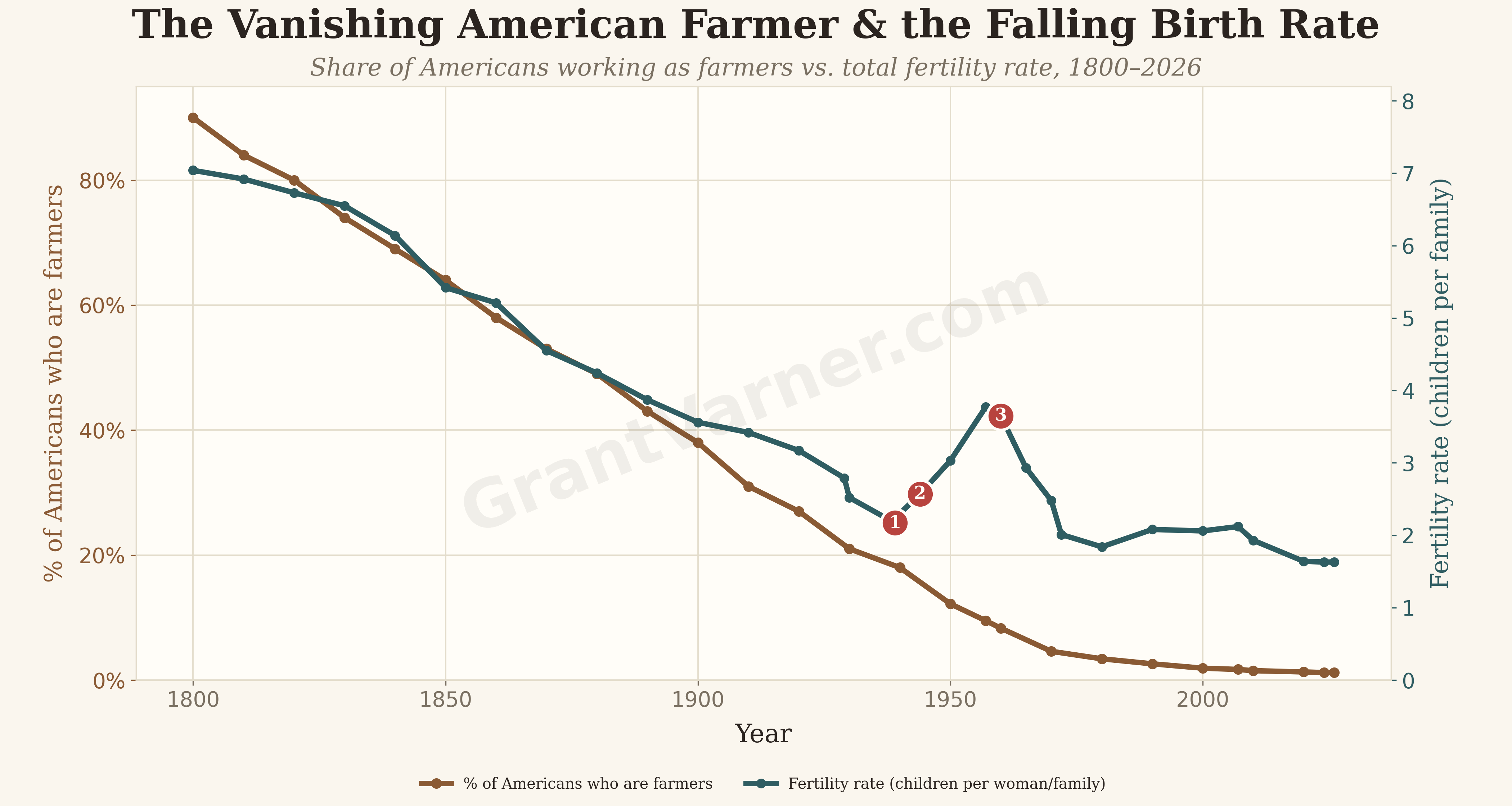
There was one notable exception. When the Great Depression ended in 1939, U.S. unemployment plummeted from 17.2% in 1939 to essentially zero by 1944 — fueled by the industriousness of WWII. This caused a spike in fertility — meaning the baby boom started during WWII, not after — contrary to popular belief.
American fertility peaked in 1957. Three years later, the first birth-control pill arrived. By 1971, when the first cohort of women on the pill graduated from college, women made a rapid ascent in the professional workforce and fertility rates settled into a new, but lower steady state of 2.1.
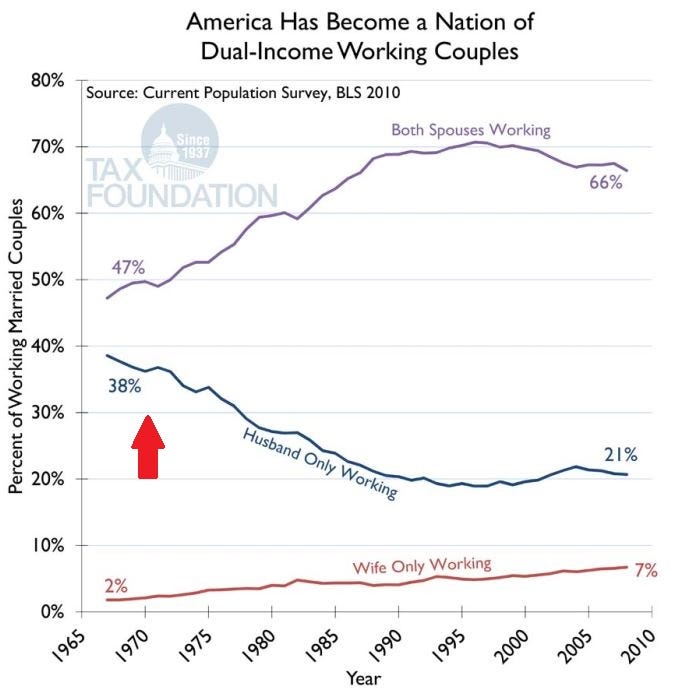
The Two Income Trap hypothesized that dual-income households actually made many necessary household expenses more expensive.1 The theory is that families with two working parents are actually more financially vulnerable to bankruptcy than single-income families. When both parents work, families spend more on fixed costs like housing and childcare, leaving them with less of a safety buffer if they lose a job.
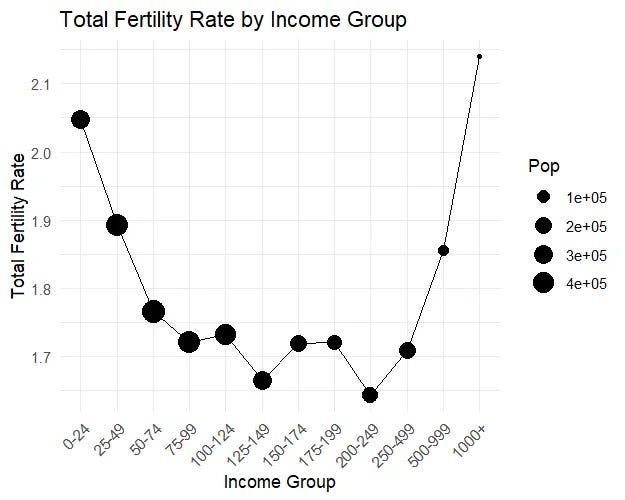
Historically, wealth predicted having fewer children. Economists believe the 1990s were the turning point when the relationship between wealth and fertility began shifting in America. This relationship has shifted into a U-shaped curve, where people in the poorest and wealthiest income groups are now having more kids than those in the middle class.
The strange part is that fertility is increasingly lowest in the middle — the people rich enough to have expensive expectations, but not rich enough to satisfy them effortlessly.
How come the middle class in the richest nation in history doesn’t want to reproduce?
II. The Population Crisis Is An Expectations Crisis
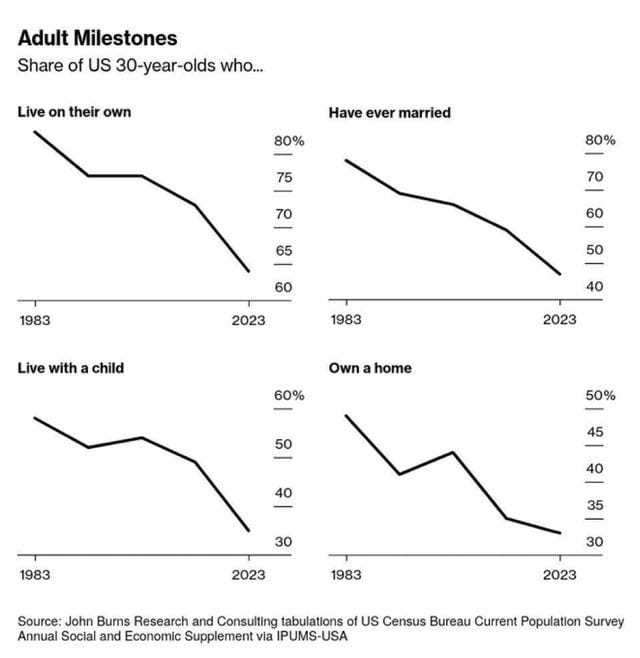
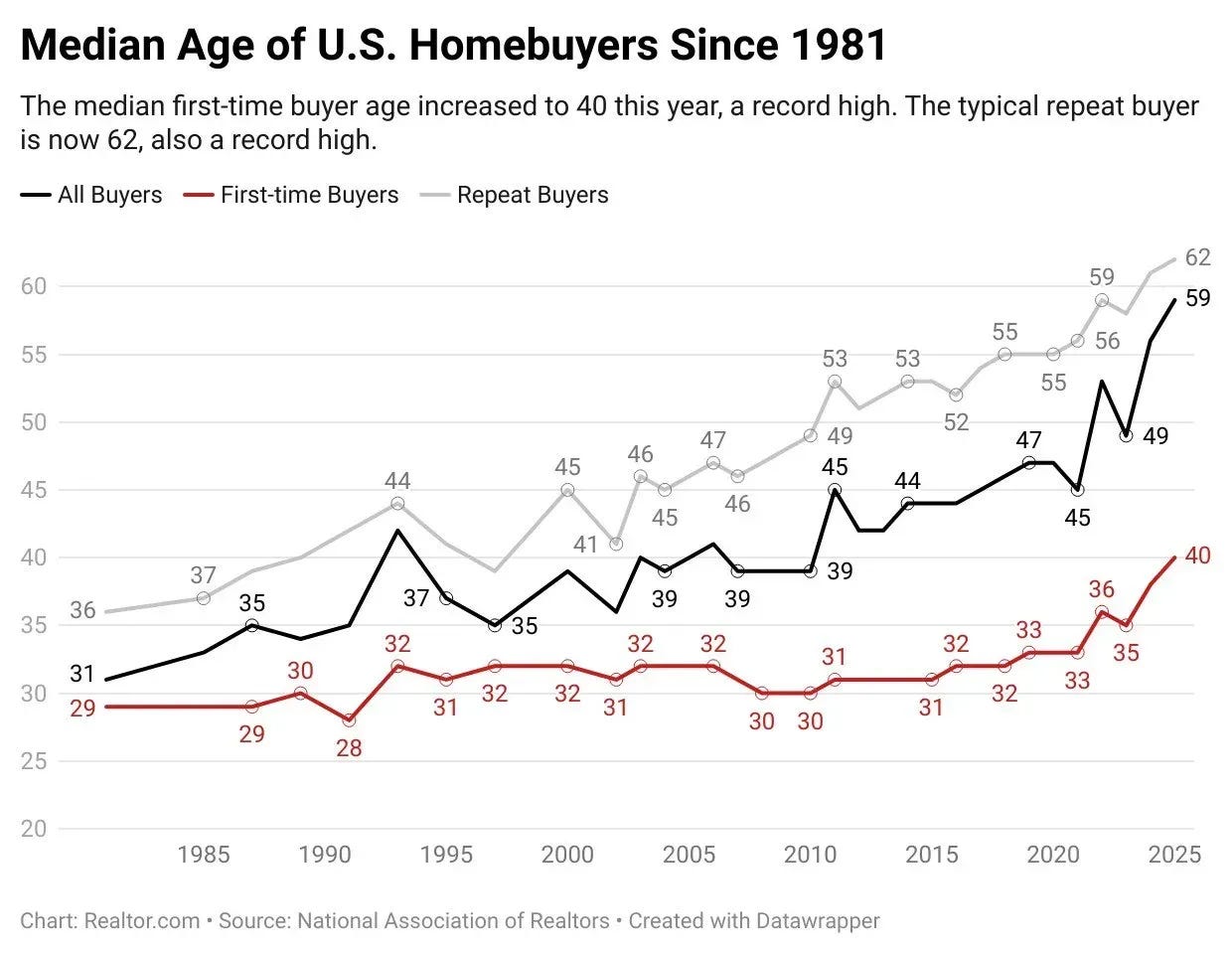
My parents bought their first home at 27 and had me at 29. I’m almost 30 and married, but parenthood feels out of reach. Since the 1980s, 30-year-olds have delayed the typical milestones of adulthood.
The median age of the first-time homebuyer has surged to its highest level since 1980, making homeownership feel out of reach.
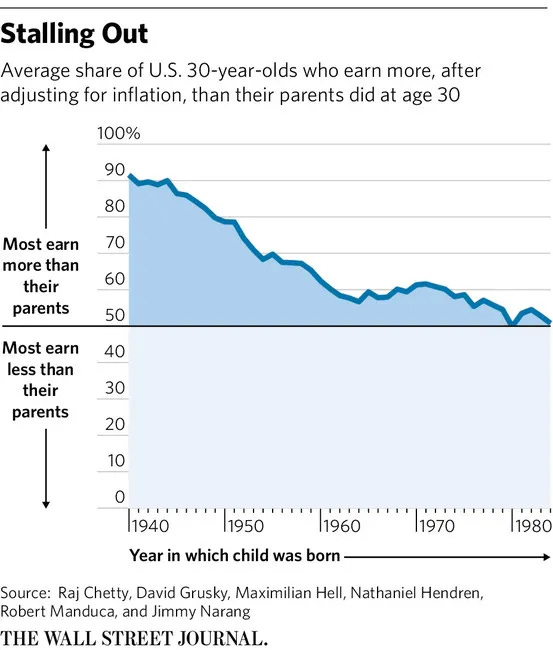
And barely half of 30-year-olds earn more than their parents — indicating that the American Dream of prosperity could be fading away.
Lastly, a state-to-state comparison of home prices shows that housing affordability is linked to fertility.
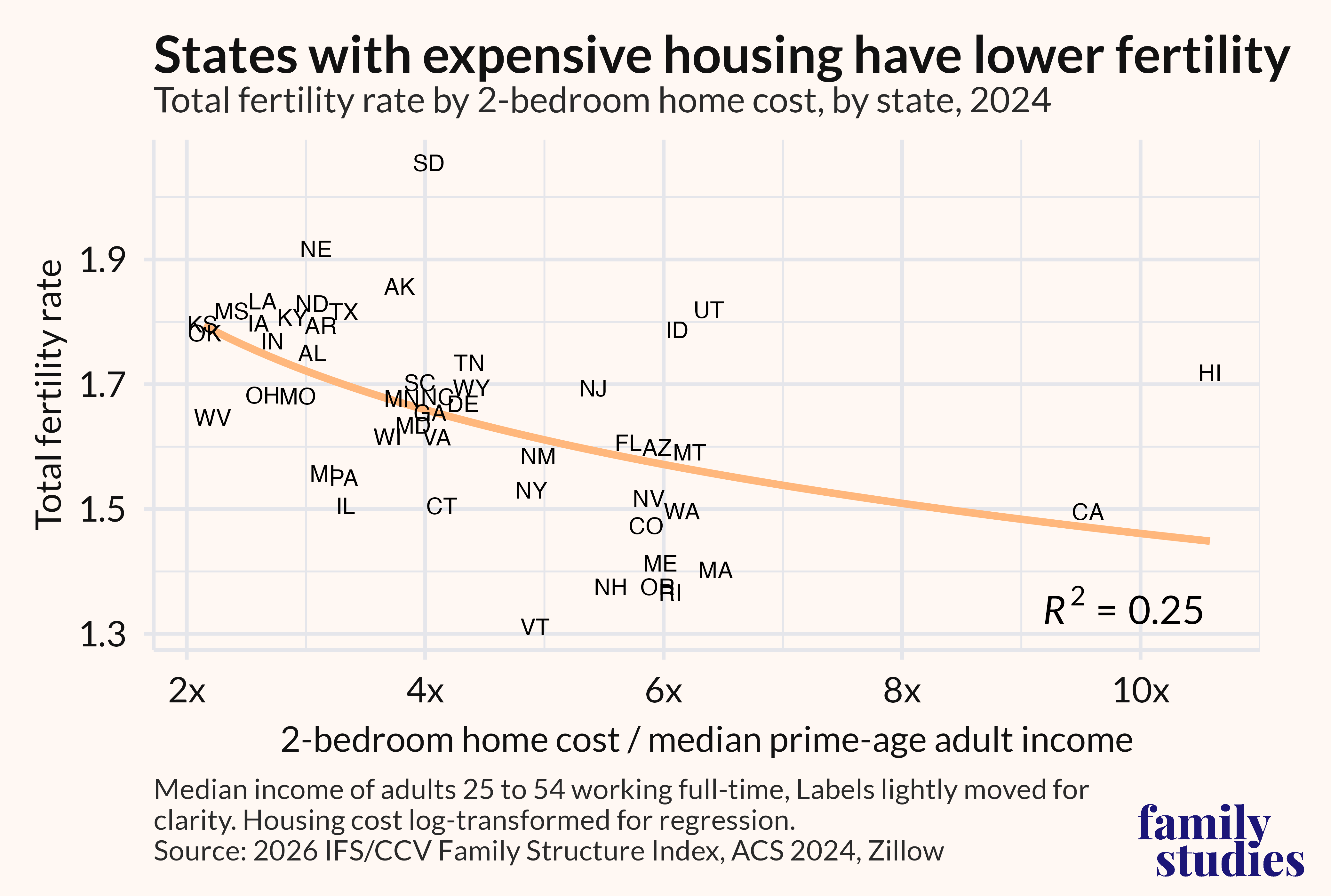
All of this is leading young people to delay marriage, homeownership, and having kids compared to earlier generations.2 People today are vastly richer than farm families who had seven children — and yet we feel less financially prepared to have two.
III. What Can We Learn From This?
When my parents had my older sister, they lived in an apartment. A home is a great aspirational goal for a growing family — but not a necessity to start a family. Collectively lowering our expectations is a good starting point for making kids feel more realistic.
The two-income family is an invention of the last 50 years. As women’s labor-force participation accelerated in the 1960s, ’70s, and ’80s, men didn’t carry the domestic responsibilities. As a result, birth rates fell. Since then, educated men have spent more time with their children and divided domestic duties more evenly.
Admittedly, I could be more helpful at home. I cook a mean scrambled egg, but I could learn a few more dishes. And I consistently take out the trash, but I could do a better job vacuuming and sweeping.
But why does a married guy approaching 30 like me feel less prepared to have a child than his parents did at the same age — when, in so many other ways, life has gotten better?
There is a real affordability crisis. Housing is more expensive, childcare is expensive, and raising children now comes with enormous opportunity costs. But affordability alone doesn’t explain the paradox. But alongside those rising costs, we’ve also raised the standard for what a financially responsible childhood is supposed to look like.
Somewhere, from 1800 to now, children stopped being something you built a life around and became something you added after the life was already built.
Maybe becoming ready for children doesn’t happen before you have them — perhaps having kids is a forcing function for adulthood.
As always, thanks for reading!
— Grant Varner
Additional Reading
30 Days, 9 Cities, 1 Question: Where Did American Prosperity Go? by kyla scanlon
Modern Parenting Does Not Scale by Skylar Powell
What Caused the ‘Baby Boom’? What Would It Take to Have Another? by Derek Thompson
More Dads Are Scaling Back at the Office for Kids and Housework by Harriet Torry
The Case For Gradual Population Decline by Adair Turner
In fact, having children is the single best predictor that a woman will go bankrupt in her lifetime.
To be clear, less teen pregnancies is a good thing, but we’ve gone too far in the other direction.
Imagine if we didn't ransom physiological needs like shelter with a manufactured affordability crisis. I truly think if the basics of life were more easily afforded, people would be more actuated to prosper more.
This one is a keeper. Thanks, Grant.