

In the late 19th century, the German psychologist Hermann Ebbinghaus discovered the forgetting curve:
Within an hour, we forget 50% of new information,
Within a day, we forget 70%,
And after a week, we forget 90%.
Plotted on a chart, the forgetting curve looks like this:
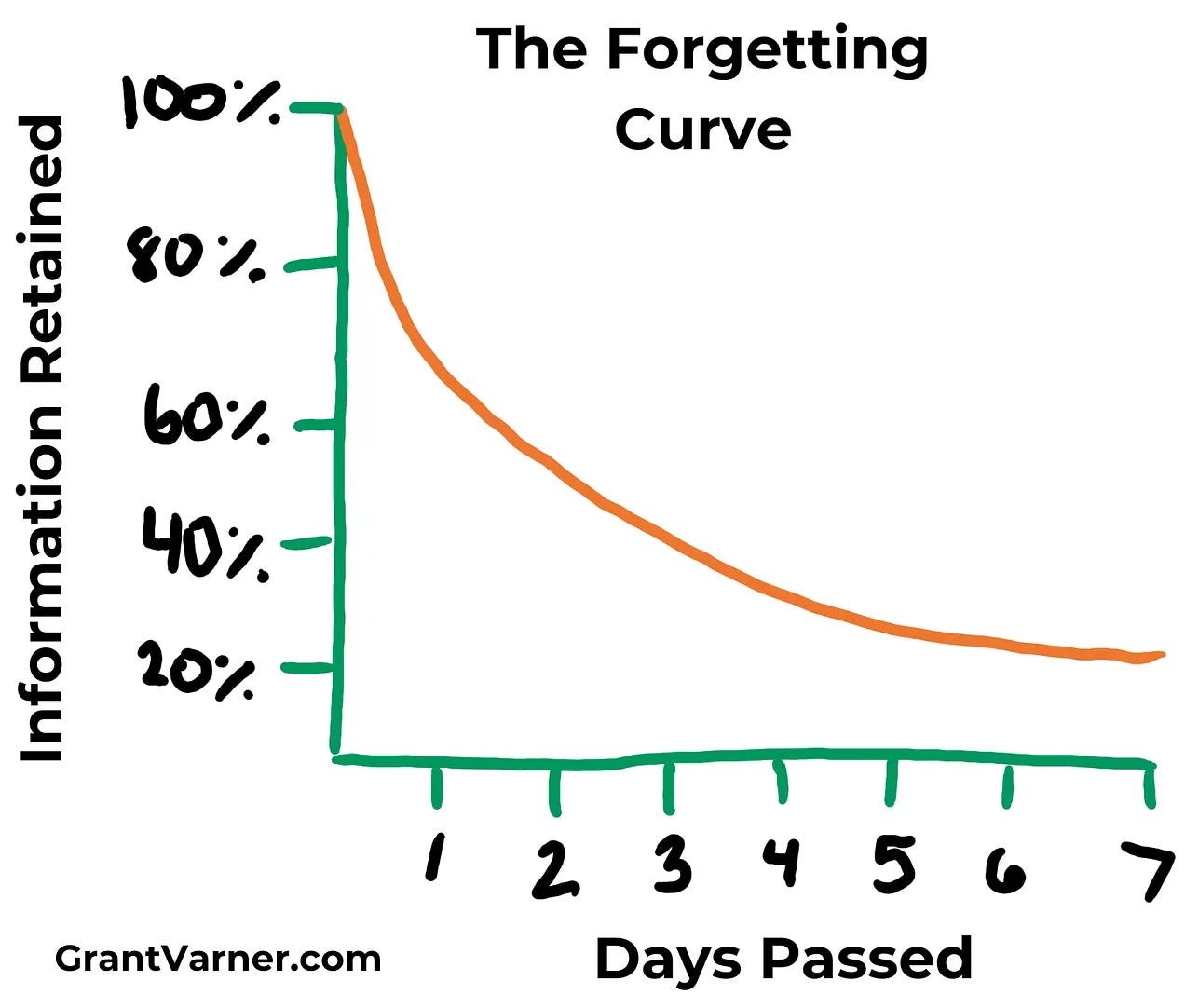
In short: we lose information immediately after learning it. Unless we revisit that information over time.
Spaced Repetition
Spaced repetition flips the learning curve on its head. By reviewing information over and over again, you retain more.
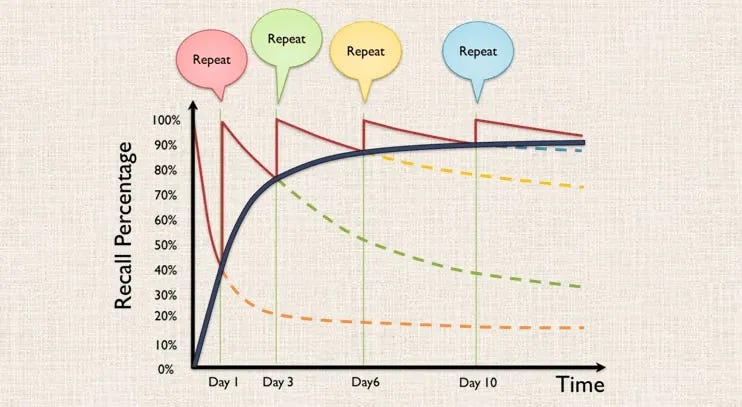
By writing the ‘ole fashioned way (line-by-line), you must slow down to wrestle with competing ideas, viewpoints, and primary sources. It’s the platonic ideal of the learning curve.
By contrast, writing with AI creates the illusion of learning. You think you’re learning. You feel like you’re learning. But in reality, you’re bypassing the spaced repetition where learning actually happens.
(Human) Writing Is Learning
If you’ve developed your own unique writing style, you could train a large language model to mimic that style.
To the reader, it’d look the same as your writing.
For the writer, the impact is different.
Writing well requires aesthetic taste to identify which ideas are quality. In the pursuit of writing aesthetically beautiful things, your capacity to create more beautiful things increases.
An essay can literally change your beliefs. Written well, it can change your reader’s beliefs, too.
There’s power in writing. But fewer than ever can write without AI.
Can you?
Thanks for reading!
— Grant Varner
Hi Grant - should have checked my grammar before sending :). Anything we expect to "LEARN" and retain......
Hi Grant! This hits home for me as an old retired football coach! Anything you expect to really and retain takes repetition and focus. Sometimes we had to run a play 50 times before we looked like we knew what we were doing, but that repetition is why we "learned" what eventually becomes second nature. Thanks for sharing this!