

It’s that time of year again! Politicians left and right sliding into your iMessage DMs to politically mudsling at the competition.
This time of year my dad and I jokingly send each other the increasingly cringey text messages we get from candidates and political mail that gets (incorrectly) sent to my parents’ address.
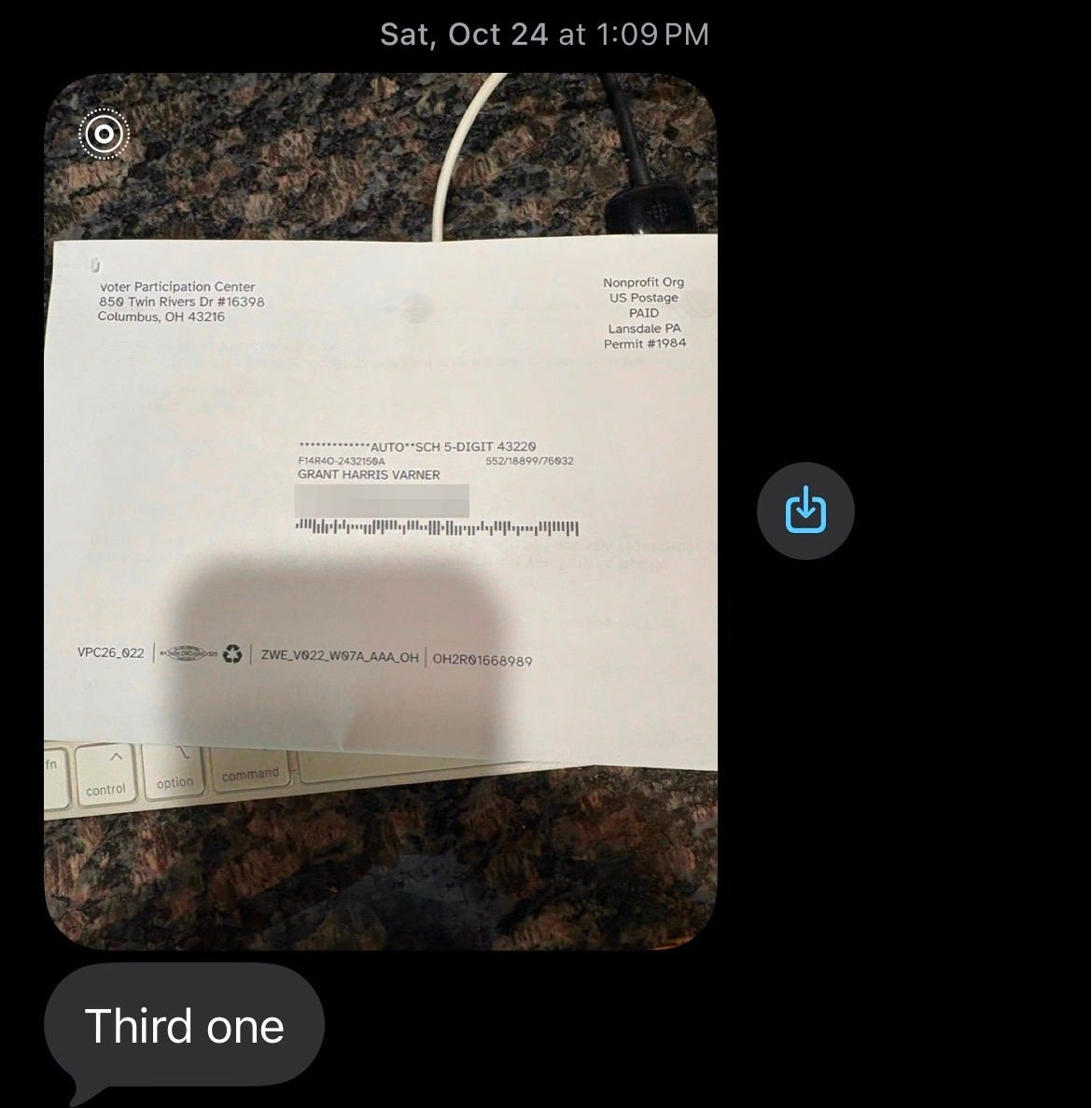
In the midst of the barrage of texts and political ads, I couldn’t help but wonder: Do political ads even work? Surely, you’ve probably wondered the same thing too. Some are hilarious. Steve Hilton of California posted a political ad to vote via mail with an ad that resembled a raunchy video filled with double entendres.
Could any publicity be good publicity? More specifically, do political ads even work?
What’s the point of political ads?
A 2020 study in Science Advances measured the persuasive effects of 49 ads from the 2016 presidential election across 34,000 people through a series of nearly 60 experiments. The study expanded upon a large body research which suggest that political ads have little effect on voter preferences.1
The study expanded on past research which suggested that political ads have small persuasive effects on voter preferences.
“There’s an idea that a really good ad, or one delivered in just the right context to a targeted audience, can influence voters, but we found that political ads have consistently small persuasive effects across a range of characteristics… Positive ads work no better than attack ads. Republicans, Democrats, and independents respond to ads similarly. Ads aired in battleground states aren’t substantially more effective than those broadcast in non-swing states.”
So why even make ads in the first place if they don’t influence the perspectives of viewers anyways? Because political ads are meant to do more than persuade voters. They can also get your more name recognition potentially influence voter turnout.
“TV ads help candidates increase their name recognition among the public, which is extremely important. Moreover, the effects we demonstrated were small but detectable and could make the difference between winning and losing a close election.”
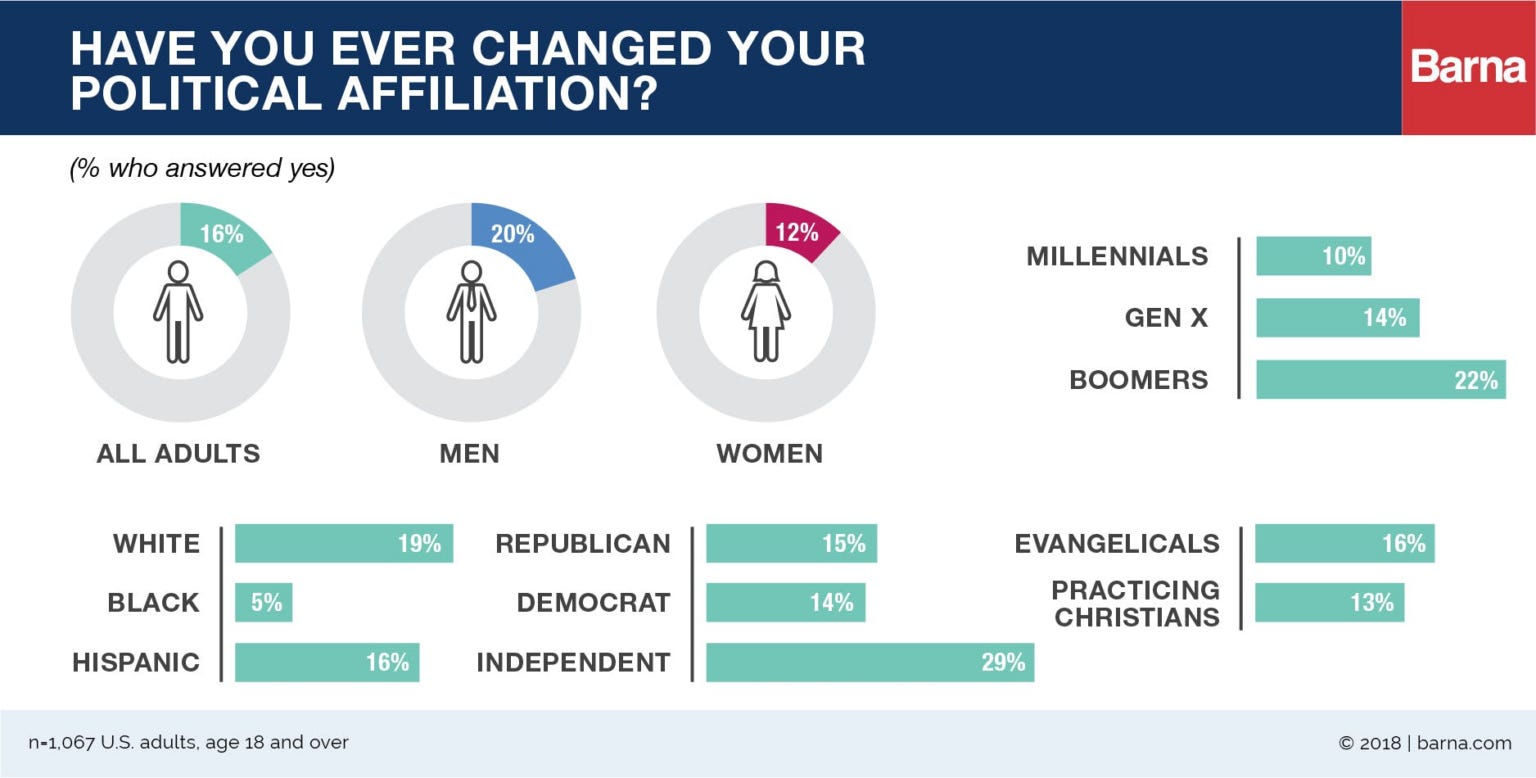
These days voters tend to vote for their party’s candidate.
Only one-quarter of American adults (25%) report voting for a candidate who was not affiliated with their registered party. Few people have ever changed their political affiliation. Political affiliation has become analogous to religious identity for many Americans.
But is that a good thing?
Trust is bought in a low trust society
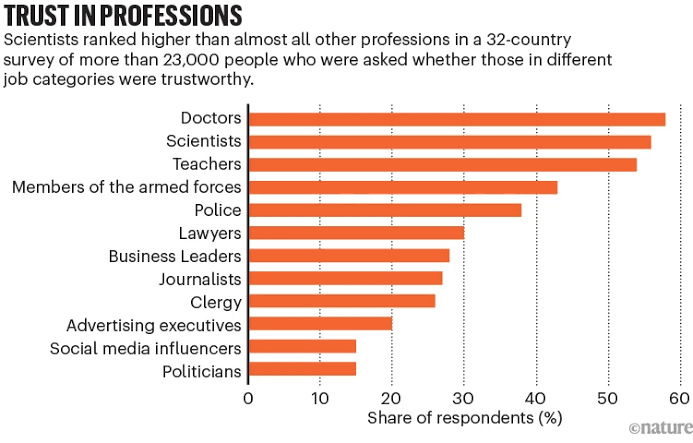
I get a ‘yucky’ feeling around election season because it feels like beer bonging a barrage of advertising from the least trustworthy profession in society. (If you stop texting me, maybe I’d actually vote for you!!) The greatest irony is that the channels politicians advertise through aren’t trusted either.
According to Gallup, Americans' trust in mass media remains historically low. By profession politicians and social media influencers are among the least trusted. Nonetheless, podcasts dominated the 2024 election campaign for both sides of the aisle.
Who can blame them, though? Rubbing elbows with the elected can give you massive influence at the local, state, and national level. For candidates hoping to win election, rubbing shoulders with deep pocketed donors buys you resources — which is many cases mean advertisements and distribution to spread your message and build awareness of your candidacy.
It all makes sense. But does it feel good? In the midst rising costs of living, a housing crisis, and AI-driven fears of joining the permanent underclass, it feels like I, the voter, am the sucker no matter who I vote for.

Democracy is still alive and well
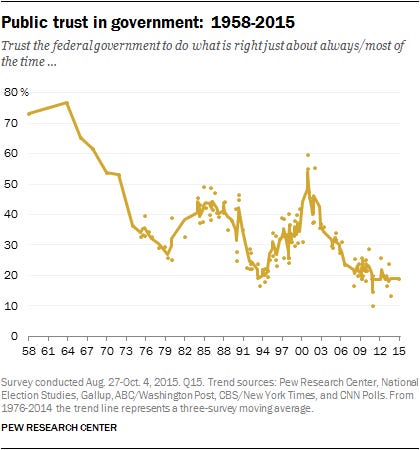
But then again, what’s new? Since the 1970s, public trust in the government has fallen, only recovering sporadically. Per Pew Research:
“Within a decade — a period that included the Vietnam War, civil unrest and the Watergate scandal — trust had fallen by more than half, to 36%. By the end of the 1970s, only about a quarter of Americans felt that they could trust the government at least most of the time.
Trust in government rebounded in the 1980s before falling in the early to mid-1990s. But as the economy boomed in the late 1990s, confidence in government increased. And in 2001, the 9/11 terror attacks on the United States transformed public attitudes on a range of issues — including trust in government.
In early October 2001, a month after the attacks, 60% said they could trust the government, roughly double the share earlier that year and the highest percentage expressing trust in government in more than 40 years. But the rise in government trust was short-lived — by the summer of 2002, the share saying they could trust the government had tumbled 22 percentage points.
Amid the war in Iraq and economic uncertainty at home, trust in government continued to decline. By July 2007, trust had fallen to 24%. Since then, the share saying they can trust the federal government has generally fluctuated in a narrow range, between 20% and 25%.”
It doesn’t take a Pew Research study to know why trust in the government and politicians have decreased over time. Career politicians are incentivized by the nature of the job itself to do what it takes to get re-elected — even if it doesn’t benefit the American people in the long term. And yet, that shouldn’t stop anyone from contributing to their local government to be the change they want to see.
In Democracy in America (1840), during his journey through America; Alexis de Tocqueville learns that democracy in America doesn’t come from the Constitution, Declaration of Independence, or Bill of Rights. Rather, democracy in America comes from the democratic spirit of the citizens that inhabit the nation. This democratic ethos, that drives civic responsibility at the local level by ‘F-Yeah Americans’ is what makes America great.
Blind trust in the federal government isn’t a virtue by any means.
Sure, no government is perfect — at the local, state, or federal level. Perhaps by becoming more active participants in the democratic process, we can find ways to renew our belief in the democratic process, without blindly rewarding undeserved trust. To quote John F. Kennedy, “Ask not what your country can do for you — ask what you can do for your country.” What I can do for my country is my #1 concern this midterm election.
As always… thanks for reading!
— Grant Varner
Coppock, Hill & Vavreck (2020) — The Small Effects of Political Advertising. Science Advances. Research examining how political ads influence voter preferences across 59 randomized experiments.
Chu et al. (2024) — Do Online Ads Sway Voters?. Political Communication. Research investigating the persuasive effects of online political advertising.
Couture & Owen (2025) — Political Advertising and Consumer Sentiment. European Journal of Political Economy. Research exploring the relationship between political advertising and consumer sentiment.