

High performance will get you more of what you value — whether that’s flexibility, pay, or recognition. Companies work hard to please high performers because they deliver 100%-500% more output than average- or below-average colleagues.
In a word, it’s better to be a high performer.
What Is A High Performer?
A high performer is someone who consistently delivers better results relative to 75% of their peers.
“Consistently” means you regularly do those things — it’s not just an occasional flash of brilliance.
“Relative” means your performance is better than others’ — not just the goal.1
This book shows you how in 8 steps:
1. Set Big Goals
Goal-setters outperform non-goal-setters. But too many goals are distracting. Doing three things extremely well is better than struggling to achieve many. Set fewer goals.2
2. Behave To Perform
How you’re perceived at work influences your performance, network, image, and ultimately, your success. You need to:
Understand how you’re naturally wired to behave. I, for example, am an INTP Myers Briggs. I have a tendency to dive deep into the weeds of work.
Identify which behaviors are most important for success at work. At my work, being social & collaborative is rewarded.
Develop an action plan to quickly adapt to those behaviors. I’m treating socializing as part of the job — not just an optional activity.
Remember: Your greatest strength — turned up to an extreme — can become a weakness and hold you back.
3. Grow Yourself Faster
Think of growth as a cycle — perform, get feedback, perform again better.
The faster and more frequently you move through that cycle, the faster you’ll develop.
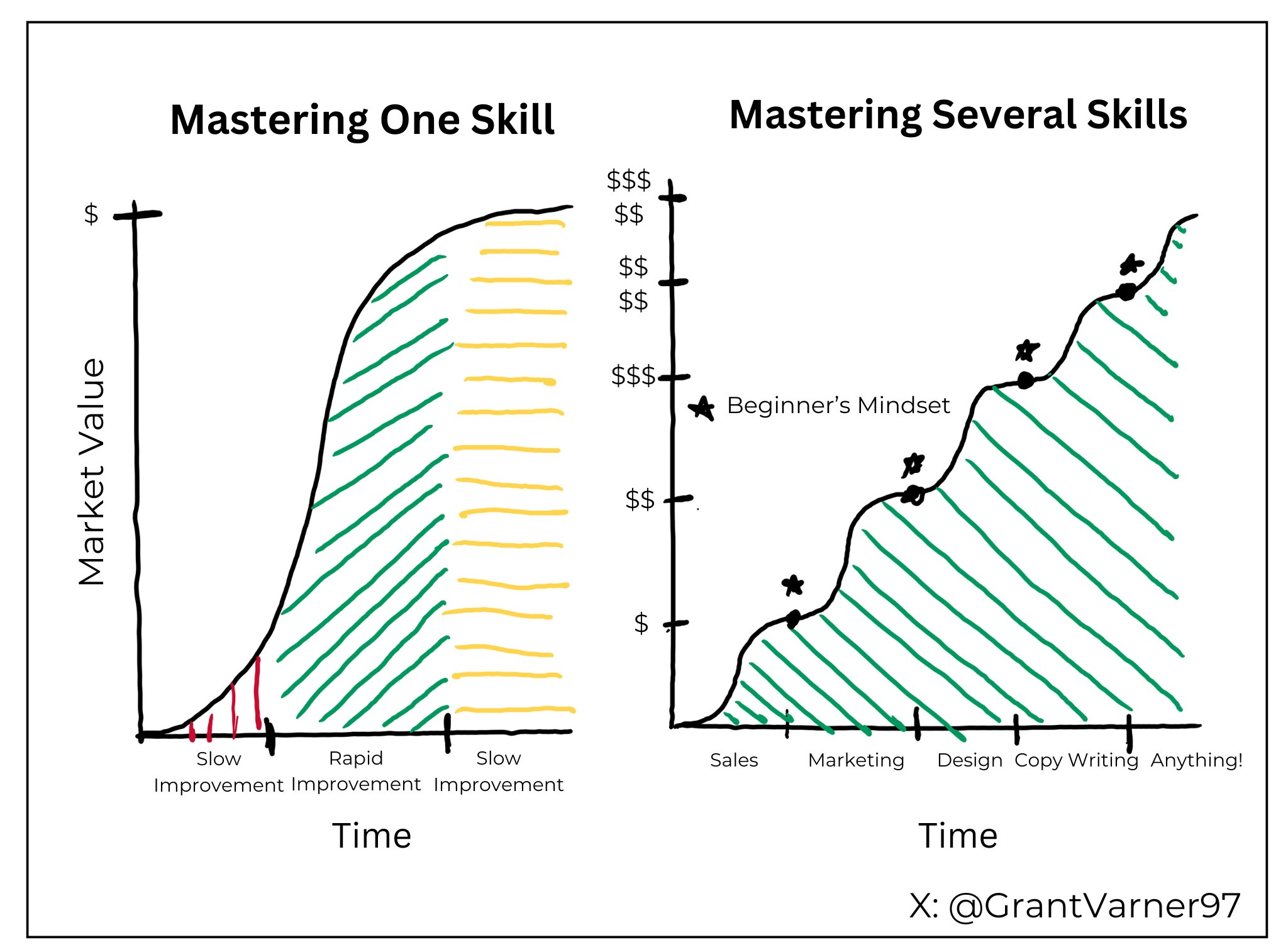
With time, you’ll acquire many skills that help you perform better at your job.
4. Connect
Your immediate manager is your most critical working relationship.
Poorly performing employees with strong relationships with their managers get higher performance ratings.
Employees get promoted faster when their manager gets promoted faster.3
But the more you benefit from a relationship with your manager, the more risk your behaviors pose to your reputation with your peers.
5. Maximize Your Fit
When your capabilities match what your company needs, you’ll be better positioned to succeed.
Great performers can become average performers (and vice versa) overnight when their company changes their definition of “great”. Ask your manager what behaviors are needed today.
6. Fake It
Don’t become fixated with showing up as the “real you” at work. Instead, show up as a stylized version, aligned to the behaviors that are rewarded on your team.
There are three behaviors you should “fake” to get noticed as a high performer:
Self Promotion: Vocalize your good ideas and appear self-confident while doing so.
Making Friends: The best way to make friends at work is through sincere flattery.4
Showing Ambition: The best way to show your manager that you have a competitive edge is by (i) delivering high quality work, and (ii) calling out others who aren’t performing to the standard of the team.
7. Commit Your Body
Being physically fit won’t automatically help you be a high performer. But it can help.
Sleep: With less sleep, your creative problem solving will decrease, you’re less innovative, and more moody. Get quality sleep.
Exercise: People who are physically fit have a strong ability to plan, manage yourself, and pursue goals.
Diet: Caffeine provides consistent, proven, work performance benefits. Drink your coffee.
8. Avoid Distractions
Focusing on your strengths will help you be better at the exact thing you’re good at today. But it won’t help you be good at anything else — what got you here won’t get you there.
A young Kobe Bryant used this strategy to become a complete basketball player. By incrementally focusing on different skills, he eventually became an expert.
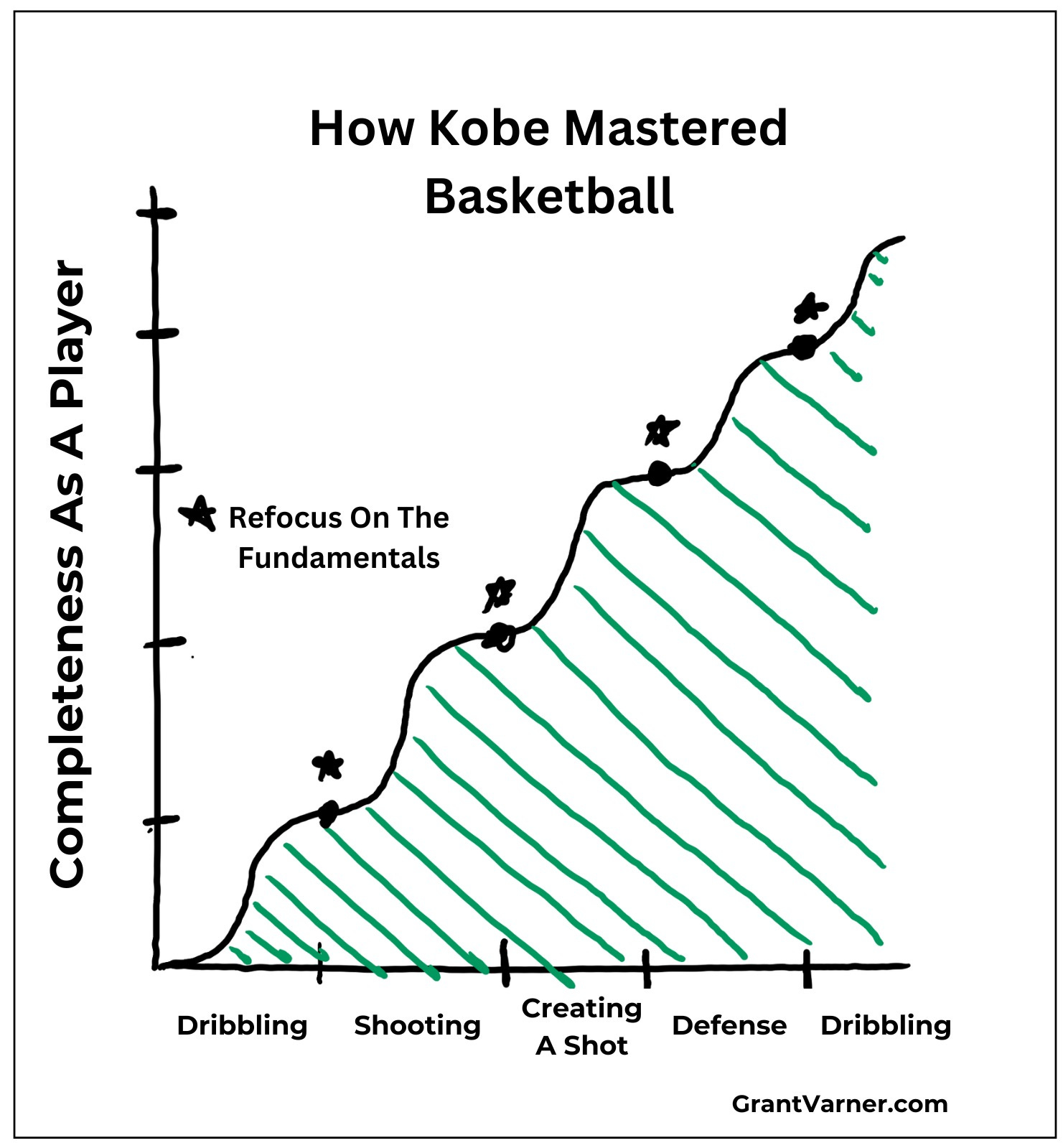
Natural Strength + Lots of Practice = Great Results
Conclusion
High performance is a choice. Focus on what’s in your control, and ignore the rest!
Thanks for reading!
— Grant Varner
This doesn’t mean you should see your peers as competition, though. By striving to be a high performer, you elevate the overall performance of the team, and actually help your teammates out.
Every year I use Warren Buffett’s 25/5 Rule. I write down 25 goals I’d like to achieve. Then I circle the 5 most important. The following year, I pursue those 5 goals, and actively avoid the other 20, since they’re distractions.
Katz, Tushman & Allen (1995), Management Science, “Supervisory Promotion and Network Location”.
Pfeffer, Jeffrey. Power: Why Some People Have It — and Others Don’t (2010).
“calling out others who aren’t performing to the standard of the team” this resonated. And how would you do this? During the team’s call? Directly to the colleague? Or to the manager?