

To avoid burnout from my job in 2020, I took a few days off for a solo camping trip. I snapped this photo on my iPhone upon my arrival:

My packing list was intentionally simple. 20,000 calories of peanut butter, tortillas, and trail mix. For four days, I slept, journaled, and hiked the Chisos Mountains. My batteries were fully recharged when I came back to work on Monday.
It’s hard for high achievers to unplug. There’s this voice in your ear that constantly says: “Work harder!!”
Mark Twain said, “history doesn’t repeat itself, but it often rhymes.” Today I work at a different company, in a different city. But burnout struck me just the same as it did before.
Why do we burnout? What can we do to prevent it? How can we balance progress and rest?
The Theory of Cumulative Stress…
…says that the buildup of repeated stressors across various domains of life.
There’s a "stacking" effect where minor everyday stress builds up and eventually leads to burnout.
These small stressors are like adding small rocks to your backpack. Each weighs a little more than the last. Over time the cumulative weight of all those tiny rocks add up.
You remove rocks by doing stress relieving activities.
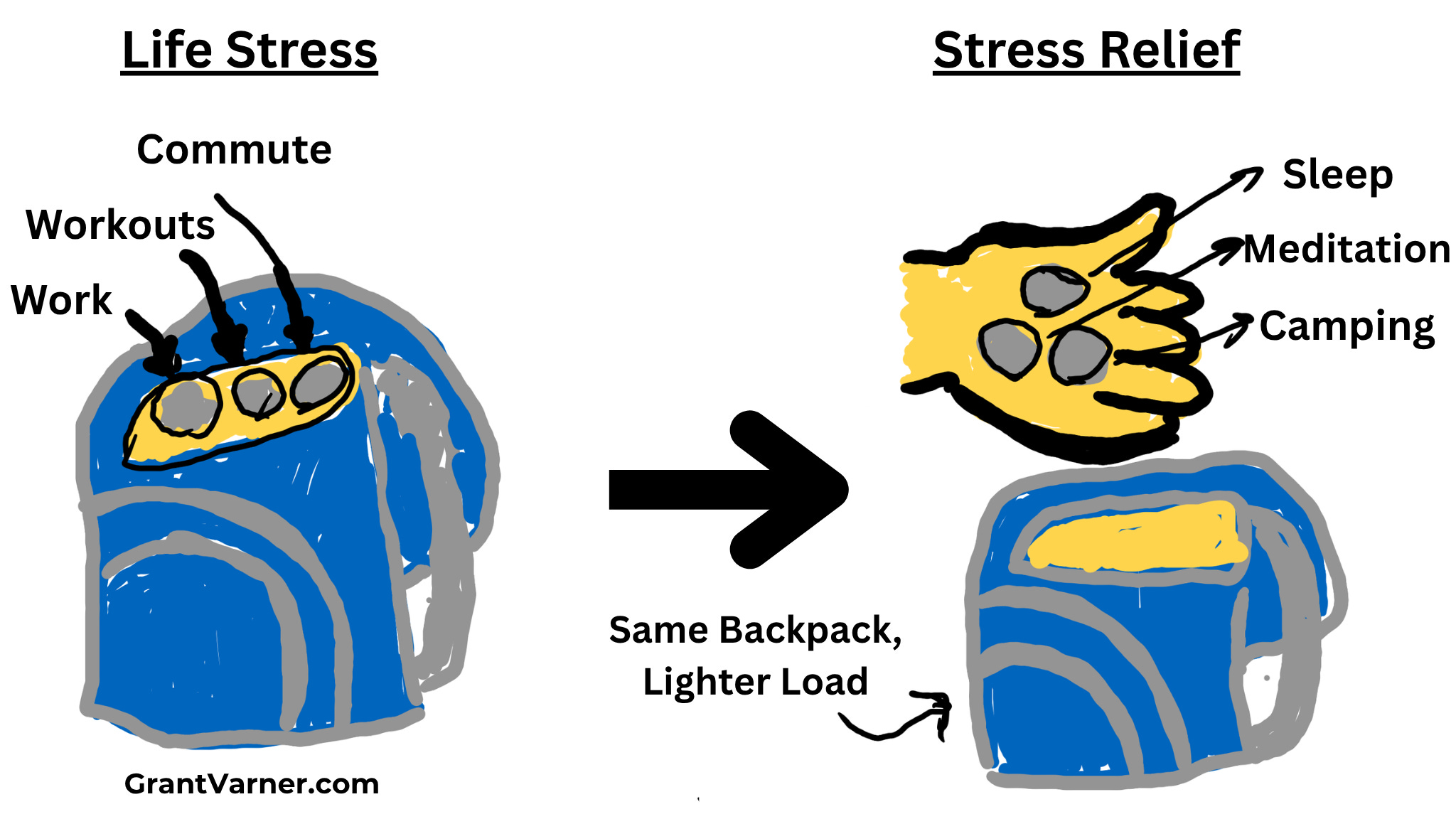
Your body doesn’t have a warning light that goes off when your body has reached its limit. If it did, it’d be a lot easier to operate at a high level without burning out.
The key to avoiding burnout is consistent stress relief, even if you don’t feel burnout out yet.
Strategic rest is work. The same way a NASCAR driver slows down before the turn to accelerate through it, you should cyclically take rest.
By strategically scaling down your stressors, and scaling up your stress relief, you’ll use your batteries, but not to point of complete exhaustion.
Rest Is Productive
I often think about how all variables held equal, it’s better to make consistent (but slower) progress, than making fast progress that’s halted by periodic stops.
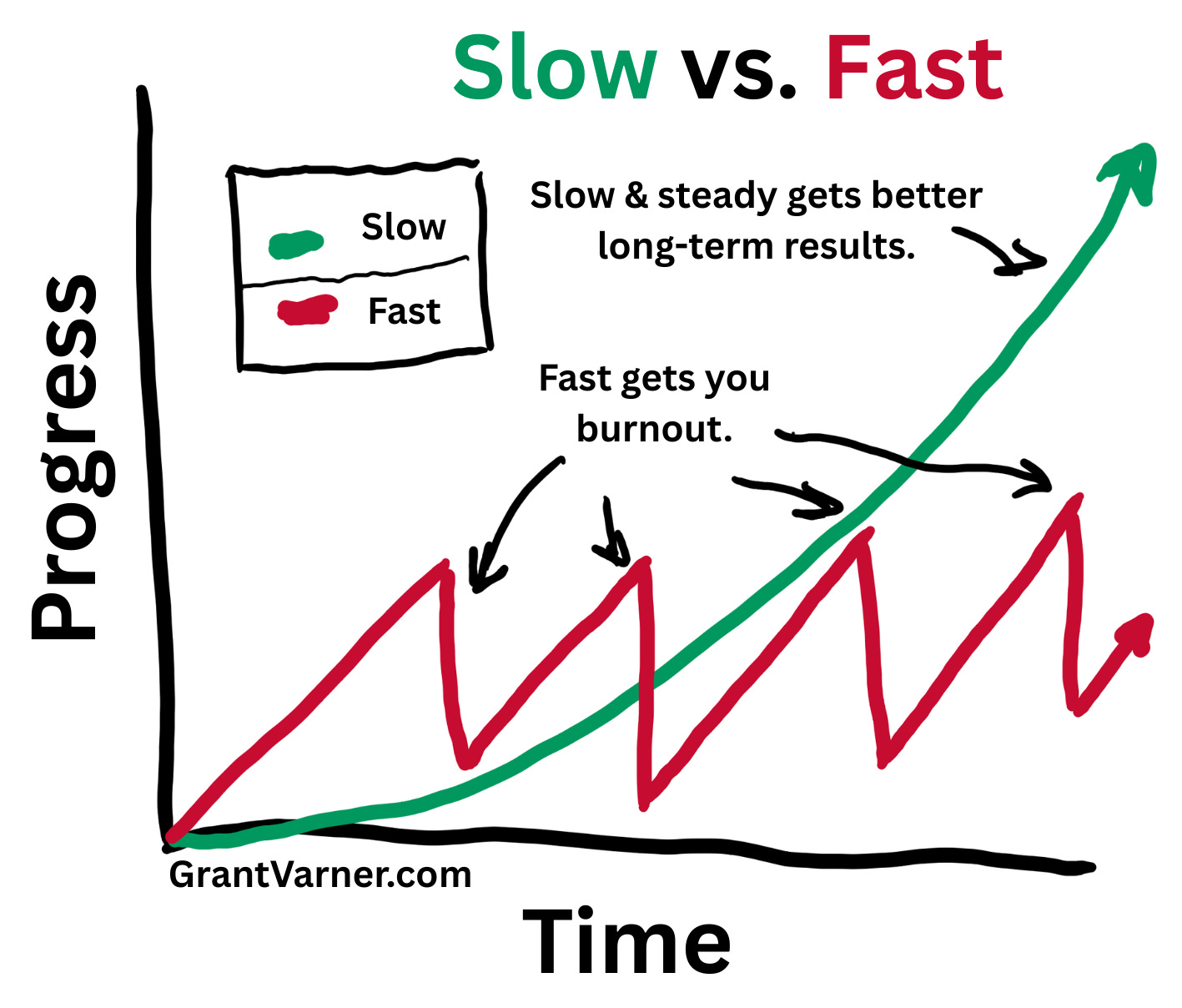
This is a lesson for you (and me) to take a break. It might be the most productive thing you do.
Thanks for reading!
— Grant Varner
Man, I have a draft for an article about this exact same subject. A while back, I gave myself Wednesdays permission to do nothing, and I don't always take myself up on it. But when I do, I'm always so much more productive on Thursday and Friday.
Totally. It’s really about listening to yourself every day, in each moment. We are constantly pushing ourselves to be better, and that can become stressful when you're not in the right condition to do so.