

I keep an Apple Note of amazing charts and ideas I find online. That list is growing like gangbusters. So I curated all the best-of-the-best after hundreds of entries for you to enjoy! Here’s the 24 most important ideas in 2026 (so far).
LABOR MARKET
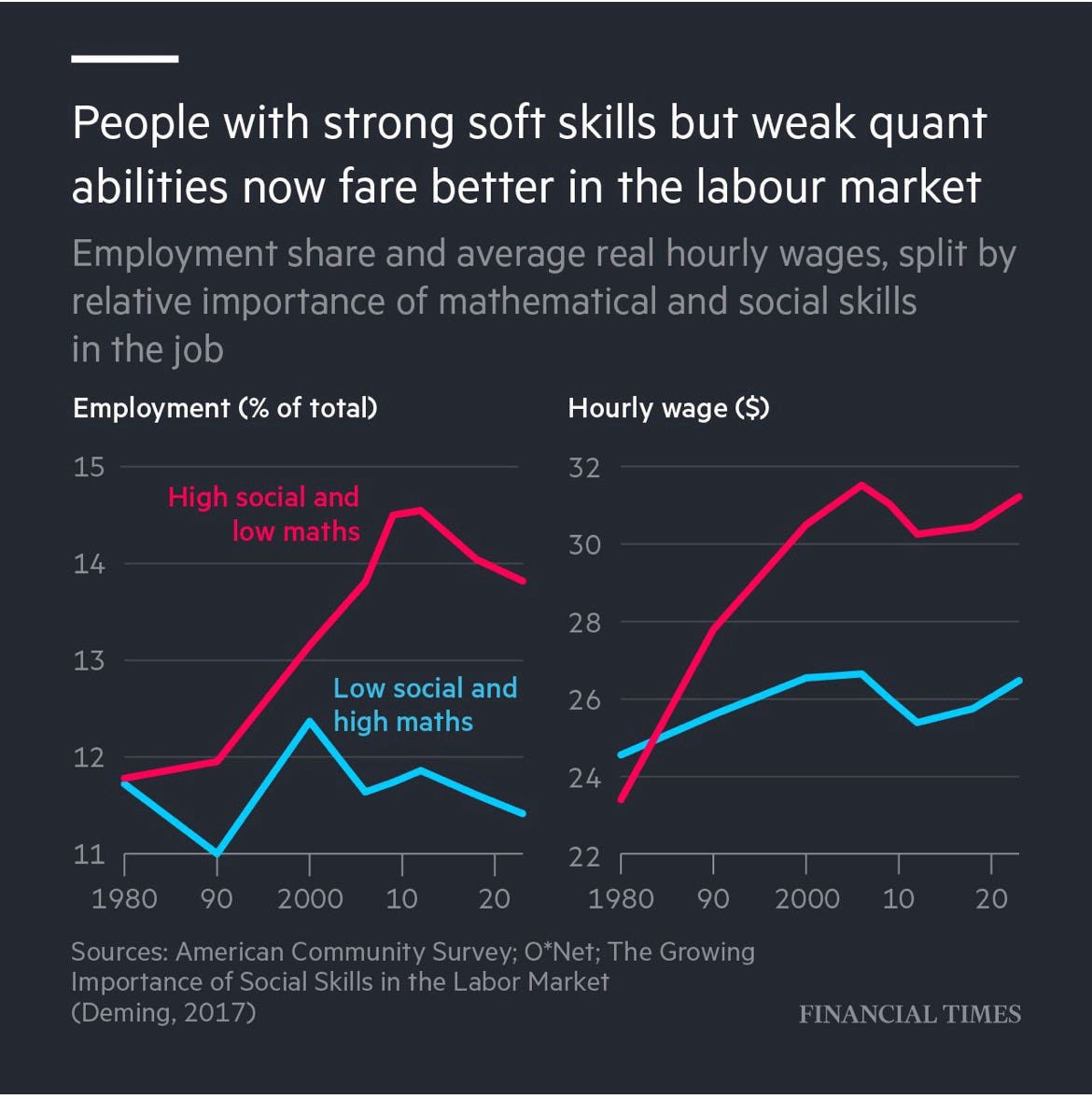
1. Social skills fare better than quant abilities in the labor market.
An apples-to-apples labor market comparison of workers makes the conclusion clear: high social skills is the path to career opportunity.
Time to dust off your old copy of Carnegie’s How To Win Friends & Influence People.
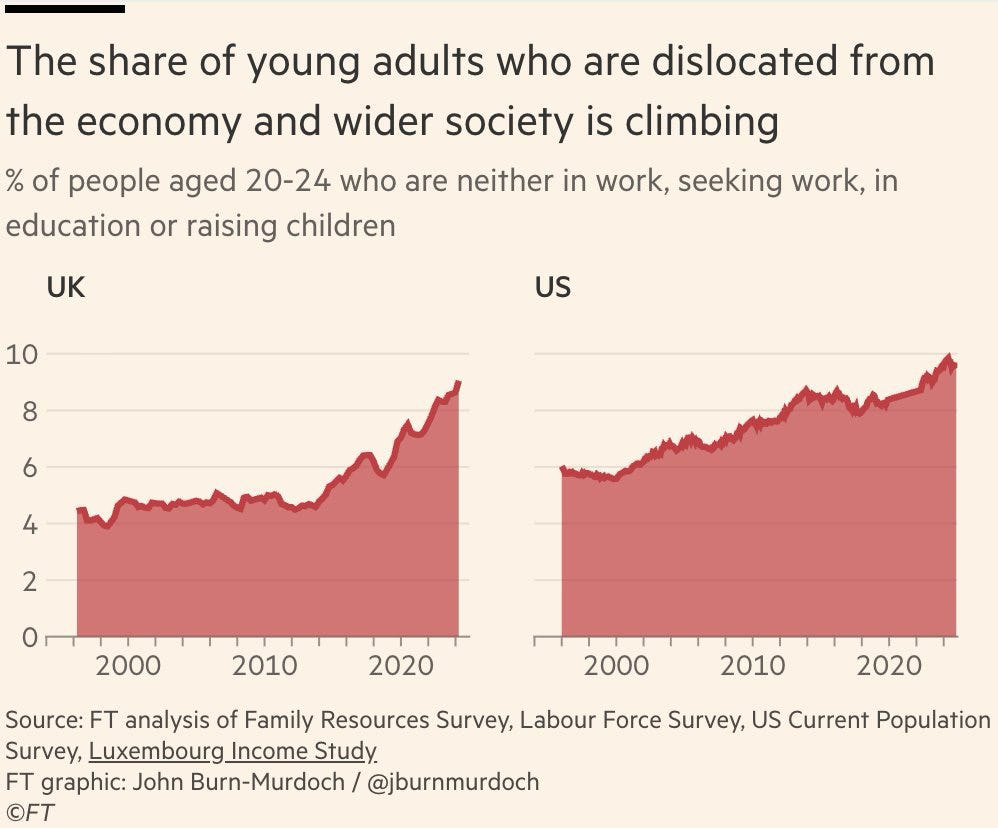
2. Young people are increasingly dislocated from the U.S. economy.
They even have a term for it: NEET (not in education, employment, or training). Today’s labor market is brutal, especially for young people.
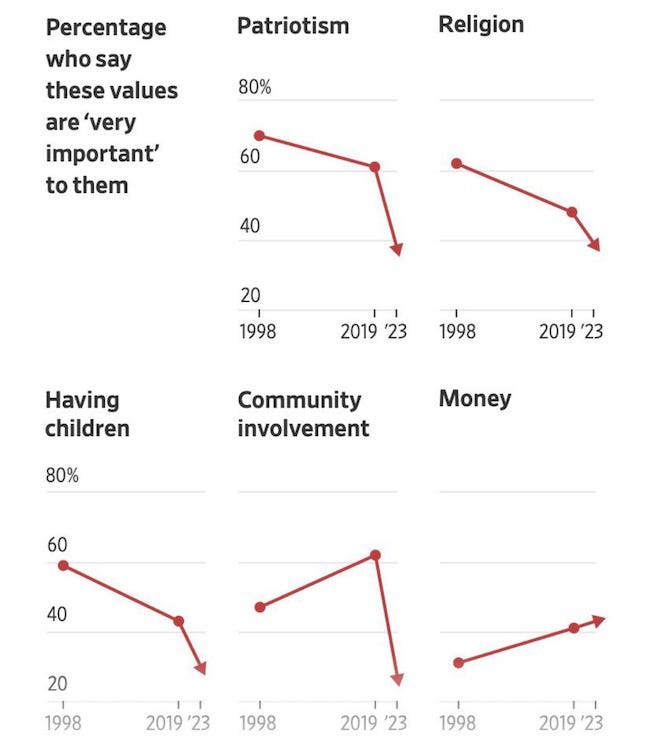
3. The only value that’s increasing in America is ‘money’.
Tocqueville’s America doesn’t look the same as it used to.
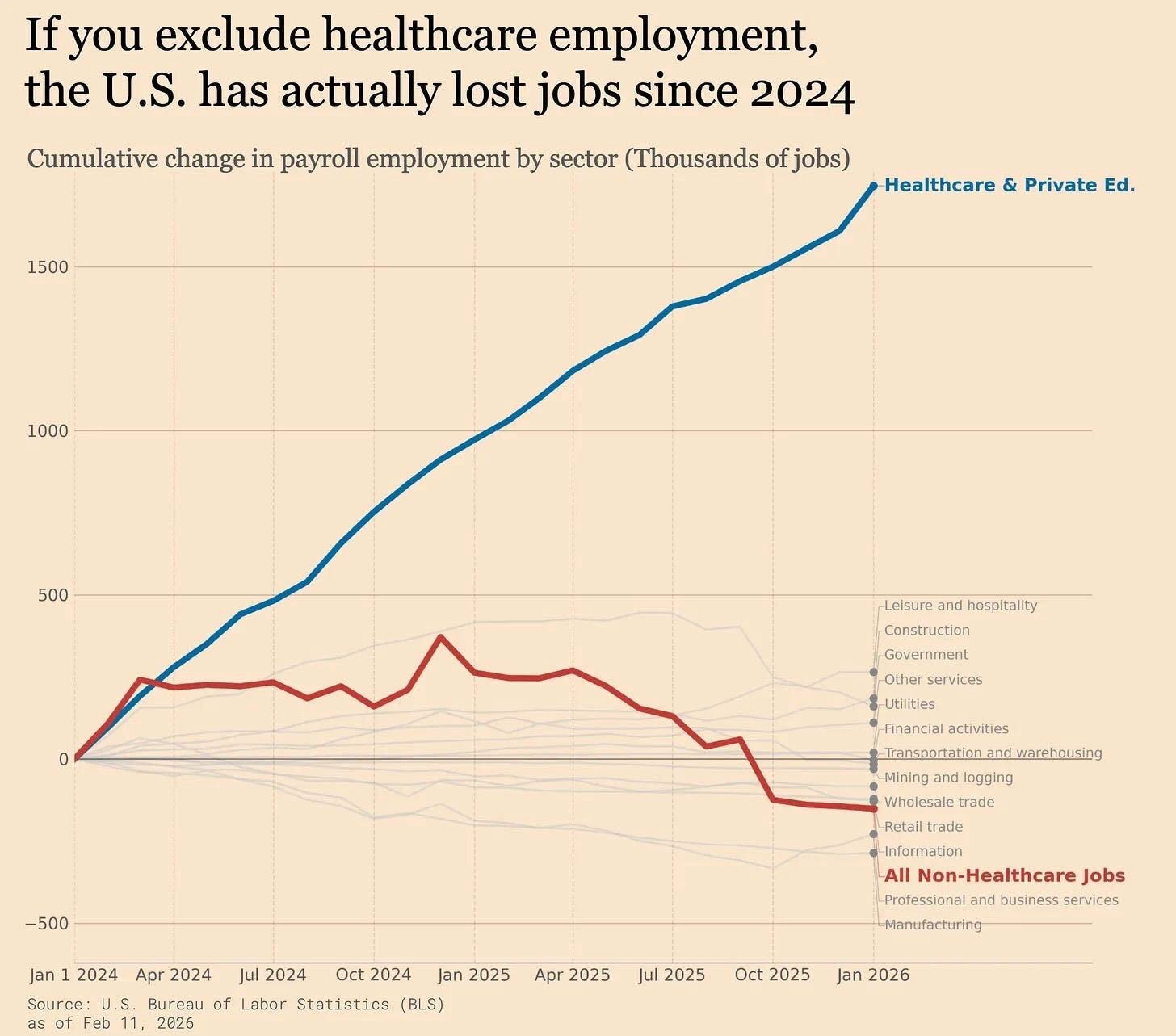
4. Excluding healthcare employment, U.S. jobs are down since 2024.
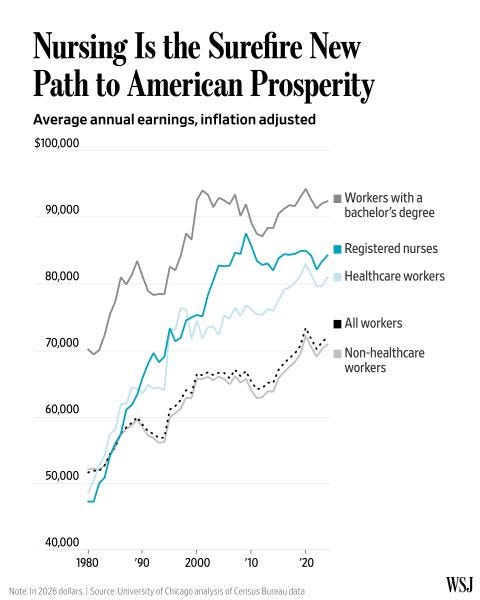
5. Nursing is the place to be.
My sister is a nurse and she loves it. Nursing is likely AI-proof. Who wants to be cared for by a soulless metallic clanker?! Not me.
I’m bullish on human nurses (for now).
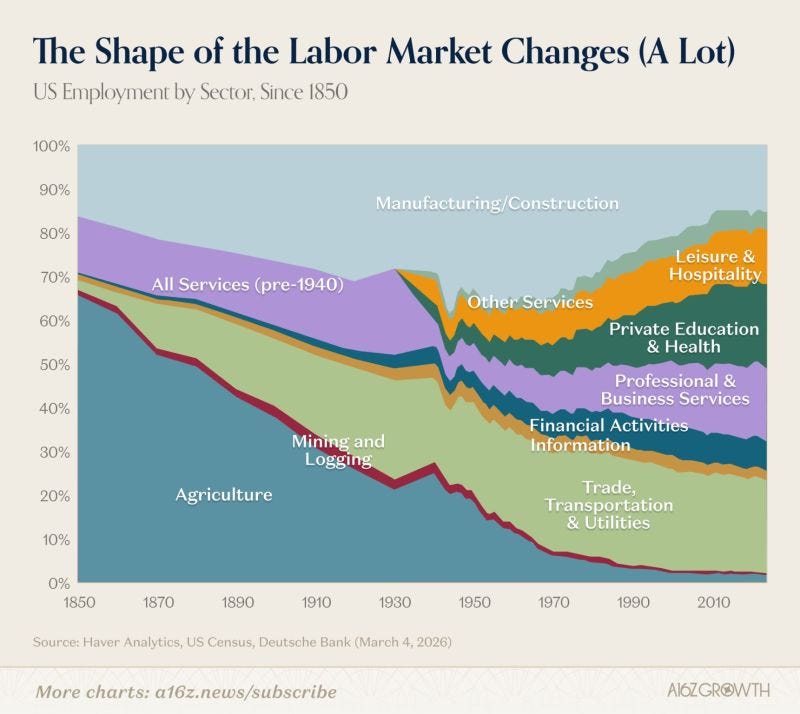
6. The shape of the labor market changes frequently.
If you told a farmer in 1800 that only 2% of Americans would be a farmer in 2026, they’d think you’re nuts.
Roughly 60% of the jobs that exist today didn’t exist 80 years ago. Your grandkids’ job likely doesn’t exist yet. How will the labor market look in a decade?
ECONOMY
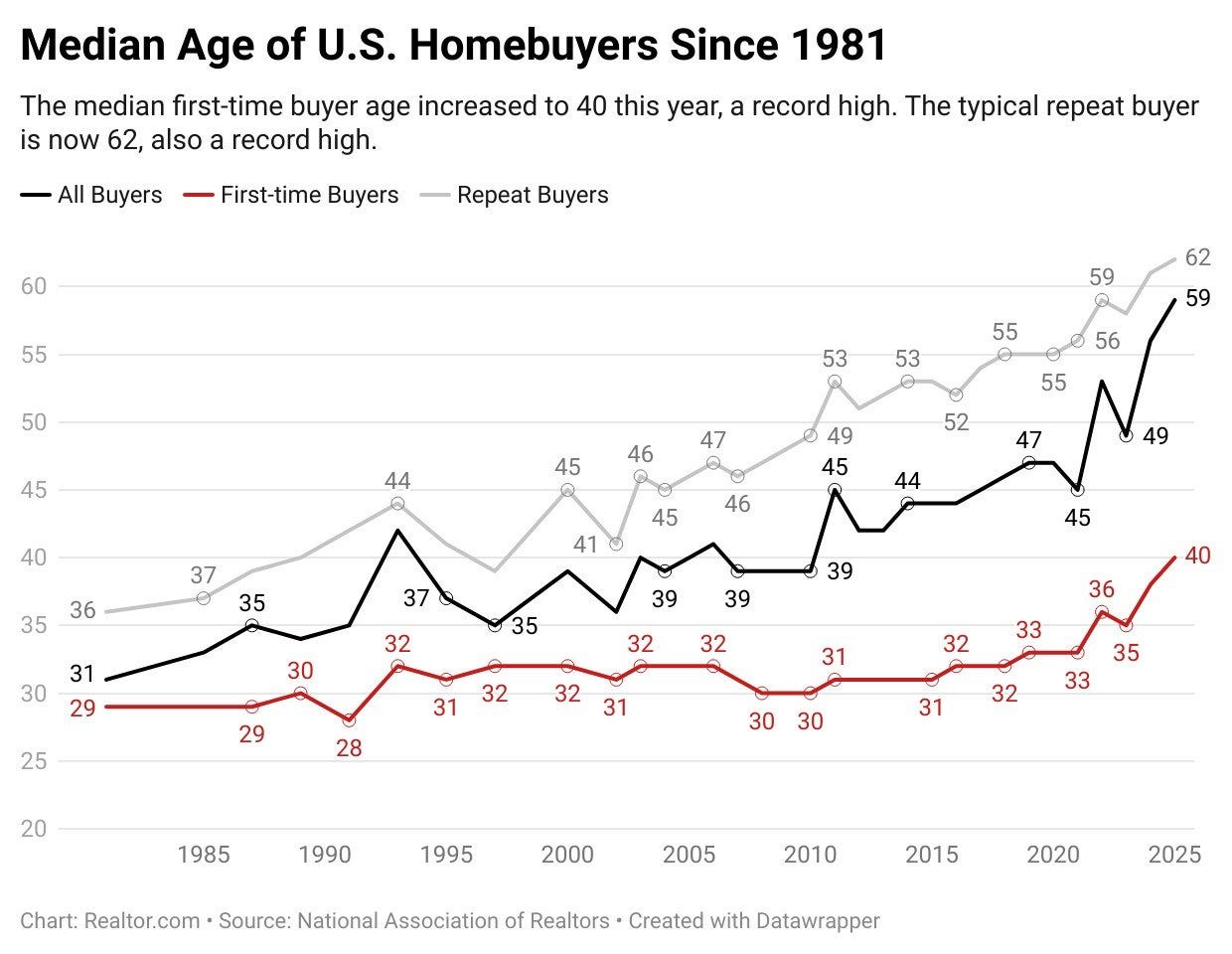
7. The median age of the U.S. homebuyer increased to 40, a record high.
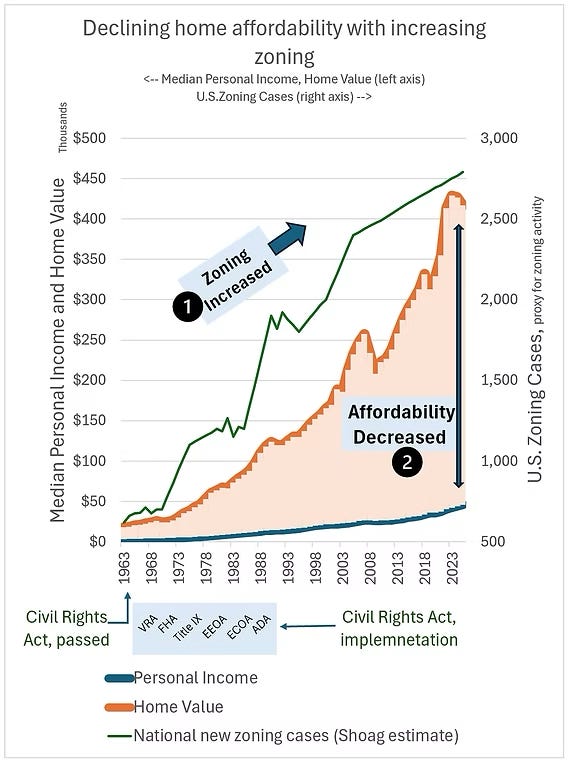
8. Zoning is to blame.
Growing evidence is showing that zoning is a huge part of the housing affordability crisis.
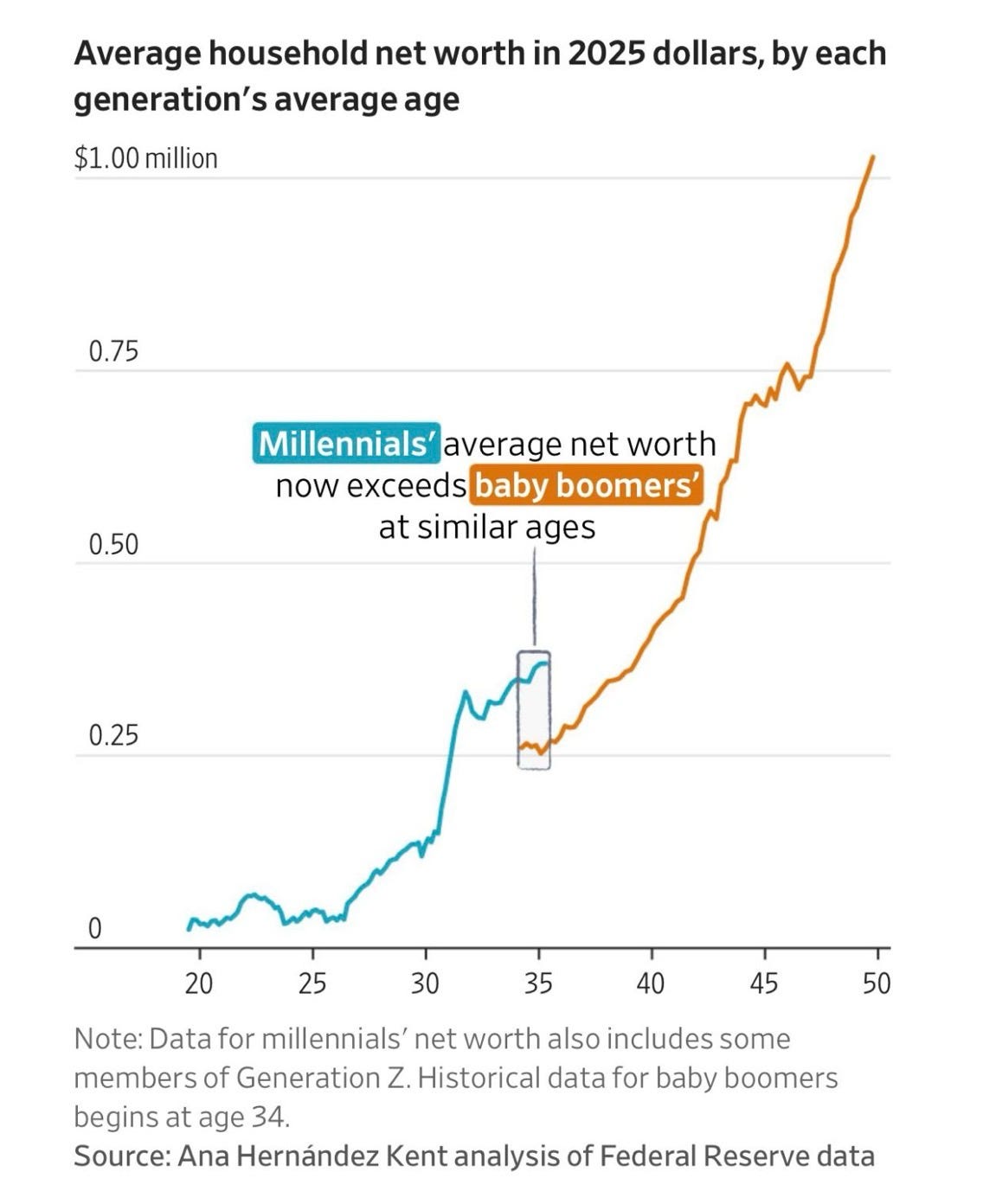
9. Millennials are wealthier than baby boomers at the same age.
Millenials are actually more rich than baby boomers were at our age. Young people are investing in the stock market, and getting richer than if they’d gotten a mortgage on a house.
President Herbert Hoover’s 1928 Republican campaign advertised "a chicken in every pot and a car in every garage”. Not much has changed since then. Even though millennials are objectively rich, many don’t feel rich because home ownership is out of reach.1
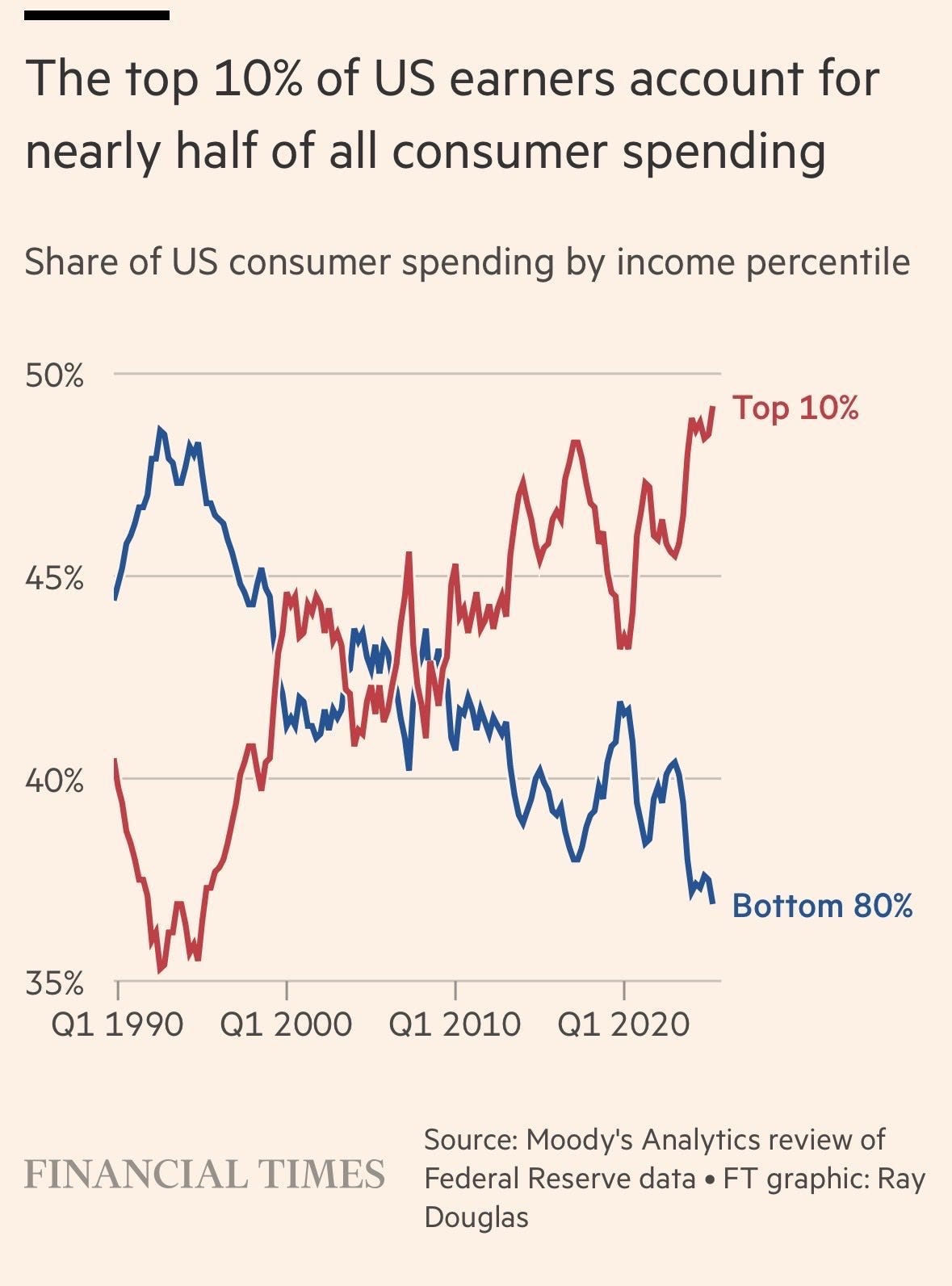
10. The top 10% of earners account for nearly half of all consumer spending.
The post-WWII egalitarian growth in collective wealth was unprecedented. Inequality is the norm throughout history - not that that makes wealth inequality right or wrong - it just is what it is.
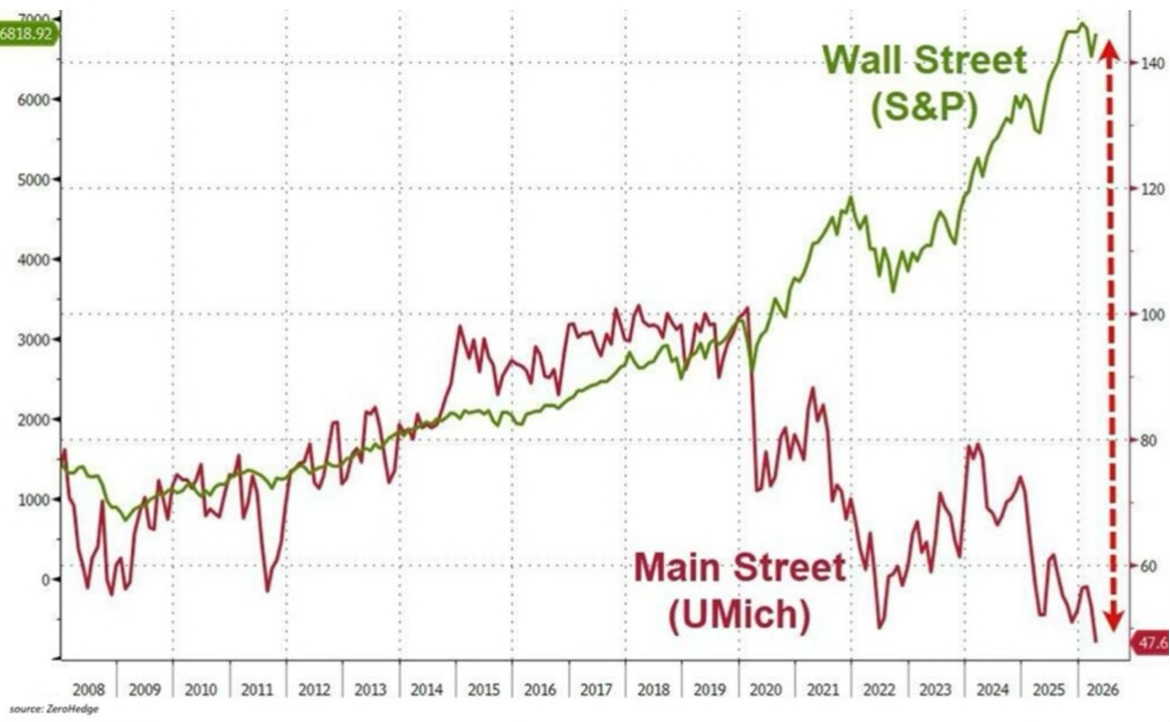
11. The S&P500 and consumer sentiment tell two different stories.
How can this be? One theory is that the S&P 500 tracks the profit engines corporations. While consumer sentiment reflects the day-to-day economic stresses that households face.
CAREER
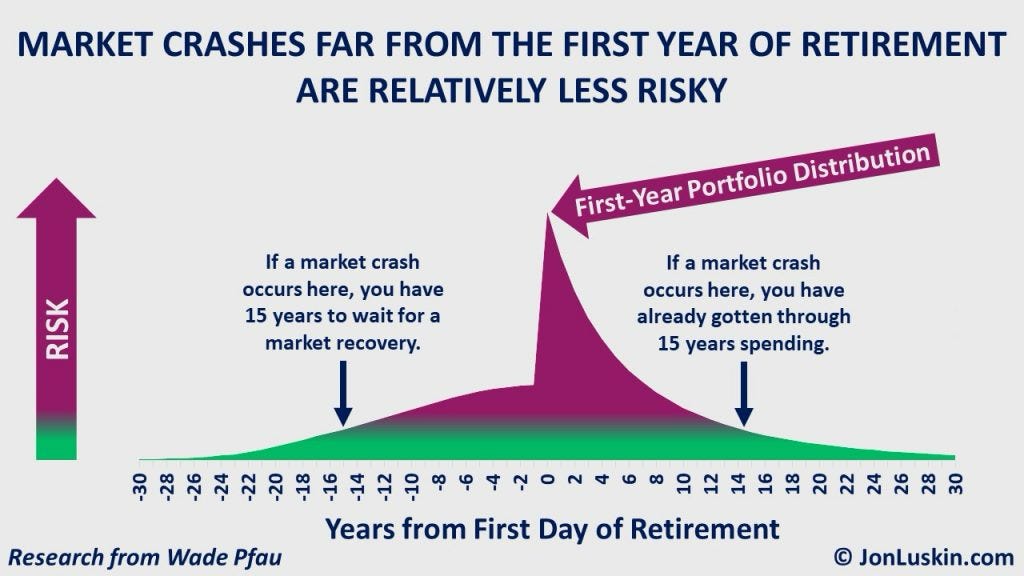
12. Your appetite for investing risk can be the highest the farther away from retirement you are.
If you’re 30, you’re likely on track to retire by 2060. Which means can take a lot of risk.
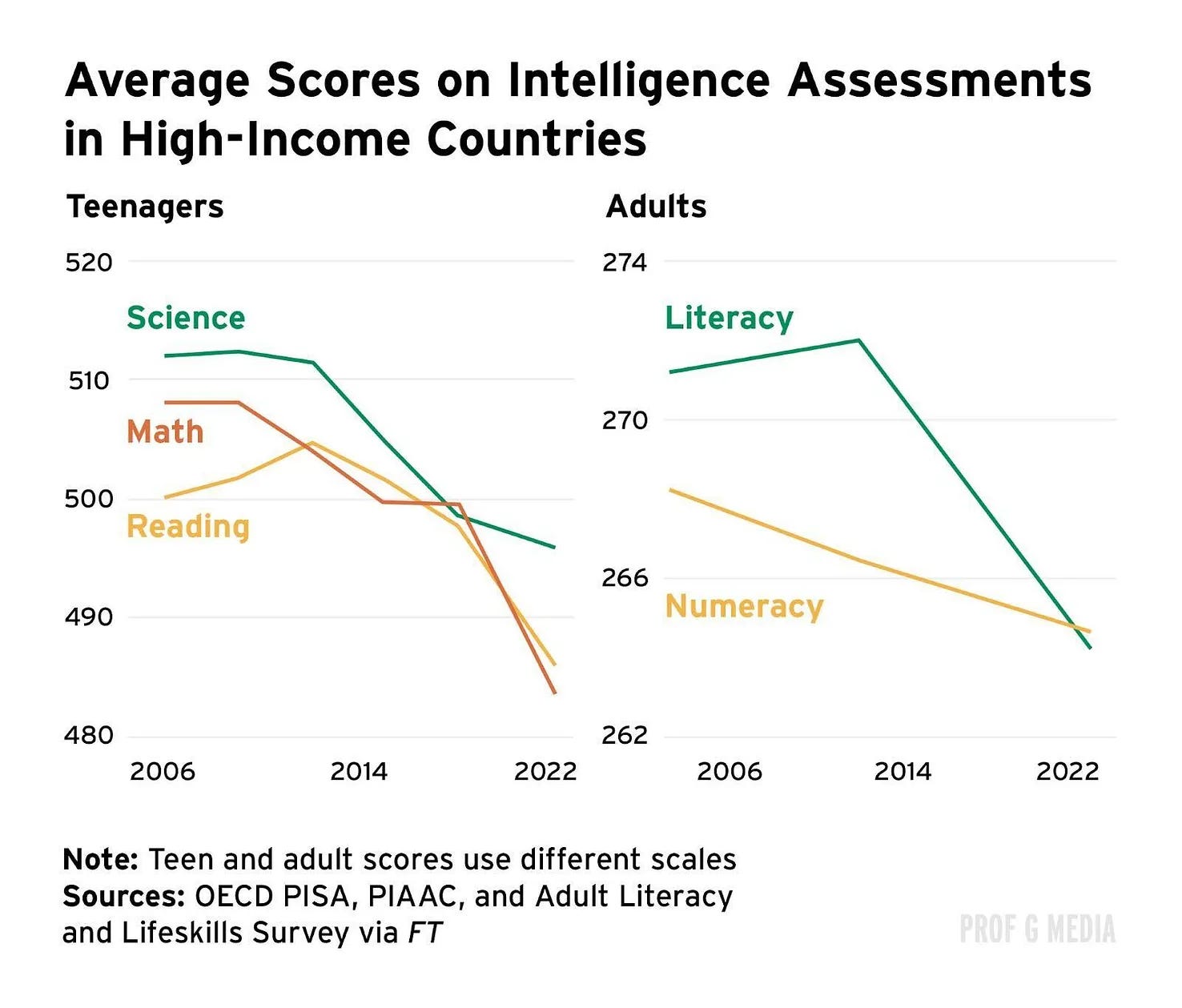
13. Average scores on intelligence assessments are decreasing.
The job market’s brutal for new grads. But competition is weak, too. If you’re a new grad, you should smell opportunity. Reading lots and working hard will take you far.
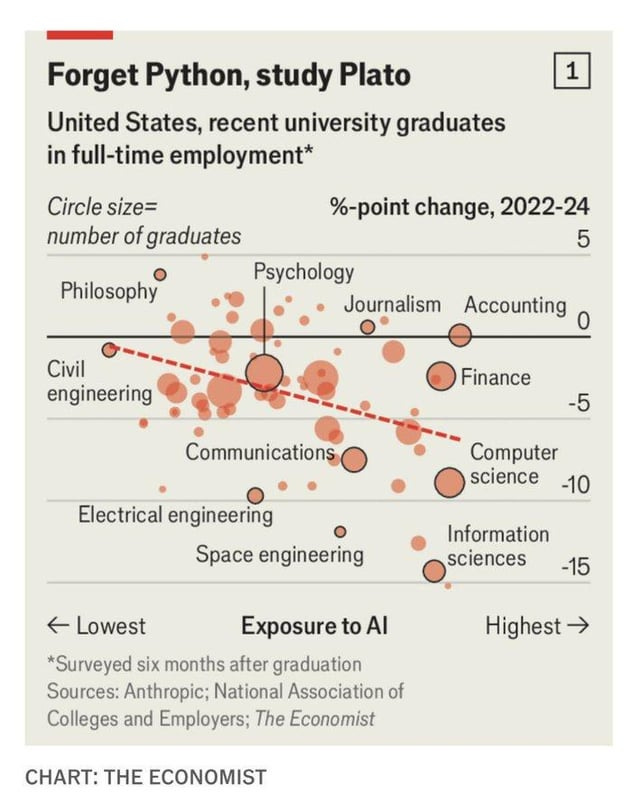
14. Philosophy majors are getting hired, but Computer Science majors aren’t.
Philosophy grads are in higher demand than computer science grads?! What episode of the Twilight Zone are we on?
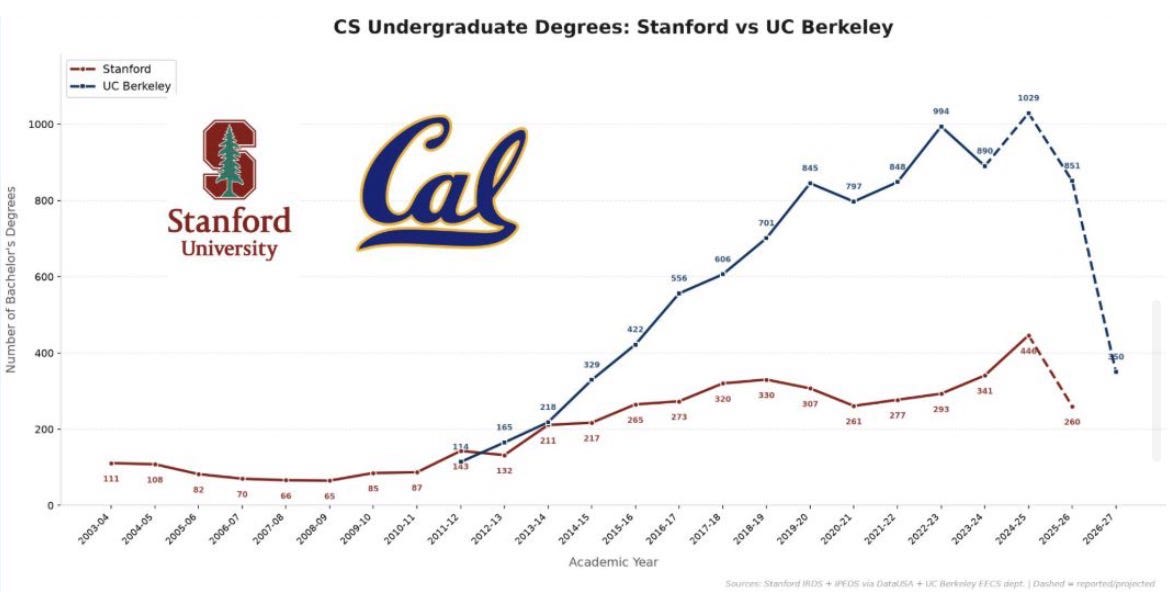
15. Computer Science degrees plummeting at Stanford and Cal.
Students at two Silicon Valley schools - Stanford and Cal - have seemingly given up on C.S. degrees.
TECHNOLOGY
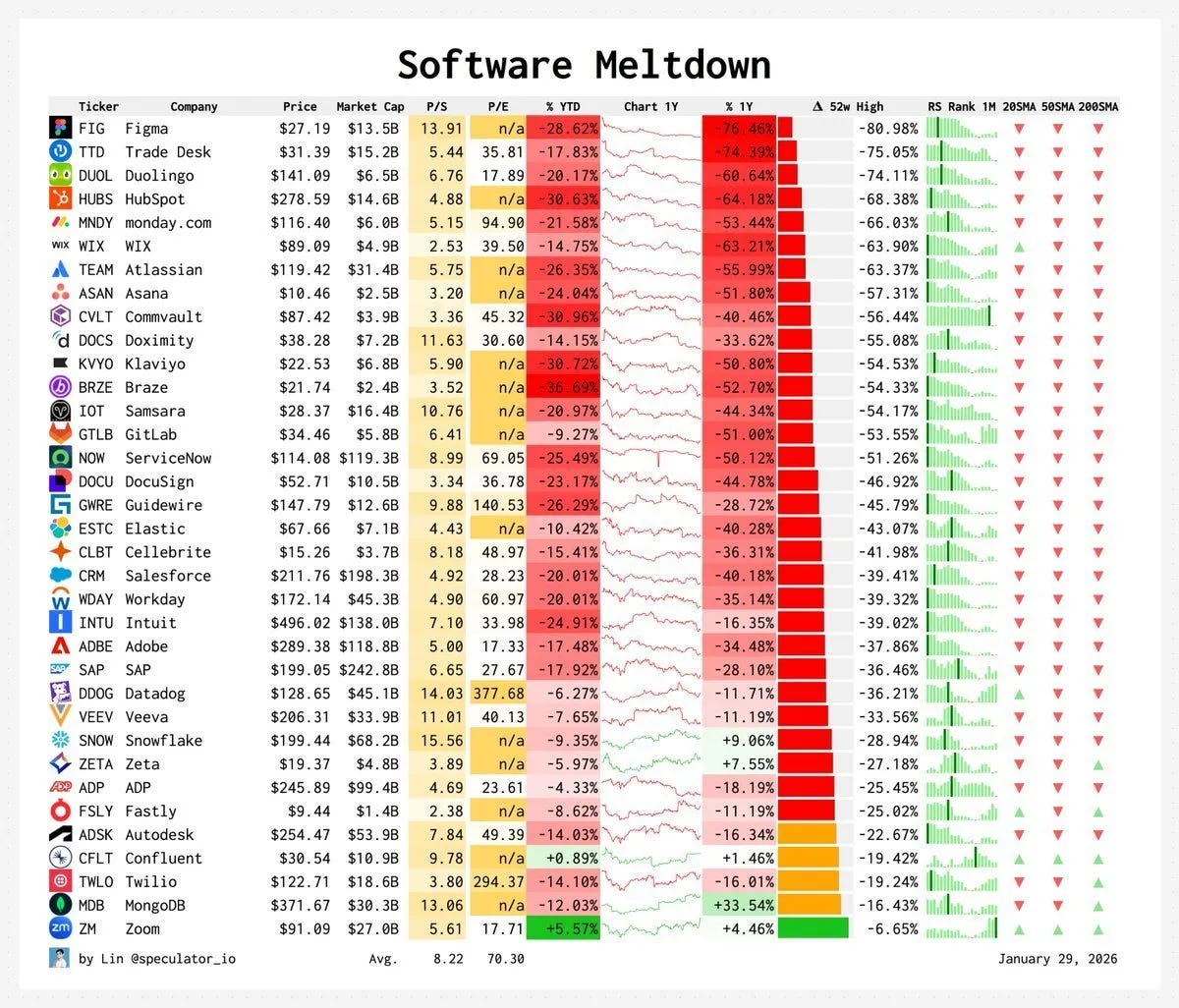
16. SaaSpocalypse!
The value of software is outsourcing the management, security, and workflows. Vibe coded CRM’s don’t get you this.
Software isn’t cooked. But legacy SaaS vendors need more hands on building in their GTM-motion to compete with AI-native startups.
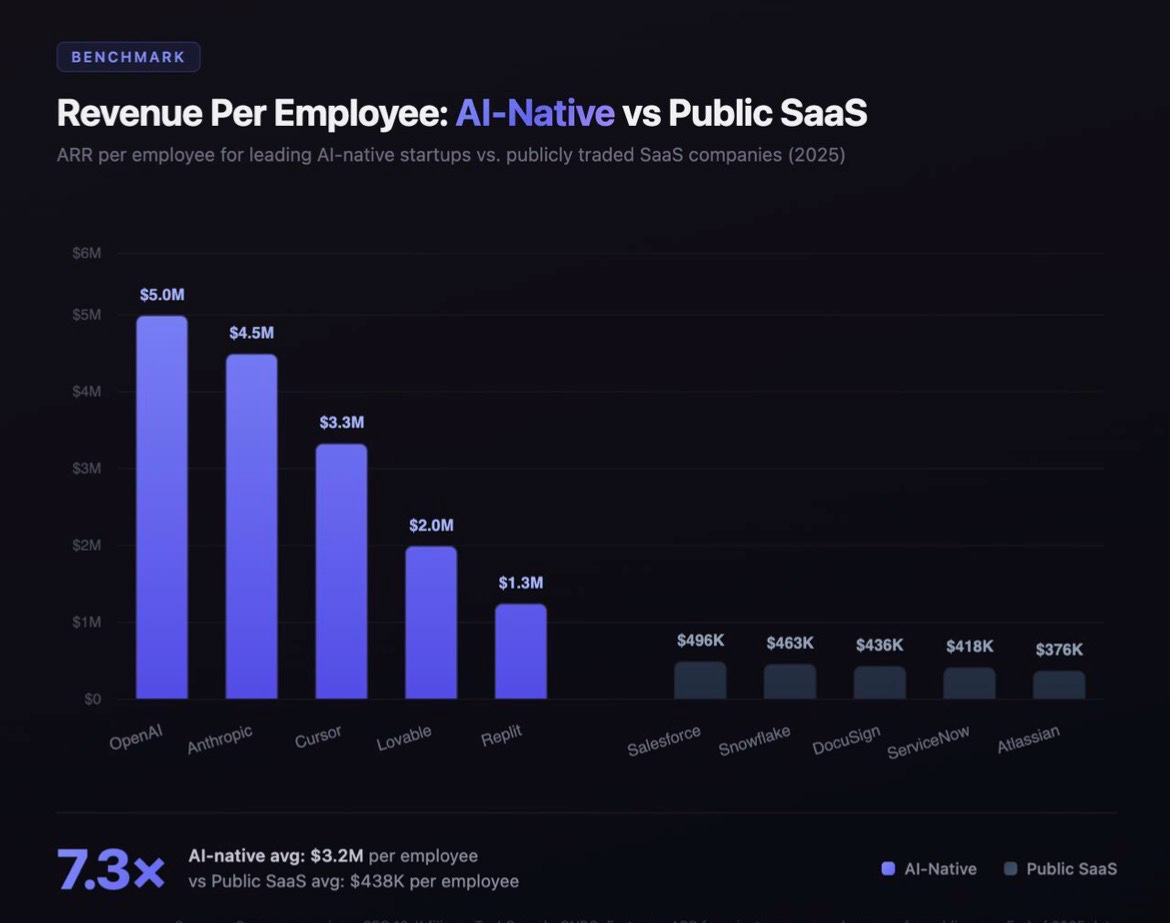
17. AI-Native startups generate more revenue per head.
There’s a lot of wind in the sails of AI-native startups. Like the social media platforms of the 2000’s, A.I. native startups are the new engines of wealth creation for tech workers.
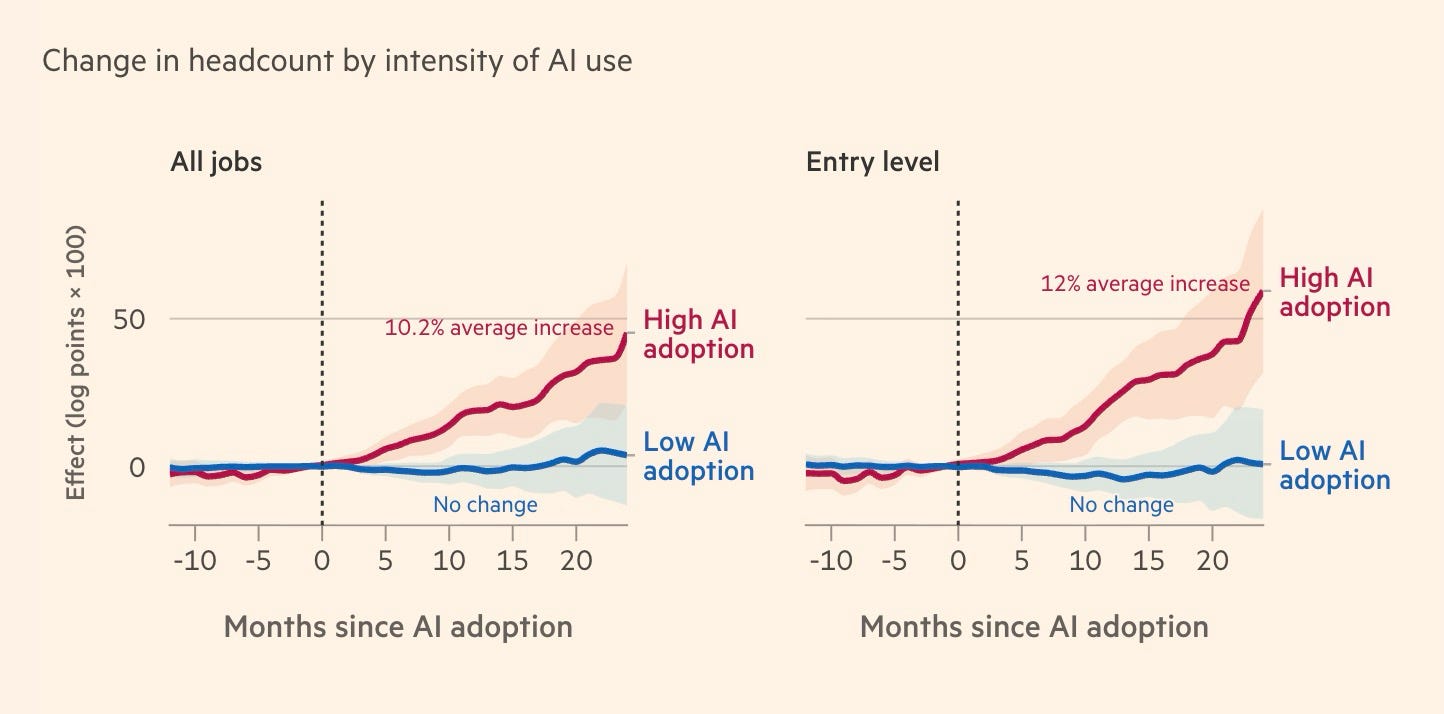
18. AI-heavy companies are hiring more.
Contrary to predictions about the eradication of white collar jobs. To quote Mark Twain: “Reports of my death are greatly exaggerated."
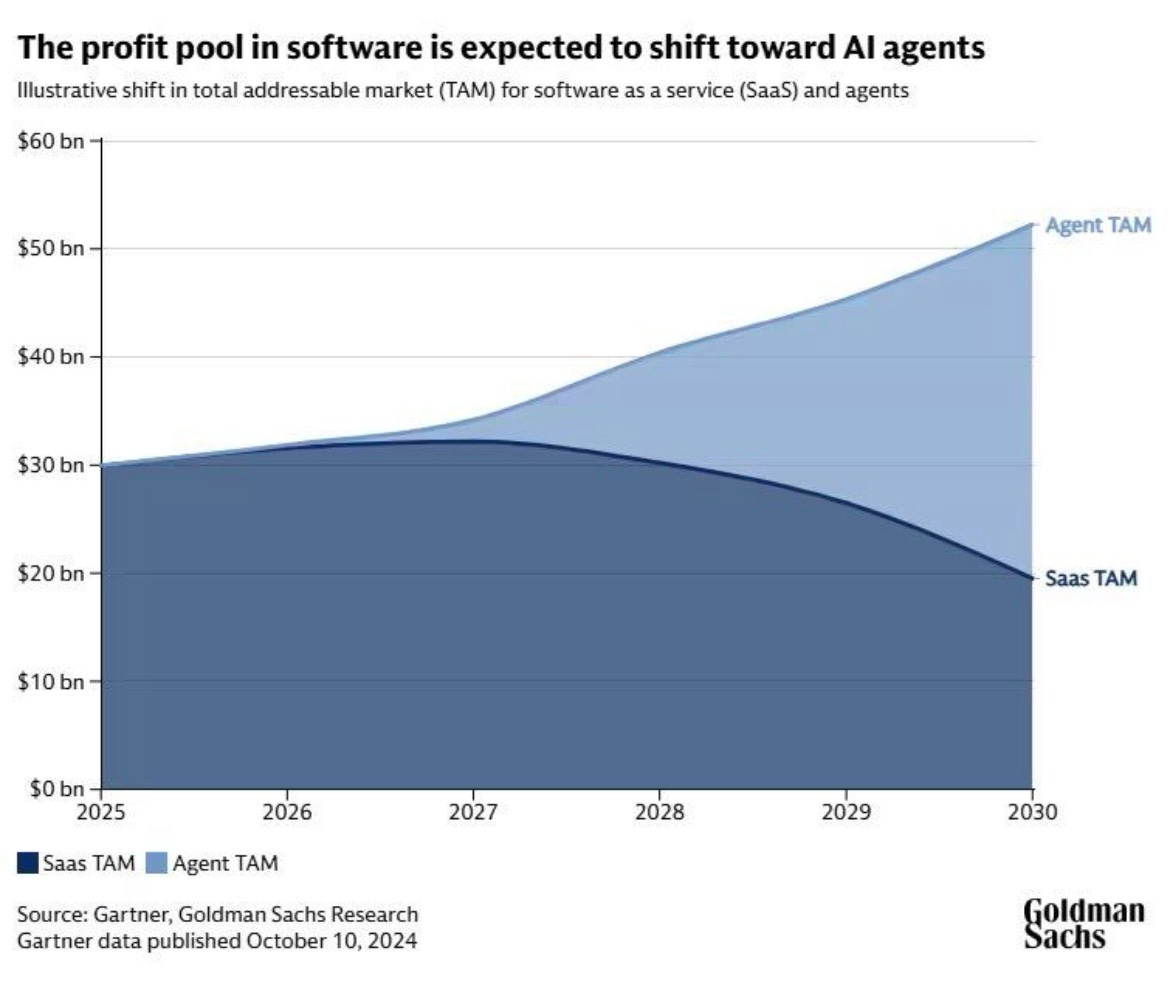
19. Future profits headed to A.I. agents.
Goldman Sachs is expecting software profits to shift towards AI agents over the next half decade. Time to stop slingin’ SaaS, and start slingin’ Agentic AI.
CULTURE
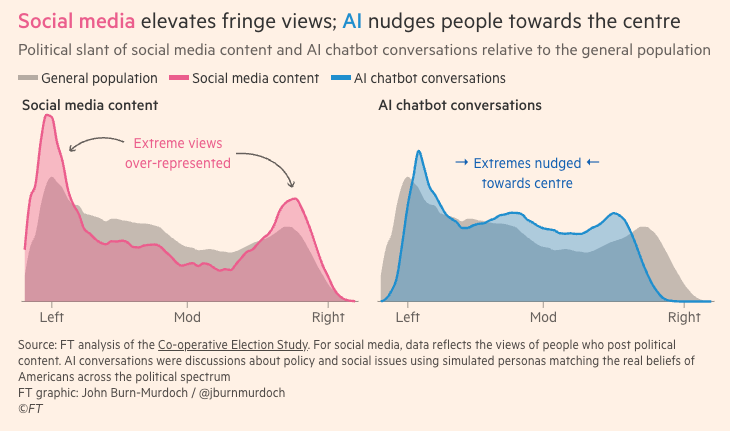
20. AI appears to be pushing everybody to the political center.
So far, this has been refreshing change compared to the polarization of the social media era.
In a decade we’ll debate whether trading the extreme views of the social media-era for knowledge collapse of the AI-era was better or worse for culture.
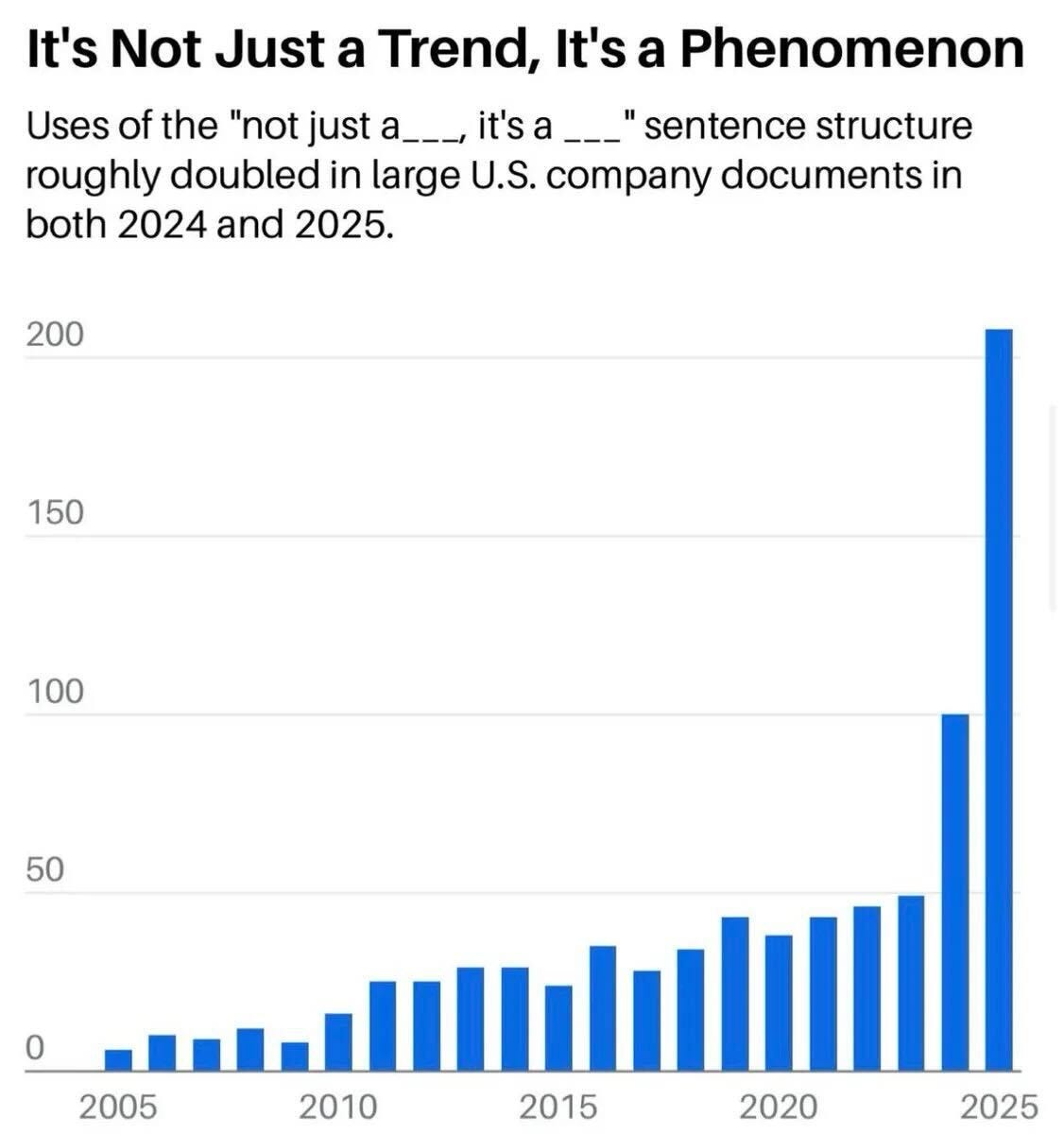
21. AI speak. ‘It’s not just a trend. It’s a phenomenon.’
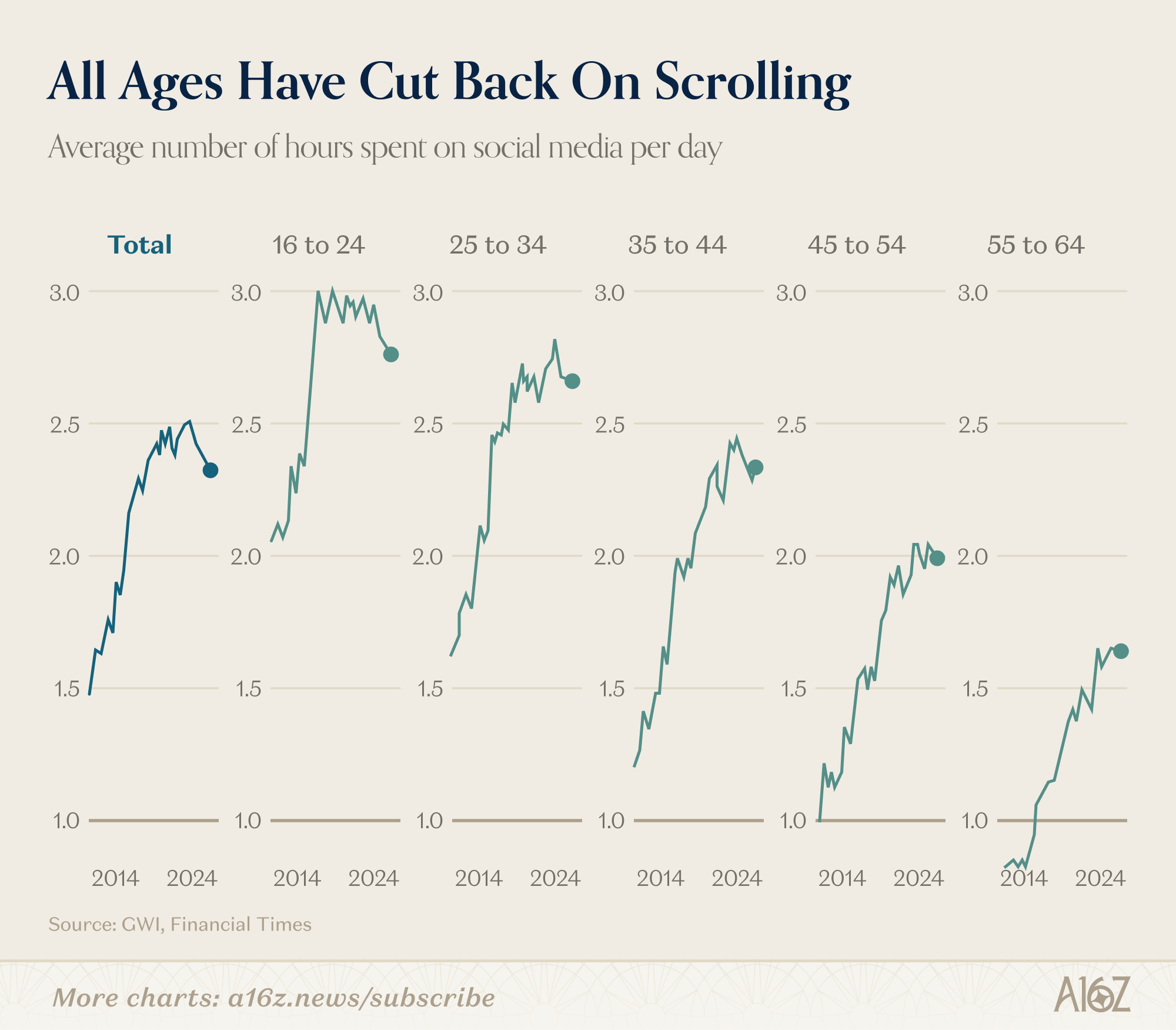
22. All ages cutting back on scrolling.
Personally, I’m beginning to rethink my entire relationship with social media.
Social media feeds are a potent cocktail of dopamine, rage, and bots. Simply taking away social media can yield similar effects as going through therapy. Yet the default path is falling into deep rabbit holes of online consumption.
I’d rather spend my Sunday afternoon researching for an essay than doom scrolling YouTube.
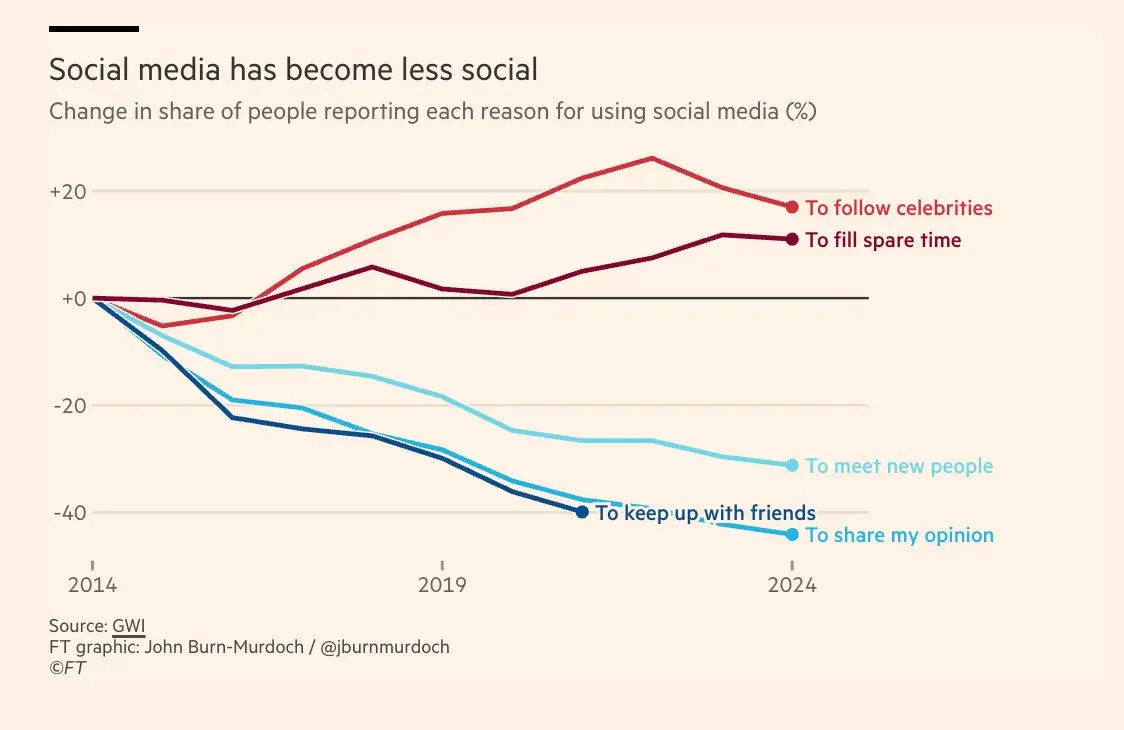
23. Social media is getting less social.
Chalk it up to dead internet theory? AI-generated content? However you slice it, people simply aren’t using social media the same way they used to.
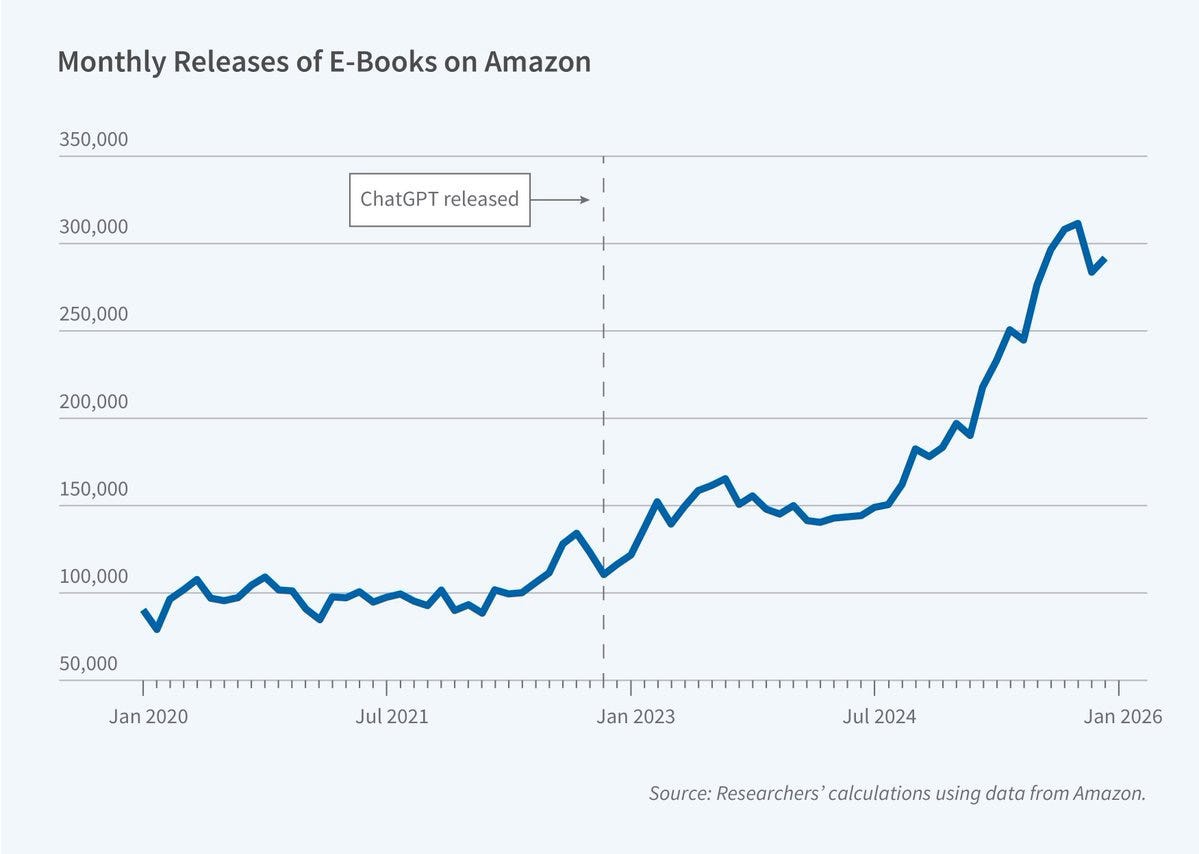
24. AI book releases are through the roof.
Two pieces by the NY Times covered authors producing hundreds of books a year with AI. That’s right, hundreds of books a year.
AI-generated e-books on Amazon should come with a Pepto-Bismol for the acid reflux you’ll inevitably feel while reading them.
Welp… that’s it for H1 of 2026. I’m always on the hunt for new ideas, which I’ll eventually share with you.
As always… thanks for reading!
— Grant Varner
Update 9/8/26: As pointed out by Age of Infovores, recent FRED data is showing that Gen Z isn’t that far behind millennials in home ownership at the same age. Will Young People Ever Buy A House? digs into the data.
3) Not surprising that money is the only one of those increasing. So many jobs are under threat, and the future has gotten so ridiculously uncertain, that many feel the need to get as much as they can. I would be the same way. The Boomers had the so-called “job for life”, which went by the wayside for my generation. That’s the price of progress, and it keeps speeding up.
9) This true, but we (I’m “Gen X”, but I hate these generational buckets) had at least an order of magnitude more buying power. I’m afraid it’s only going to get worse, and that’s tragic.
The real question is, how do the younger people at least keep up with the pace of change? Constantly learning and being infinitely more adaptable to the earlier generations.
#20 - culture - about how social media polarizes and AI nudges people toward the political center. Fascinating. Another takeaway from that is how malleable we are… if the tech bros decide to nudge us in any particular direction, they absolutely can affect the political direction of the country. Harrowing times.