

Back in the 1970’s, my late grandpa sold computer hardware for IBM.
He used to tell my sisters and I stories about closing multi-million dollar deals — back when a 1 GB hard drive deal was enough memory to support all of Ohio State University’s IT infrastructure.
Things are much different today.
1 GB of memory can fit on a memory stick for $5, not millions of dollars. As a sales professional — who’s staked his entire career on software — it makes me wonder: Is software the next cost in technology to collapse?

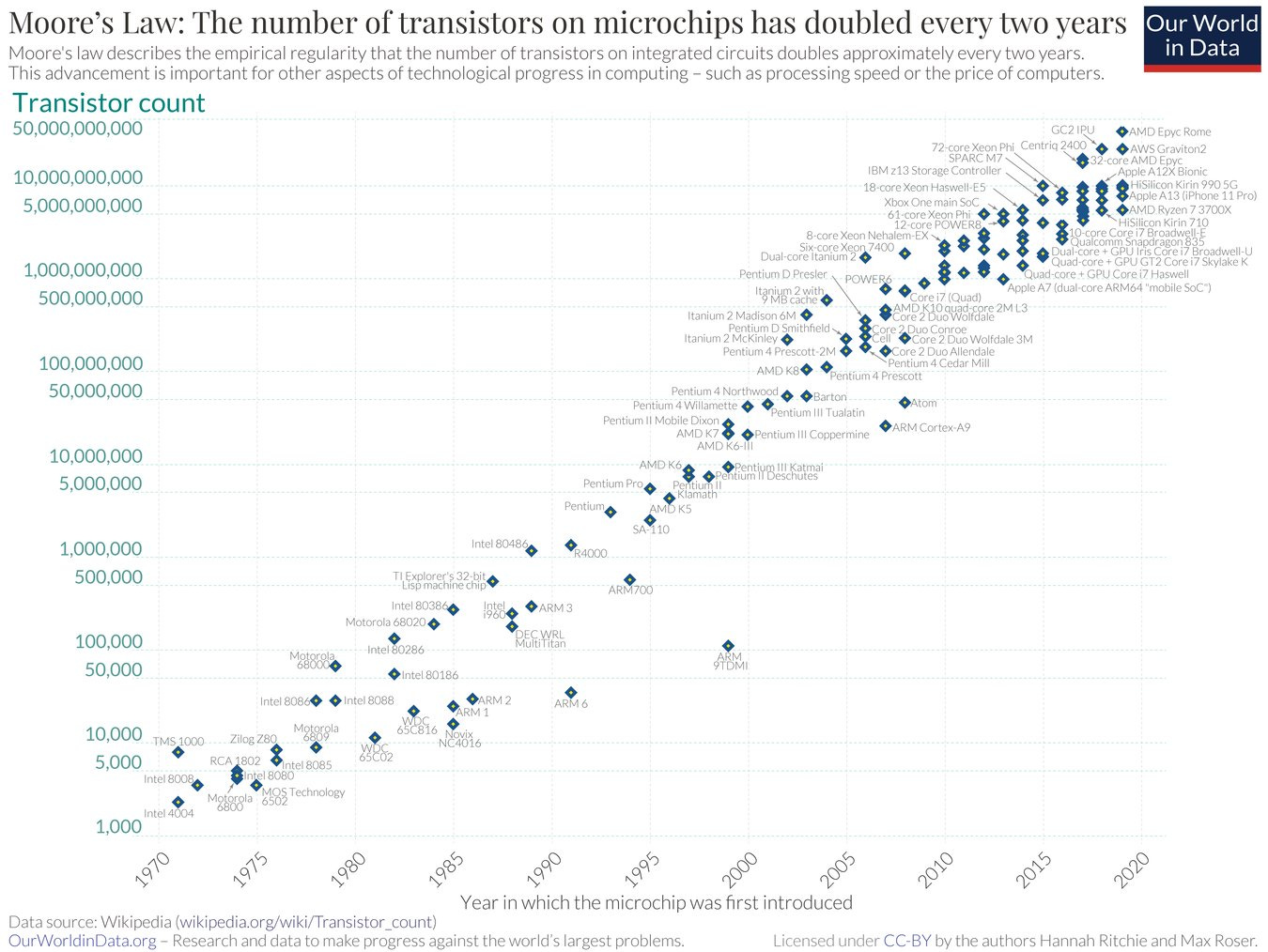
Moore’s Law
Back in 1965, Gordon Moore, co-founder of Intel, predicted that computing power would double every two years, for the next decade.
He was wrong.
Computing power actually doubled every two years for six decades — 50 years more than he originally predicted.
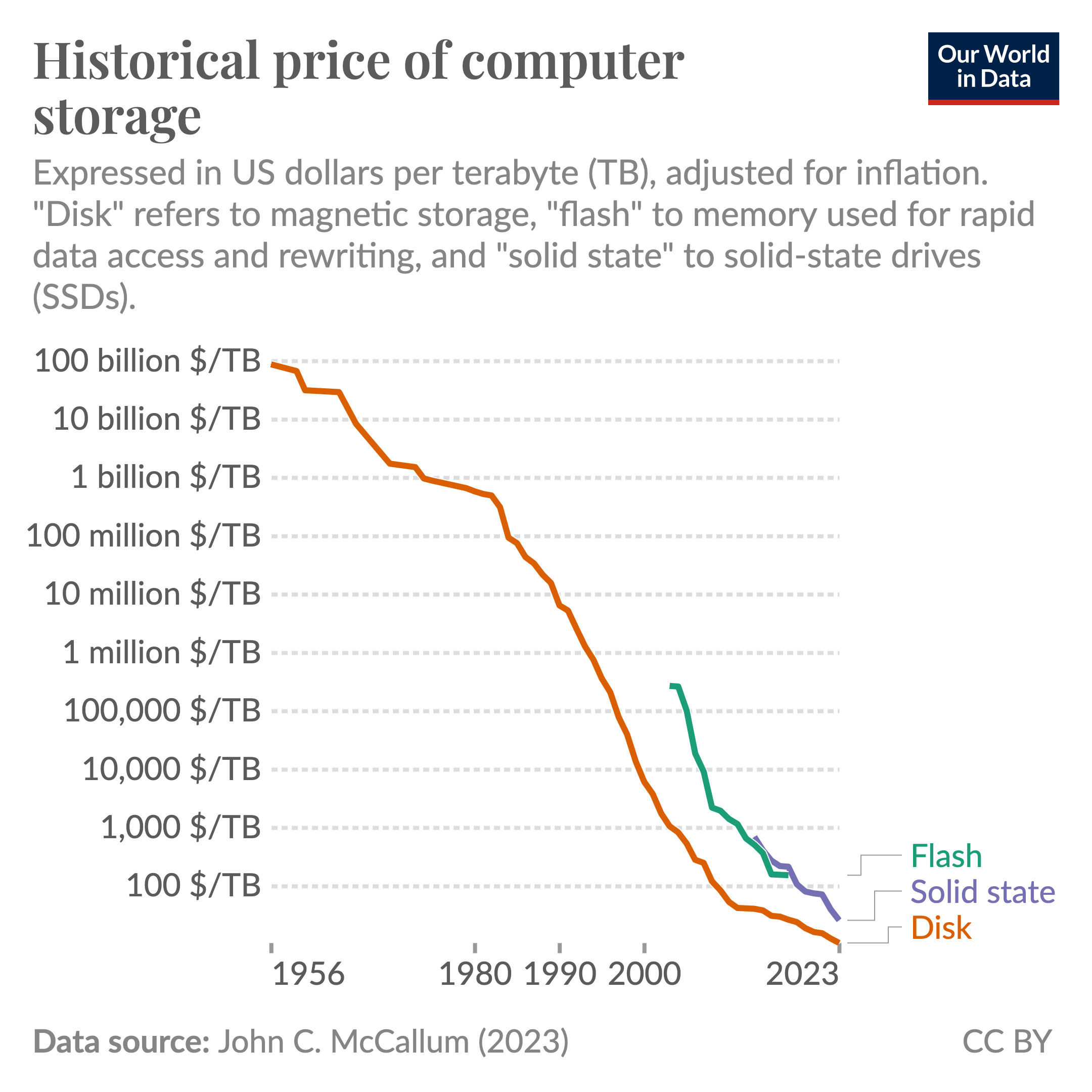
As computing power increased, so did the cost of computing power. To put just how much in perspective, the memory you’d find on a modern laptop at Walmart used to cost $20 billion in 1950.
The Devaluation of Software
Jury’s still out on the productivity gains to be had with AI. Some say AI is improving productivity.1 Others say it’s the opposite — that AI actually hurting productivity.
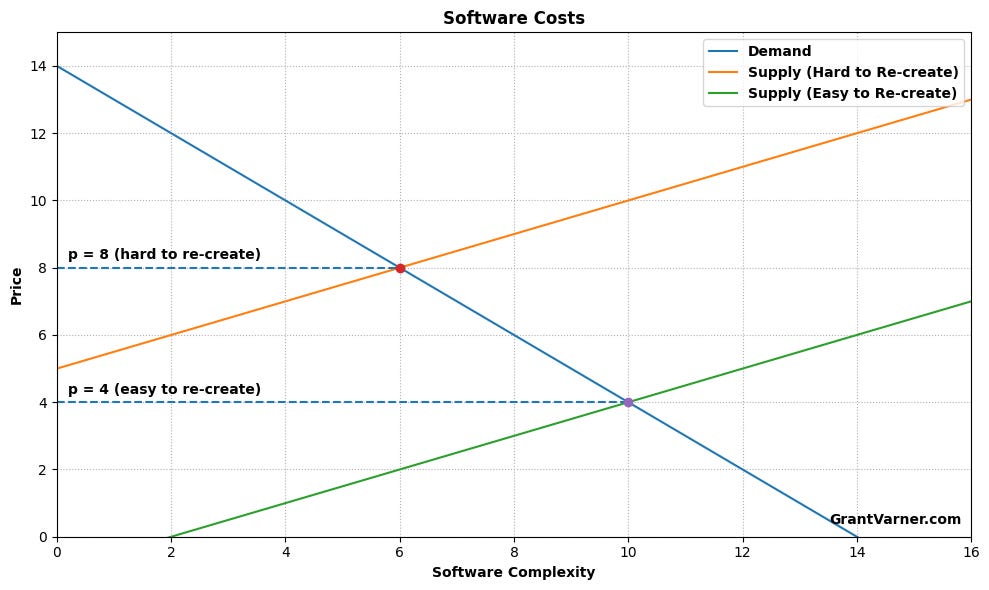
What we can say with absolute certainty is that AI will increase the supply of simple software. A 101 understanding of supply and demand tells us that:
When simple software gets easier to make, the price goes down.2
If complex software remains difficult to make, it stays expensive.
The real question is will complex software remain difficult to make?
This is changing the economics of SaaS for buyers — and the ‘ole IT question of “should we build or buy?” Before AI, engineering time was expensive ($200k/year) and SaaS was cheap ($50/seat). It made zero sense to build your own CRM, SMS, or Email platform. Today, that equation is flipped.
With Agentic Engineering, the cost to build is collapsing. A lean team of engineers (or even one “Forward Deployed” architect) can spin up fully custom, enterprise-grade workflows in a weekend. Why pay $10k/year for your SMS platform when a developer can Claude Code one for $200 in AWS compute?
Here’s the reality: the cost of building the alternative is the moat for SaaS. The next 5 years might look less like “which SaaS tool should we buy?” And more like “why are we buying this at all?”
All this doesn’t mean companies like Salesforce will go away. But I am afraid that because it’ll become increasingly difficult for early-stage tech startups to break in because buyers can easily build themselves. While it’ll be great because so much innovation will be happening within IT departments with AI. But not great for any fledgling software startup trying to find their niche in the market.
“A truly great business must have an enduring ‘moat’ that protects excellent returns on invested capital.” — Warren Buffett
Tech Innovation Isn’t New
In a 2014 Stanford guest lecture, Peter Thiel explains why some businesses thrive, and others become obsolete.3
“The dynamism of new monopolies itself explains why old monopolies don’t strangle innovation. With Apple’s iOS at the forefront, the rise of mobile computing has dramatically reduced Microsoft’s decades long operating system dominance.
Before that, IBM’s hardware monopoly of the 1960s and ‘70s was overtaken by Microsoft’s software monopoly.
…the history of progress is a history of better monopoly businesses replacing incumbents. Monopolies drive progress because the promise of years or even decades of monopoly profits provides a powerful incentive to innovate.”
As technology evolves, businesses create new value with something different.
For example, Google invented PageRank algorithm, an entirely new way to index web pages. For years, it was the easiest way to search for information on the web.4
They reaped the benefits for years with monopoly profits.
Creativity Is Always Valuable
I’ve staked my livelihood on selling software — just like my grandpa Ken did with hardware. Each wave of new technology raise the bar for what’s possible — and make other technologies obsolete.
If you solve expensive problems that are difficult to solve, you’ll have a competitive moat.
Same as it ever was. Before AI and always will be.
Thanks for reading.
— Grant Varner
Applications like Waii make it easier for business users to generate code with natural language, like this example of converting natural text into SQL.

I’m seeing examples of this working in the tech industry—Pitt University recently launched a Cloud Innovation Center—where they employ students to re-build the simple software they used to buy. Their work is published in this GitHub repo.
Thiel’s 2014 Stanford lecture:
This Reddit thread explores how Google was different from other search engines. Interesting to read first-hand accounts of how Google was significantly better than the alternatives.