

I’m 29 going on 30. Entering the job market during COVID, immediately followed by AI marketed as the “killer of entry-level jobs”, combined with the most competitive entry-level housing market has felt like riding a roller coaster after lunch.
Here’s what I’ve learned on my personal journey as a Gen Z building wealth in America.
Table of contents
V. Convert Your Labor Into Capital
I. How To Get Rich
"In 1,000 parallel universes, you want to be wealthy in 999 of them. You don't want to be wealthy in the 50 of them where you got lucky.” — Naval Ravikant
Money is a means to an end — not an end in itself. Beyond covering your basic necessities, money on its own doesn’t make you any happier with your life. But what money enables you to say ‘yes’ or ‘no’ to can bring you happiness.
In short, money gives you options. I don’t know about you, but I’d rather have more options than less — if the effort to get there is worthwhile.
My goal is to teach you how to achieve $1,000,000 net worth in America. Why $1,000,000? Because our generation can’t assume Social Security alone will provide the retirement we want. The faster we can wean ourselves off of social benefits, the faster we can get the federal budget deficit under control — which is better for the future prosperity of America and its citizens.
Don’t fixate on the actual number because the actual dollar amount matters less than the principle: getting a high enough net worth to have options in life and not have to rely upon the government for your retirement.
Most importantly, this guide aims to give you a high-probability path to wealth. I intentionally avoided moonshot startup ideas, lucky stock picks, or get-rich-quick schemes. This guide is for the average American working a 9-to-5 job. It’s how I accumulated wealth, and I aim to teach you how you can do the same using the process I did.1
The flip side is that it requires hard work, discipline, and intentionality. Believe me, the effort is worthwhile. The ability to say ‘yes’ to a last-minute trip to Egypt or ‘no’ to a crappy job with a boss from hell is the kind of freedom wealth gives you.
Why should you trust me?
For one, I have absolutely nothing to gain from you reading this. I make enough money that I don’t need to sell you a course about how to get rich.
I’ve also earned a grand total of zero dollars and zero cents from this newsletter, so I have nothing to gain, other than the intrinsic satisfaction of you getting wealthy, loving life, and having the freedom to pursue your own happiness — whatever that means for you.
Last but not least, I’ve already done this. At 29, I’m not a millionaire yet, but am well on my way (God willing). I couldn’t help but share this now, but as I progress to different stages of my wealth journey, I’ll share more.
Being born in America is better than winning the lottery
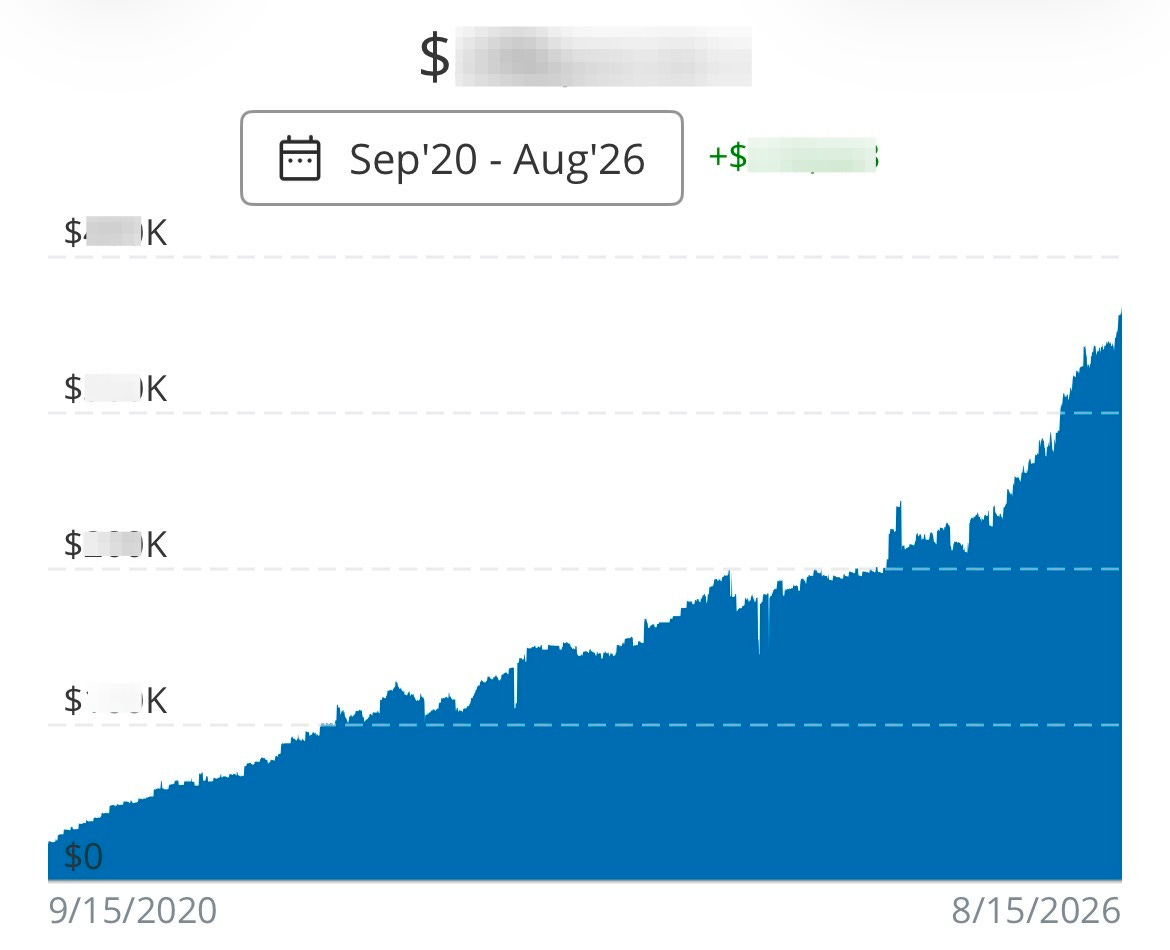
I’m 37% of the way to becoming a millionaire — or halfway if you count the time it takes to accumulate $1M. But I did win the lottery.
I was born in America to two married parents — which is actually better than the lottery. Warren Buffett called this the “ovarian lottery” — the idea that simply being born in America makes you more likely to end up more financially successful than 99% of the world.
If you were born in America, healthy, to a stable family, you’ve already won several enormous lotteries. Don’t waste the head start. Morgan Freeman has said something similar:
“I don’t think wealth and genetics have anything to do with each other actually. If you’re born in the US, it really doesn’t matter the condition of your birth. What matters is what you inherit from your nurturing, from your environment. If say you’re born as one of the untouchables in India, there you are. And if you’re born into the super rich, there you are. Here you can be born to the super rich, but three, four generations down the line, it’s gone.”
Do I know what it’s like to make it in America as an immigrant? No. But I know it can be done — my wife did it. If you’re an immigrant, I can’t guarantee this advice will work for you. American immigrant or not, something in here might be useful on your own journey.
Regret minimization
Do I have regrets about my path? Yes! Would I do it again? Hell yes! Spending-wise, there’s nothing I regret at all. During my wealth building journey, I paid for a wedding, trips to Europe, Egypt, and Put-In-Bay. I never regretted money spent on experiences. If anything, my biggest regret is not having the balls to quit crappy jobs in the past.
But when you go from single, to engaged, to married, the stakes get higher with each milestone. When quitting a crappy job means no income for the family, rather than just yourself — the prospect of quitting isn’t realistic and an emergency fund becomes all the more important.
II. Making Money
“Your income today is the bedrock of your wealth tomorrow.” — Nick Maggiulli
As your income increases, so does your wealth. Your income today is the bedrock upon which all your future wealth will be built tomorrow.
But before teaching you how to make money, I’d be remiss not to explain why you should make money. After all, money is merely a means to an end, where its value is derived by what you actually do with it.
Why make money?
As Kahneman and Deaton found in their 2010 paper, no one is immune to unhappiness, no matter how much money you have.
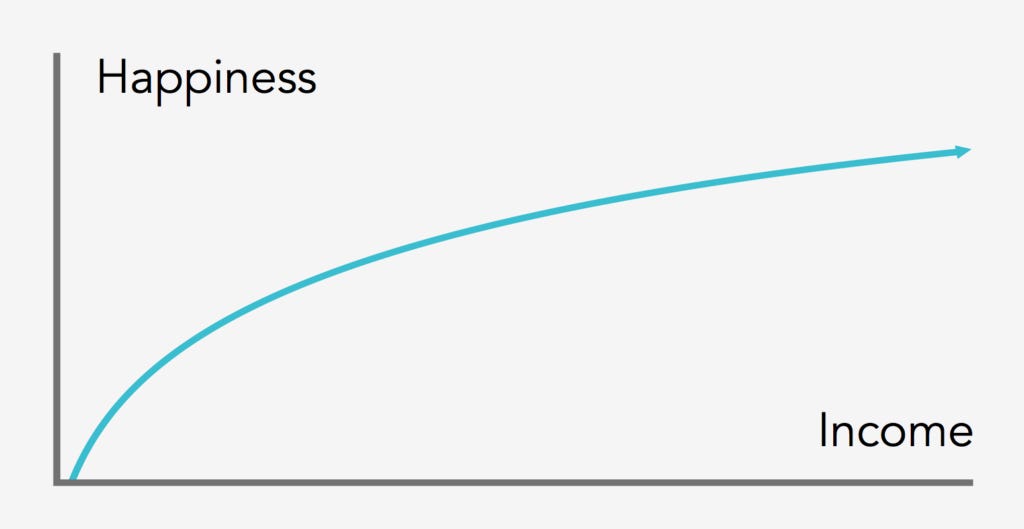
Money doesn’t buy happiness, but what money allows you to do can make you happier. The comedian Bill Hicks once said, “Money can't buy happiness. But it can buy a jet ski and have you ever seen someone frown while riding a jet ski?”
All this being said, the ideal strategy if you’re looking to maximize your happiness is by having enough money to alleviate struggle and worry — then focusing on things other than money. As the saying goes, “Money can’t buy happiness, but poverty can’t buy anything.”
In the same way that salt enhances the existing flavor already in your food, money elevates the experiences you have in life.2 The best argument for making more money is that it can enhance the flavor of life by giving you something, like a nice ribeye steak. Or taking something away, like a crappy 4-hour commute.3
How to make more money
Making more money, in the simplest terms, comes down to finding work at the intersection of:
What you’re good at.
What you’re interested in.
What people will pay for.
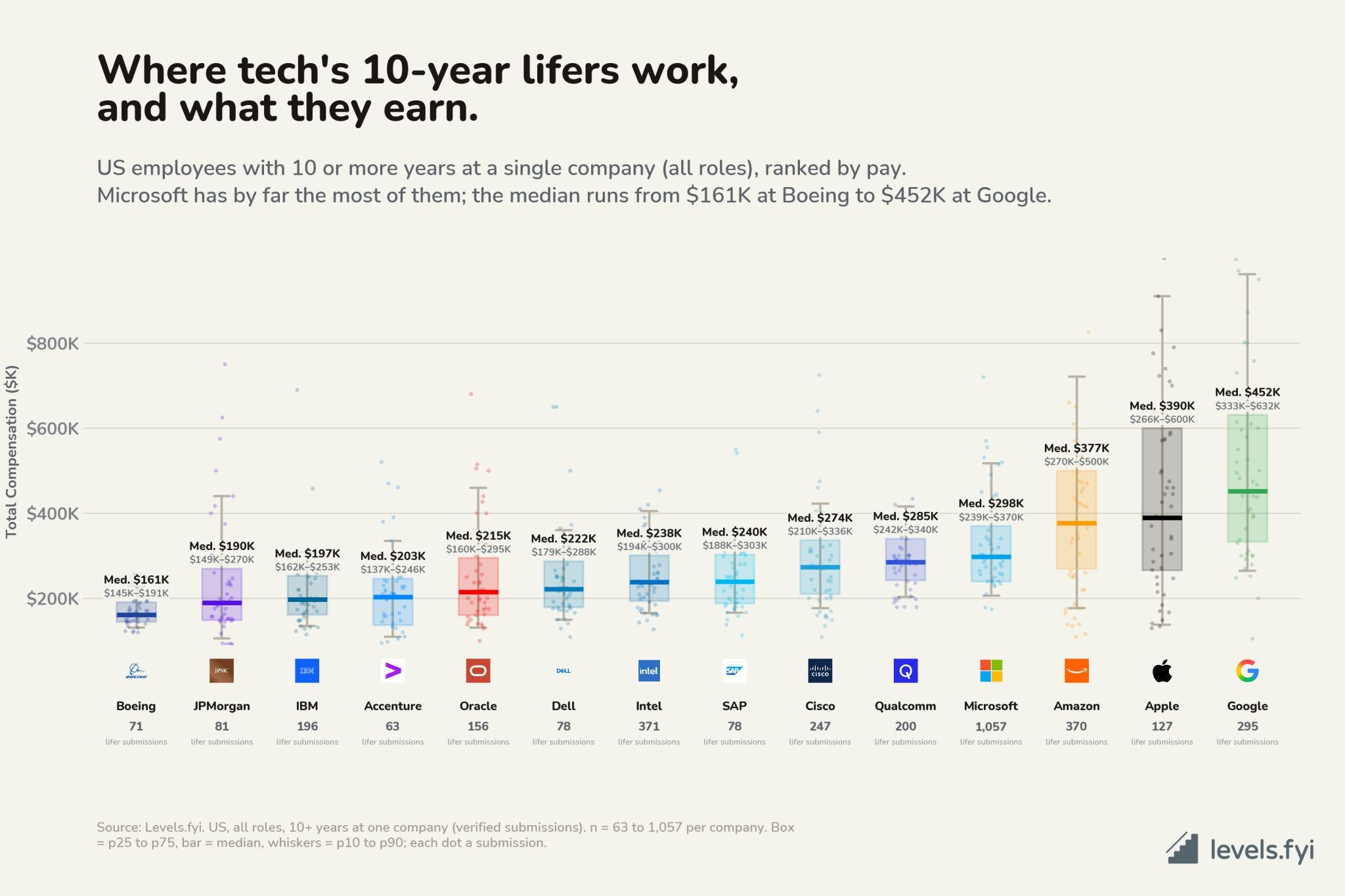
Everyone’s path is different, but my path to high income was through a career in tech sales — which has been lucrative for me, but hard work. Given a second chance at life I’d do it again 10x. Tech sales is one of the best paths to a high income, especially if you don’t have a professional degree.4
Tech sales is the epitome of what Hannah Zhang calls the low status, high income path to wealth. You face rejection constantly, deal with the difficult customers, and survive corporate politics all day long… but you make great money.5 It’s also leveraged, which means you have the opportunity to make a ton of money if you’re selling a high-ticket item like enterprise software, commercial real estate, or cloud infrastructure.6
Once you get your foot in the door selling something with a high ceiling for earnings, the next step is to stick around for a long time.
Ever heard of Joe Flacco? He won a Super Bowl in 2013, then spent the rest of his career as a perennial 2nd string QB. After 19 seasons in the NFL his earnings were $185M. I’m not saying any of us are NFL caliber. I am saying that if you work several years in any industry with high earnings, you’ll accumulate a nice chunk of change.
The NFL or Big Tech isn’t the only path to life-changing money. You could get into finance, consulting, commercial real estate, you name it — there are a lot of paths with high earnings.7 What you do matters less than how long you do it — as long as there’s earning potential.
When in doubt… work harder
To say that I’ve felt self-doubt in my career would be an understatement. Since starting my ‘big boy’ career at Oracle, I’ve considered becoming a Catholic priest, military chaplain, joining Officer Candidate School for the U.S. Army, pivoting into real estate, starting (and failing) a hot sauce company, and trying (and failing) to monetize a few vibe-coded apps.
Many Gen Z also feel similar self-doubt in today’s economy. 1 in 4 white-collar workers have gone five years without a promotion or raise. But if you get your foot in the door in an industry with a high earnings ceiling, individual raises matter less than staying in a high-earning field long enough for your income and investments to compound. Just look at Joe Flacco.
And if you’ve ever doubted your career, the economy, or whether the clankers (AI) will take your job — just work harder.8 Per Sam Altman:
“Working hard early in your career to get the leverage and compounding effects is underrated and one of the most valuable pieces of advice that I ever got.”
Research published by the NBER documented a related shift:
“In 1983, the most poorly paid 20 percent of workers were more likely to put in long work hours than the top paid 20 percent. By 2002, the best-paid 20 percent were twice as likely to work long hours as the bottom 20 percent.”
In every case, I’ve found that the harder I worked, the more serendipitous career opportunities opened up. When in doubt, work harder.
Be grateful, but remember that you’re just a number
Sharp income drops are more likely among high earners, so if you’re in a period of abundance, save your pennies, and have gratitude for this time.9 If you’re not, continue to level up your skills to find work at the intersection of what you’re good at, what you’re interested in, and what people will pay for, and you’ll improve your odds of finding better opportunities.
If my wife or I got laid off tomorrow, we have the cash set aside to live our current lifestyle for a year before needing work to pay the bills. You’re just a number in the eyes of your employer, and layoffs are more common and less predictable than you’d think.
The best thing you can do is work as hard as you can, play the politics game, pray, but don’t take it too personally if your role gets cut.
The Sisyphean task of improvement
In Albert Camus’ story of The Myth of Sisyphus, a man — Sisyphus — pushes a great boulder up a massive hill. But every time Sisyphus nears the top of the hill the boulder rolls back down.
The story points out the absurdity of human existence. Yet it’s also a story of hope. After a lifetime of struggle, the book ends with a banger of a line, “One should imagine Sisyphus happy.”
I think about The Myth of Sisyphus often because my career in sales often feels like the epitome of absurdity. No matter how much you manage to sell, your number resets at the end of the month. And even if you absolutely crush it, the target just gets bigger, and the territories shift so you have to rebuild relationships from scratch. It quite literally feels like a never-ending treadmill at top speed.
During the grueling Rhode Island heat of Brown University football camp, the only thing worse than football practice was not practicing. I know because I tore my pec sophomore year, and not practicing sucked. For as much as striving to improve hurts, the only thing worse is not being able to improve at all.
The lesson is to exert as much effort as you possibly can into whatever you do — just don’t strive so hard that you burn out. In the midst of all your striving remember: you should imagine yourself happy.
III. What To Invest In
“The greatest shortcoming of the human race is our inability to understand the exponential function.“ — Albert Bartlett (1923-2013)
The other night at dinner my wife asked me, “Can you teach me about investing?” For the next hour I nerded out on tax-advantaged retirement accounts, Roth vs. pre-tax contributions, and the importance of having an individual brokerage for early retirement.10 To my wife’s utmost credit, she survived my brain dump until we got the check.
Investing can be a rabbit hole that never ends. It can be as complicated as you want to make it. But complicating investing doesn’t necessarily make you any more money. In fact, complicating investing typically makes you less money.
Over long periods, most actively managed funds underperform the S&P 500 after fees. You’ll end up better off buying low-cost index funds, and reallocating your mental calories to finding ways to increase your earnings, or simply living your life.
It’s been said that the best financial advice should be simple enough to fit on an index card.
The personal finance index card
In 2003, Harold Pollack, a professor at the University of Chicago, had his world turned upside down when his mother passed away unexpectedly, leaving him to care for his disabled brother. Faced with the sudden financial burden of caring for a loved one with high medical expenses, Pollack was desperate for answers. He searched far and wide to learn about personal finance — until he had an epiphany.
“All the financial advice experts have a simple set of things that they suggest you do. But all of them would say to tune out all the other stuff.”11
— Harold Pollack
To help others, Pollack began chronicling his financial education in a blog. In 2013, he realized something that would become a viral sensation and lead to him writing a book — that the best financial advice can fit on a 3x5 index card.12
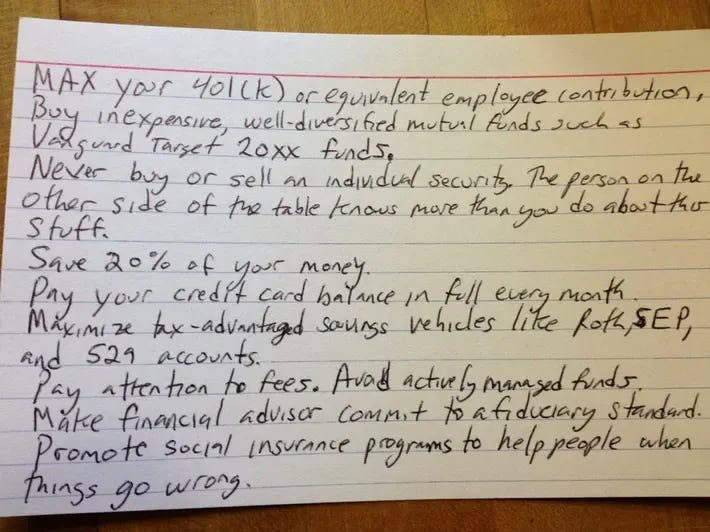
With enough time, Pollack’s investing rules will work their magic thanks to what Charlie Munger called the snowball of compound interest.
The snowball
During a Berkshire Hathaway shareholder meeting in 1998, the late Charlie Munger said, “The first $100,000 is a b****, but you’ve gotta do it.”
With a net worth of $2.6 billion when he was laid to rest, he knew the power of compound interest. And that getting the snowball rolling in the first place is harder than letting gravity run its course.
The challenge is getting the snowball big enough to get rolling — so you can lay off the gas.
My wife and I hit our first $200K in December 2025. Four months later, due to escalating tensions with Iran, the S&P fell 7.6%. We just kept buying, and when it rebounded 13%, we crossed into $300,000.
Charlie Munger’s proverbial snowball was picking up steam. Ironically, this is the part I was most excited about, yet this is the most boring.
The inevitability of $1,000,000
What’s halfway to $1,000,000? Mathematically, $500,000. But under the assumptions below, roughly $300,000 is halfway there in time.
If you invest $10,000/year at a 7% annual return, it’d take 7 years to earn your first $100,000. The next $100K would take 5 years. Then 4 years. Then 3 years. Your final $100K would only take you 1 year to achieve.
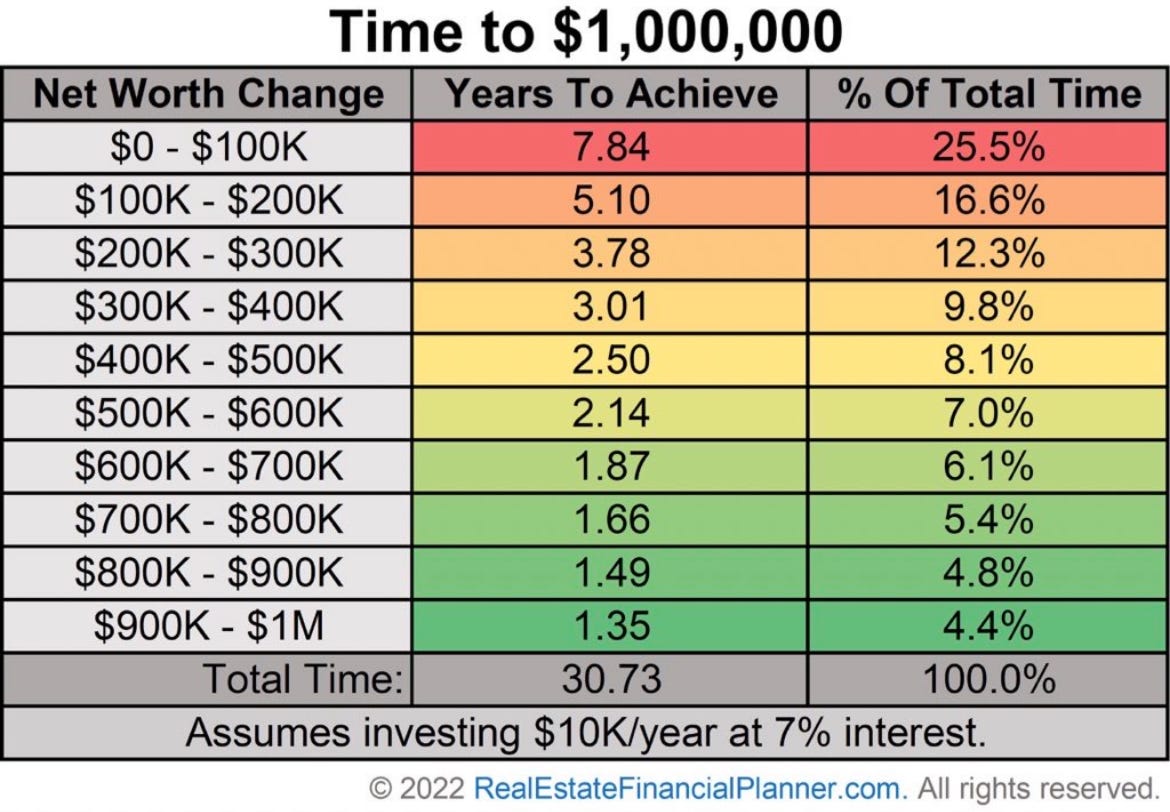
What the math of compound interest doesn’t capture is the psychological impact of seeing the financial snowball pick up steam. My path to $100K was an absolute thrill. I was single, in my early 20s — living in a commune with homeless people. With each subsequent $100K after, the wealth came easier, and the thrill of the pursuit subsided, and my net worth became more dependent on the performance of the stock market than on my own contributions.
Early on, the gains from compound interest feel insignificant. At this stage, changes in your portfolio have more to do with your savings rate than investment gains.
Eventually, when the snowball of compound interest picks up steam, small swings in the stock market will cause big swings in your portfolio. $250,000 invested could see $5,000 swings in a day.
Seeing your portfolio increase or decrease as much as a paycheck can be jarring — but if you’re invested in low-cost index funds, you should have the confidence that stonks always go up.
IV. The Art Of Spending Money
“Memories compound faster than money.” — Jack Raines
"Dishonest money fades away, but whoever gathers money little by little makes it grow.” — Proverbs 13:11
Every summer before football began, I had the same exact conversation with two of my best friends: “Can you believe football’s already here? Before we know it, we’re gonna be freshmen already.” Like clockwork, each passing football season came and went — slowly at first, then fast. In a blink of an eye, we were rising seniors going into our final football season.
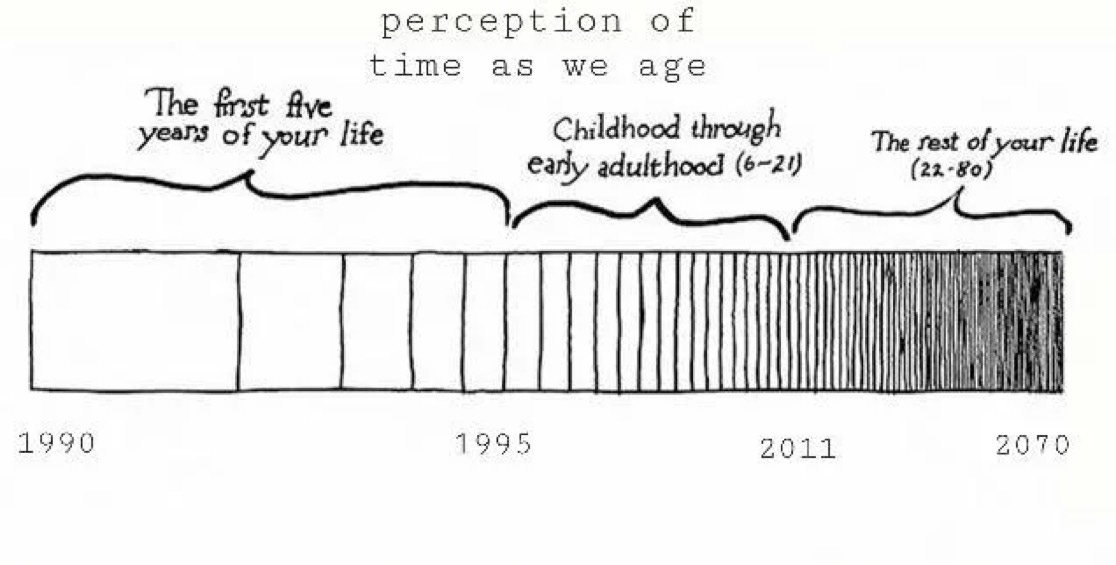
Since then, time only seems to have sped up. All three of us are married and some have kids on the way. Janet’s Law explains the subjective acceleration of time that I felt with my buddies every summer:
“When you’re 5 years old, a year is 20% of your life. And when you’re 50 years old, a year is 2% of your life. This is an explanation given why time speeds up as you age. It’s called Janet’s law. It states you’ve experienced roughly half of your perceived life by 20 years old. Or to put it another way: A summer holiday for a 5 year old feels as long as the 10 years from 40 to 50 years old.”
Make memory dividends
Your life, right now, is as slow as it’s ever going to be. It’s only going to accelerate with time. You could bum out hearing this news. Or you could take the alternative path: make it your goal to create as many memory dividends as possible in each phase of life. You’ll never be your current age ever again — what memories will you make this year that you’ll have nostalgia for many years from now?
My wife and I dedicate some of our budget to restaurants & travel annually — we expect that number to go up over time. There’s no better time than now to spend on memories. Today’s the youngest you’ll ever be with the people you love.

How to budget and make the most of your life
One consequence of digital banking is that there’s no visible feedback on whether you’re spending on things that matter.
I’m embarrassed by how many Yu-Gi-Oh cards I bought in the last year. There’s zero payoff other than the nostalgic hope of pulling a Blue Eyes White Dragon. Heck, even lottery tickets have higher ROI. But tap to pay made impulse purchases ungodly hard to resist.
Lately we started tracking our spending with good ‘ole pen and paper, stuck on the fridge with a magnet. With this format, you get real feedback on what you’re spending on — and whether it was worth it.
When you have to write your purchases down publicly, it makes you think twice about whether it was worth it. Were the Yu-Gi-Oh cards worth it? Or would that money be better spent on a coffee date with my wife? Definitely the latter.
How much you allocate towards what depends entirely on your savings goals. What you allocate that money on depends on what’s important to you.
How to reduce your tax burden
Our biggest expense, by a country mile, is our tax bill. This is typical if you’re a DINK (dual income no kids), HENRY (high income, not rich yet), or generally anyone who has high household W-2 income.13
Instead, the best tax strategy for someone below $1M net worth is to max out your tax-advantaged retirement accounts every year — or at least as much as you possibly can. In doing so, you’ll get to keep more of your money away from Uncle Sam when you sell.
And, if possible, pick a different state to live. Choosing to live in a state without an individual income tax, like Texas or Florida, is one way to reduce your tax burden.
The luckier you get, the more generous you become
The more money you have, the more generous you should be with your money. One principle I’ve fallen in love with is the idea of “impulse donations”.
Everyone has a vice when it comes to spending. For a while, mine was Yu-Gi-Oh cards. What if, instead of making your impulse purchases on something dumb like trading cards, what if you impulse spent on opportunities to donate money? How much better would you feel?
A few months ago my cousin was raising for a mission trip to Thailand. I saw a message about it in my extended family group chat, and I thought, “That’s sick. I’m in.” At the time, I was contemplating dropping a few hundred bucks on some rare Yu-Gi-Oh cards. Rather than wasting the money away, I allocated it as a donation towards her mission trip. Better yet, she even wrote a newsletter during her 8-week trip.
Every time her email hit my inbox, I felt a glowing sense of happiness. Money way better spent than on Yu-Gi-Oh. The more financially lucky you get, the more generous you should be. Make donations your impulse purchase. It’ll make you a lot more intrinsically happy.
V. Convert Your Labor Into Capital
“[The economy’s] rewards are going disproportionately toward capital instead of labor. Profits have soared since the pandemic, and the market value attached to those profits even more.” — Greg Ip
The fruits of the economy are split between (1) labor — the people who do the work and (2) capital — the people who own the work. Since the 1970s, most economic gains are feeding into capital, rather than labor. Since 1973 productivity doubled, while workers’ compensation remained stagnant.
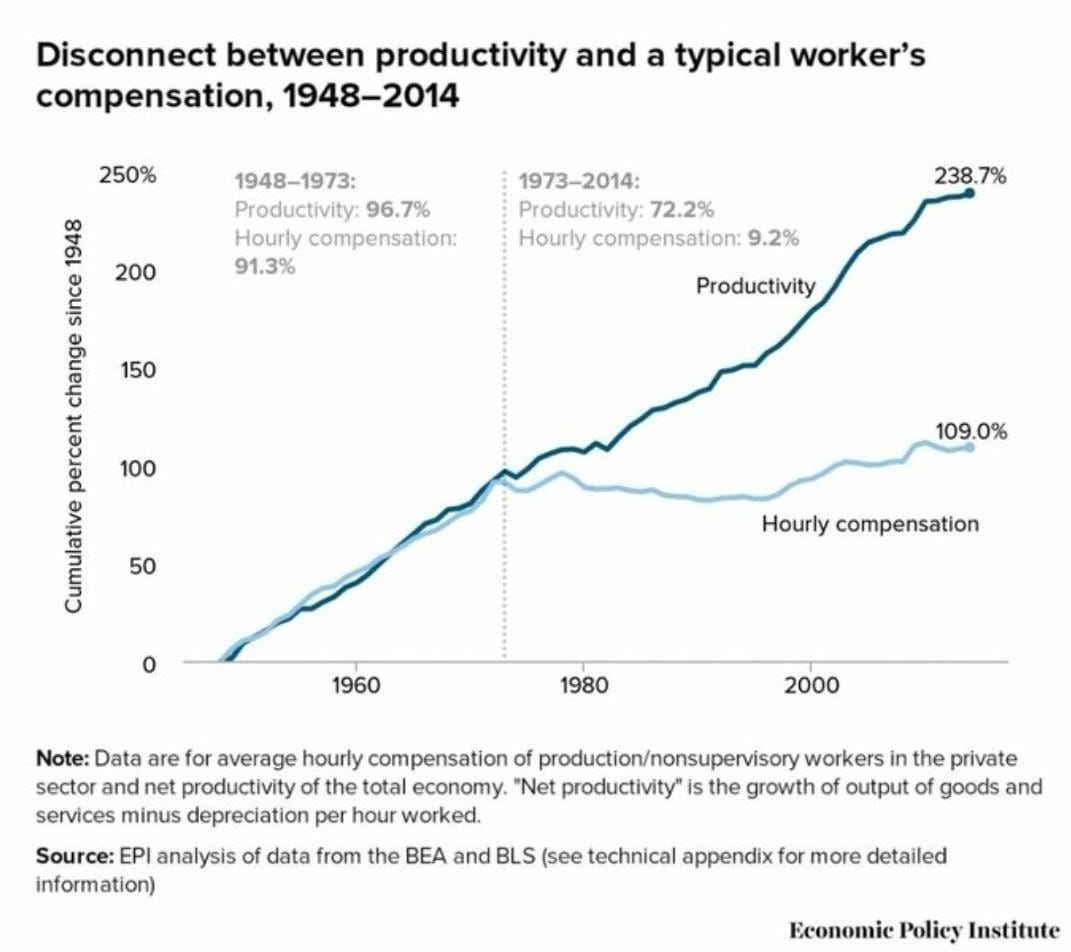
So most of the gains are going to capital vs. labor. With that knowledge, how could any young person possibly get ahead?
Acquire capital
When you get paid for your W-2 job, you’re trading your time for money — labor. By finding employment at the intersection of what you’re good at, what you’re interested in, and what you can get paid for, you’ll increase your earnings enough to have some financial margin to buy revenue-generating assets — capital.
By converting your labor into capital over the course of your career, your income-generating assets will eventually make more while you sleep than you’d make trading your hours for money. Eventually work becomes a choice rather than a necessity.
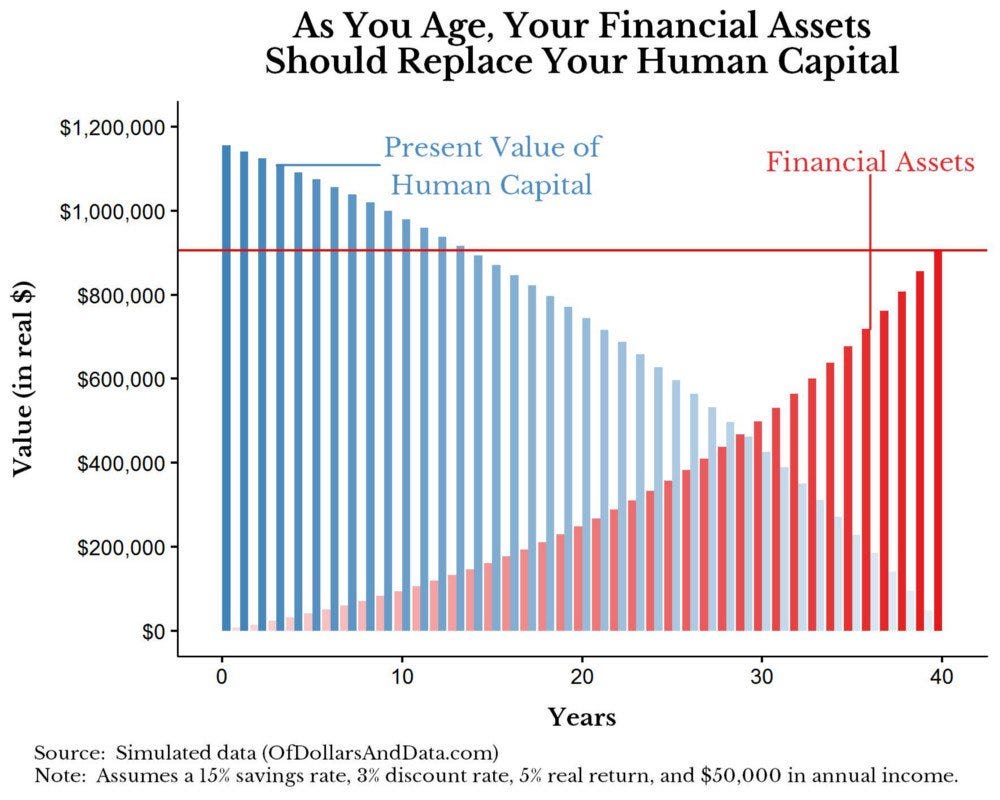
But there’s nothing new about this strategy. Household stock wealth is now equal to almost 300% of annual disposable income, compared with 200% in 2019. Households are holding more stocks than in the past, while younger Americans are beginning to invest earlier.
Traditional pensions are far less common than they once were, and younger workers shouldn’t assume Social Security alone will fund their retirement. That makes converting labor into capital increasingly important for younger workers planning for retirement.
Join a super star company
Every day I see someone leaving their Silicon Valley job to do their own thing. Nothing wrong with that. But if you’re married, have kids, or need company subsidized healthcare, that’s likely not an option.
Today’s fastest growing “superstar” companies pay well, but don’t have as many workers as they used to. To put it in perspective, in 1985, IBM was America’s most valuable company with 400,000 employees. Today, Nvidia is 5x more profitable and nearly 20x more valuable — but employs roughly one-tenth as many people as IBM did in 1985.14
Joining a company that rewards you with some form of equity compensation, such as ESPPs (employee stock purchase plans), RSUs (restricted stock units), or any sort of revenue share will accelerate your conversion of labor into capital. A fine alternative is joining a company-sponsored 401(k) plan or HSA match.
By converting your labor into capital — through diversified stock ownership, retirement accounts, and, when available, employer equity — you’ll share in the economic gains flowing to capital rather than existing in a perpetual state of falling behind.
VI. Expectations vs. Reality
“Happiness is your current situation minus expectations.” — Jimmy Carr
In my early 20s, during COVID, I was laid off three times in two years, and got so pessimistic about the economy that I started Door Dashing in between sales meetings at NetSuite to get ahead.
There’s a misconception that it’s impossible to get ahead in today’s economy. Rising costs are to blame — student loan debt, housing costs, and medical costs, are all contributing to the widest gap between stock market returns and consumer sentiment in the last decade.
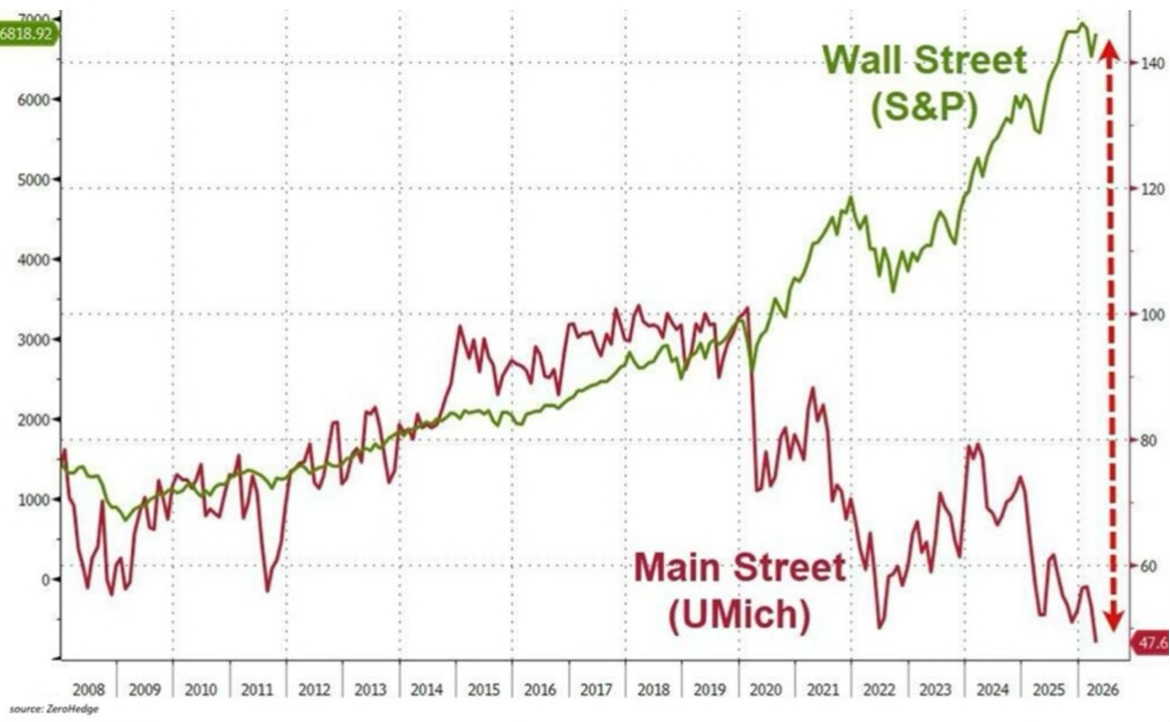
Gen Z is wealthy
Household net worth is also higher than ever — in part driven by stock market gains for those with capital. And increasingly, that includes young people like me. What’s up with this disconnect?
First and foremost, teenagers — encouraged by their parents — are investing in stocks in droves, which may help explain some of the wealth accumulation among young people. What’s more is that young people are investing earlier in life than generations past. Per Barron’s:
“Younger Americans are beginning to invest sooner than previous generations, thanks to increased access to investing and financial education, according to the latest Charles Schwab Modern Wealth Survey. On average, Gen Z — generally described as those born between 1997 and 2012 — began saving and investing at 19 years old, according to the survey. Baby boomers — Americans born between 1946 and 1964 — didn’t start until age 35, on average.”
With the power of compound interest, it’s possible that Gen Z ends up better off than prior generations. Sure, that money will be worth less because of inflation. But even though we’re investing earlier than our parents, many of us subjectively feel worse off.
Instagram vs. reality
Despite young Americans having unusually high wealth for their age, we’re also the most exposed to social media — which comes with a whole slew of problems. There’s a misalignment of expectations vs. reality when you’re on Instagram 24/7 — hence the term “instagram vs. reality”. Social media is a recipe for comparison, jealousy, and unrealistic expectations. It’s changing our collective definition of success.
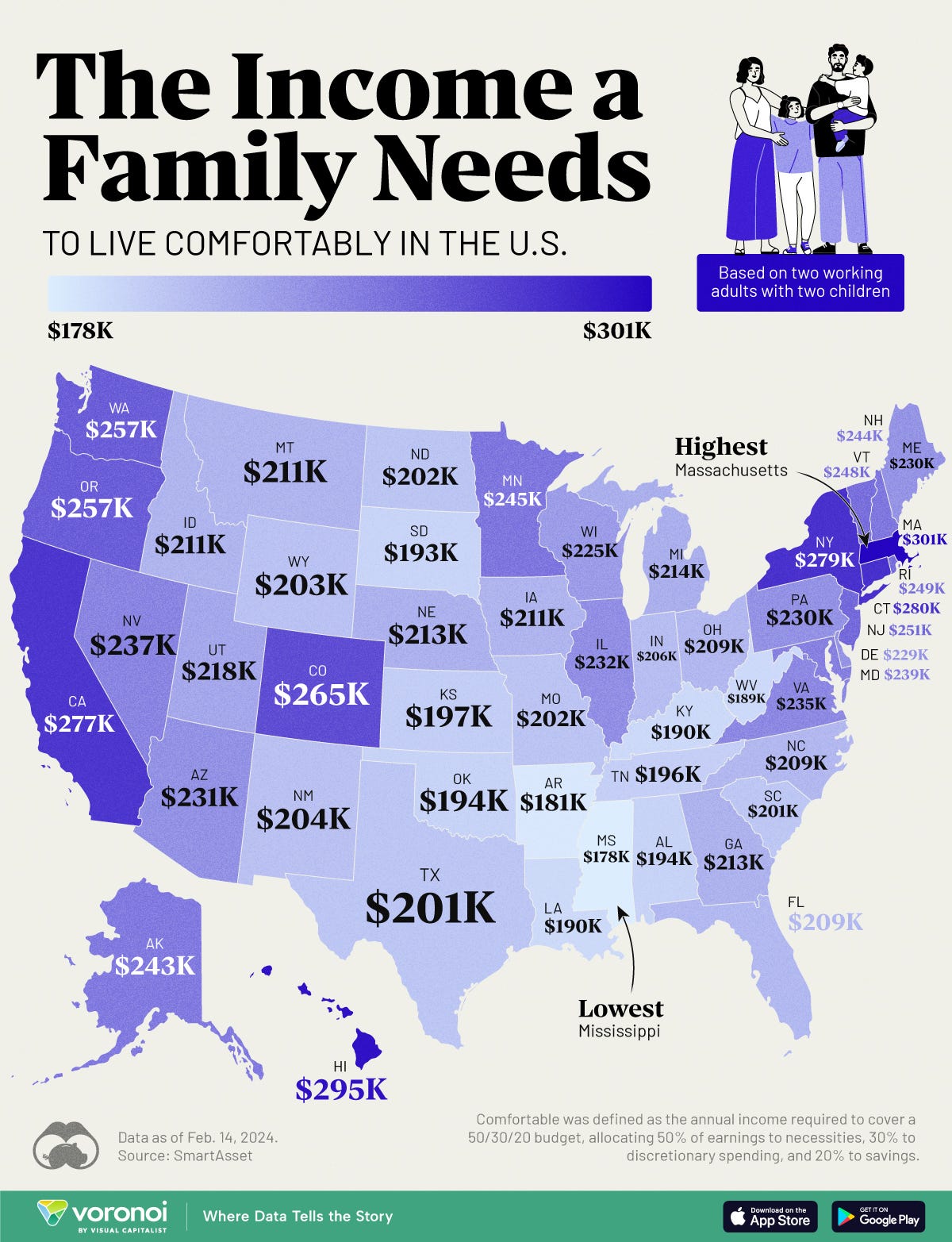
The typical Gen Zer thinks they need to make $600K to be successful. This is partially because of an affordability crisis, but it’d be naive to think social media has zero role in this — especially when even estimates for a comfortable family income are far below that in every U.S. state.
Many others are pursuing solopreneurship, side hustles, and income stacking because passive income is the new American dream and 57% of Gen Zers want to be influencers.
I recently read an article about a 24-year-old Clevelander allegedly making $75,000/month on Pokemon vending machines. It made me think about Instagram vs. Reality: Does he have quality healthcare? Can he take a vacation day and truly unplug from work? Will the business be booming in a few years?
If you like your boss and coworkers, climbing the corporate ladder could be a more efficient, less stressful, and high-probability path to wealth.15 There’s nothing wrong with starting a business — at some point, business ownership becomes increasingly important at higher levels of wealth. But jumping into business ownership too fast might not be giving you the best chance of success.
Believe me — I even tried starting a hot sauce company as a side hustle back in 2023. It sold like gangbusters, and was a lot of fun. But between managing inventory levels, accounting, taxes, it was a lot more effort than I bargained for.
Passive income is a great aspiration. But the ‘passive’ part is exceedingly rare. There’s no free lunch.
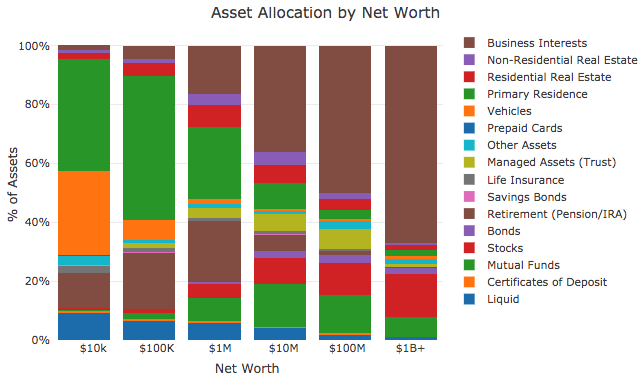
The corporation is the greatest creator of wealth
The American corporation is one of the greatest wealth creators in history. A well-paid job with a cool boss doing work you enjoy can be one of the simplest, lowest-friction paths to a $1M net worth (other than an inheritance, of course).
But to progress beyond $1M, a W-2 job will only get you so far. As net worth rises, business ownership tends to become a larger share of wealth. That’s a game I haven’t figured out how to win — when I do, I’ll tell you.
Never forget that money is a means to a much greater end. Keep earning, saving, and investing. But don’t lose sight of all the blessings you have right now because you have a lot to be joyful about.
This piece was a bit longer than I anticipated, but it was a ton of fun to write. I hope you enjoyed reading this as much as I enjoyed writing it.
As always… thanks for reading!
— Grant Varner
If you’re looking to build wealth through a business, some of this may apply, but that’s a game I’ve not yet won, so I won’t pretend to have.
Remember that just because a job pays more doesn’t necessarily mean it’ll increase your overall life satisfaction. Sometimes making less money for better working conditions — whether it be escaping a crappy boss or getting remote work is actually a worthwhile trade off.
My wife and I spent $2,600 for a 1 bedroom apartment in the suburbs outside Chicago — which meant I had a brutal 4-hour commute 3x/week. We decided to rent a smaller 1-bedroom downtown apartment for $3,200. We’re spending more money, but I feel like I’ve gotten my life back… worth it!
I mentored a P.F. Chang’s server who’s now at Salesforce — tech sales is available to anyone with the work ethic to succeed. You just need to get your foot in the door!

If I jumped into Substack full-time, I’d either be broke, or have to find some way to monetize my writing. Because I work in a low status, high income job, I get to share genuinely useful information with you, without having to profit off of it to pay the bills. That creative freedom is worth my long working hours.
What you’re interested in might not have a high earning ceiling. If this describes you, that’s totally OK. Just be sure to enroll in any retirement plans offered by your employer. Ronald Read was a janitor who passed away at 92 with $8 million by investing in simple stocks.
Of course, you could start your own company or become a solopreneur. That said, I’ve not gotten wealthy this way, nor do I plan on it, so I can’t speak to that path. If you want to go this route, you‘ll have a better chance of success if you:
Work in that industry first for at least a decade.
Start off part-time (side hustle) until making 60% of your full-time job’s salary before going full time.

In addition to working harder in an industry with a high earnings ceiling, you also need to convert W-2 income from your labor into capital. In a prescient 2017 blog post, Joshua Brown argues that rather than stressing about AI automating your job away, just buy stock in the companies trying to automate your job away. If they succeed, you may lose your job, but at least you’ll benefit from the economic gains!
Guvenen, Fatih; Karahan, Fatih; Ozkan, Serdar; & Song, Jae. What Do Data on Millions of U.S. Workers Reveal about Life-Cycle Earnings Dynamics? Federal Reserve Bank of New York Staff Report No. 710 (Feb. 2015; rev. Sept. 2019).
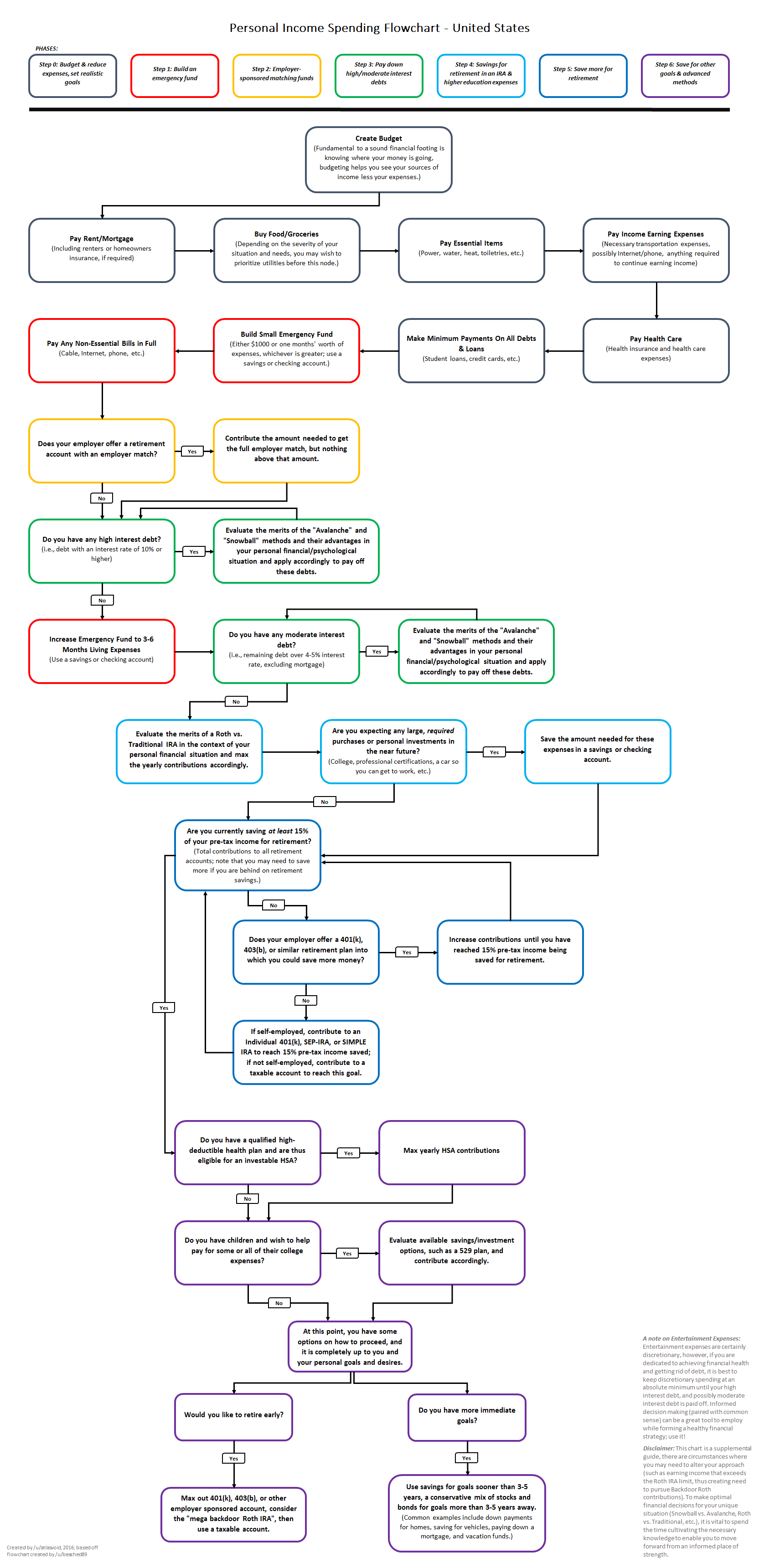
If you are looking for advanced investing advice, look no further than this personal income spending flowchart from r/PersonalFinance.
PBS NewsHour. All the Financial Advice You’ll Ever Need Fits on a Single Index Card. Watch the video here.
Harold Pollack, The Index Card: Why Personal Finance Doesn’t Have to Be Complicated (New York: Simon & Schuster, 2016).
Taxes suck so much that TikTok influencers are selling the “tax playbook” of the ultra-wealthy via tax loss harvesting. I used to look into these, until I realized the juice wasn’t worth the squeeze at our net worth versus spending those hours working my day job to earn more.
How to get into a super star company wasn’t the focus of this blog, but I’ve written about it before.

There are exceptions to this rule. After my experience with hot sauce, I realized that if I ever did another side hustle, I’d want it to be some sort of a digital product with zero inventory. After a few vibe coding stints, I landed upon writing. That said, my goal isn’t to make money from this — it’s to share genuinely useful lessons that I’ve learned with others at scale.
A very realistic money article for Gen Z, especially the "impulse donations" part. Having money for the sake of money is also not a goal I align with. I view it as a tool to make life better, and that includes other peoples' lives! I do impulse donations for the local street safety response teams in my city, or for volunteer-run programs that don't get enough funding. A rising tide lifts all boats! Great piece.
I downloaded The Myth of Sisyphus and Other Essays by Camus because of your mention of it. His essays on the absurd are wild!