

If you’ve been reading for a while, my niche is pretty obvious: I don’t have a niche! An open-ended newsletter of this kind is what Noah Smith calls a broad newsletter (vs. a narrow newsletter).
Broad newsletters are high-risk, high-reward. The high reward is that a broad newsletter has a bigger potential audience. The high risk is that prospective readers don’t have a predictable reason to subscribe.1 A newsletter about a narrow topic makes a specific promise. If you care about that topic and trust the writer’s expertise, you have a reason to open every newsletter.
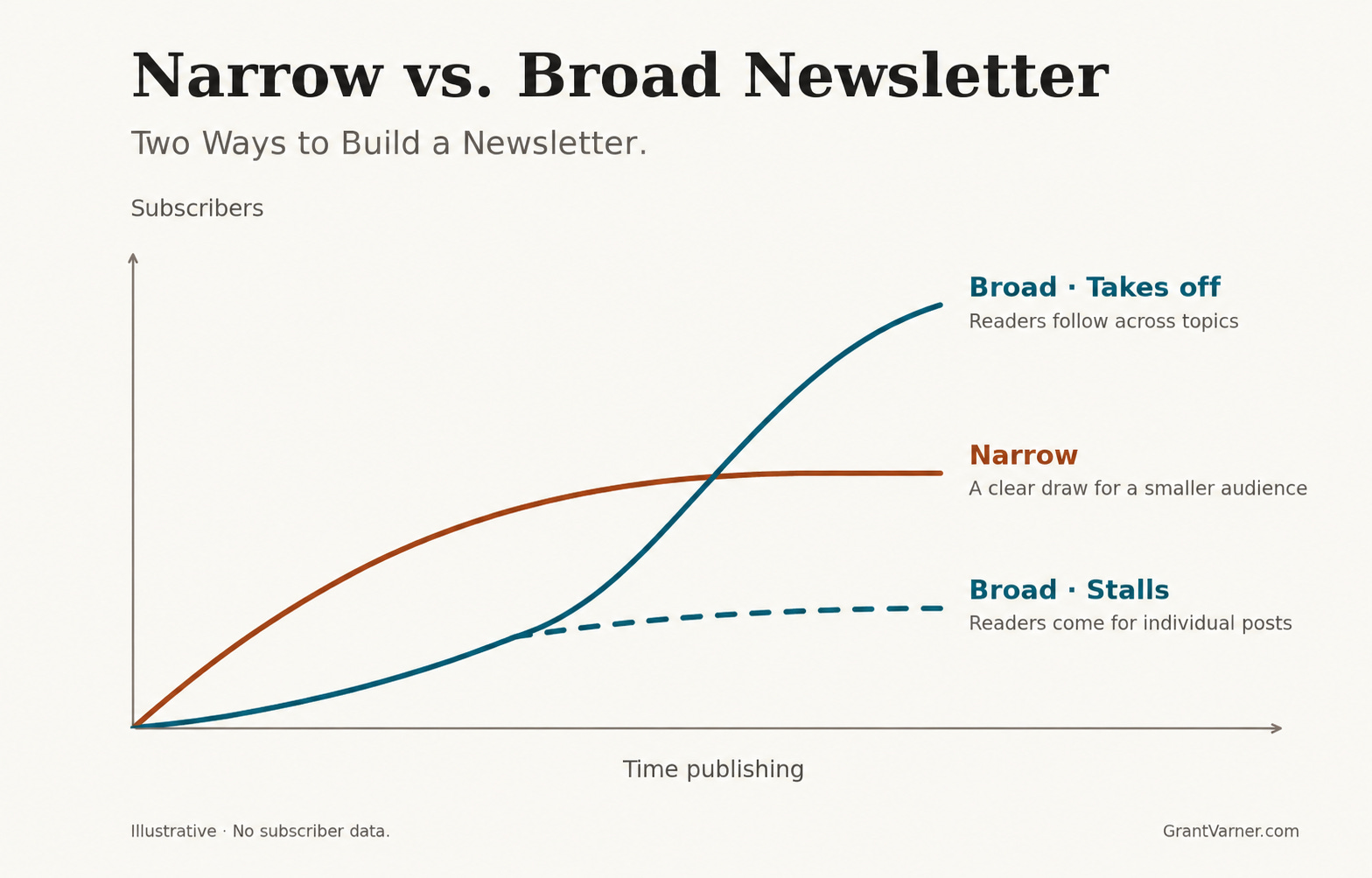
A broad newsletter needs to earn a different kind of trust. A reader might find you because of a post about personal finance. They subscribe because they trust I'll make the next topic interesting, even if it's something they've never thought about before.
How do I know this? Because I tried writing a narrow newsletter! In 2024, while working at a Sports Tech startup, I wrote a LinkedIn newsletter about all the NIL and Revenue Sharing changes in college athletics.2 In two weeks I had the same amount of subscribers as I do now after 18 months of writing a Broad Newsletter. A few of my readers were friends who were curious about all the changes. But 80% of my readers were university athletic directors. I had traction! And for a brief moment in time, I considered doubling down. But then… I got terribly, terribly bored.
Why write a broad newsletter?
The best reason to write a broad newsletter is that you can't imagine spending years writing about just one thing. I used to infuriate my parents because in high school I’d get obsessed with a food — like grilled chicken parm subs. Then all of a sudden, one day I wasn’t interested anymore. A Broad Newsletter is great for me because: 1) I must write. I have this habit of collecting all my thoughts on paper. For a decade, I kept a journal. Now I publish it online. 2) I must be intellectually free. The thought of being tied down to one topic makes me want to skinny-dip in Lake Michigan in November!
If enough readers trust your judgment across topics, then you have a larger potential audience. But if they only enjoyed one piece about fertility decline, then they have little reason to stick around. As Noah Smith argues in his essay on broad vs. narrow newsletters, writing a broad newsletter is a riskier proposition:
“A Narrow Substack is a lower-risk, lower-reward option. The set of people who want to read about climate change every day is probably smaller than the set of people who want to read about a different thing each day. But it’s also probably a more dedicated audience, especially if you’re a respected expert.
Broad Substacks, on the other hand, feel like a higher-risk, higher-reward strategy. Your readers are basically expecting you to be a one-person news magazine, showing them some new different interesting idea every day or two. And if they’re paid subscribers, they’re paying you to do that. So if your perspective and your writing style don’t resonate with a whole lot of people, very few will read you. Unlike a narrow Substack, you don’t have personal expertise and a subject-obsessed reader base to fall back on — it’s sink or swim.”
One way to succeed with a broad newsletter is to publish a consistently high volume of quality analysis, operating something like Henry Ford’s Model T assembly line. So the real differentiator for anyone aspiring to write a broad newsletter is by being persistent to the point of insanity. How? Use the same components (your worldview), in different configurations (your essays), to create a high volume of output (your body of work).3 In order to do this, you need:
A strong overall point of view about the world and how it works.
The ability to process the news as it’s happening.
The ability to incorporate new information into your mental model of the world and quickly turn it into compelling writing.
“All overnight success takes about 10 years.” — Jeff Bezos
How to build a broad newsletter (hint: Rome wasn't built in a day)
It takes several minutes to boil water. At first the progress feels painfully slow, as the water absorbs heat. Then all of a sudden 💥BAM!💥 your water’s boiling. Watching water heat up is painfully boring. But spend that time reading a good book, and before you know it, the kettle's boiling.
Every time you publish something high-quality, you're building momentum. If you’re white-knuckling your way through it by writing about stuff you don’t care about, it’s going to be realllly hard to stick around long enough to see results. But if you write about something you’re passionate about, then the time passes by with ease!
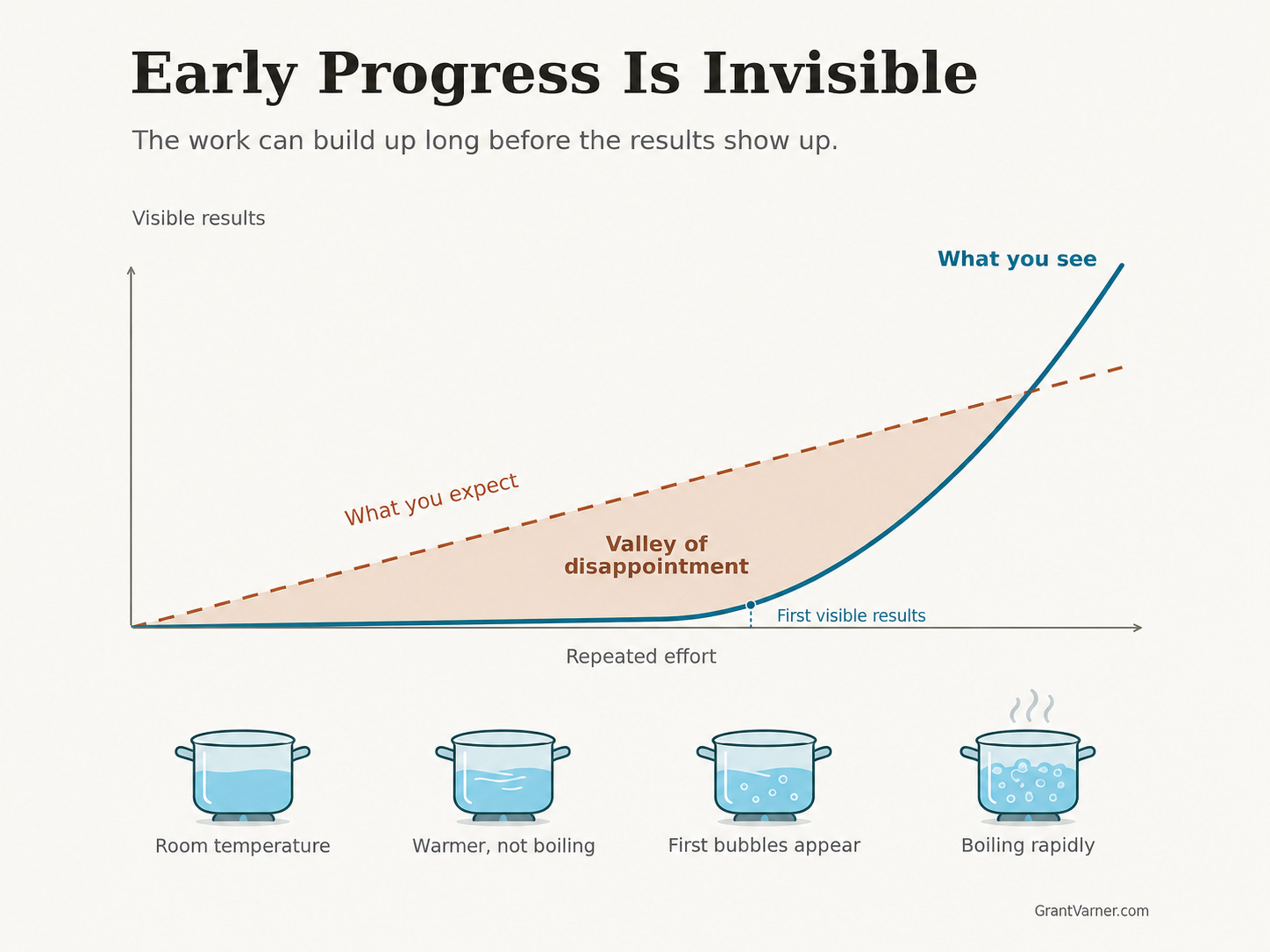
So what can you expect from Grant’s Newsletter? Well, for one, I’m doubling down on my identity as a broad newsletter writer. That means accepting slower short-term growth, continuing to write unapologetically about what interests me, and giving readers a clearer sense of how it’s all related to one worldview.
So what comes next? Beyond writing about topics that interest me, I want to learn about what interests you. I’ve created a survey to collect feedback. As much as I love nerding out about the things I’m into, I also love discovering what other people find fascinating. If you could please fill out the survey that’ll help me write more articles that are relevant to you!
As always, thanks for reading!
— Grant Varner
You might also like…


It also makes it hard to casually describe your newsletter socially. During an Astral Codex Ten meet up in Chicago, I flubbed the delivery, saying “Yeah, I write about a bunch of different things”, and I saw their eyes flicker with skepticism, unsure whether I was bullshitting or writing with so much AI that I don’t even remember what I’ve written. Both aren’t true!
For those who are curious, the newsletter was called “NCAA Settlement Era”. I had a ton of fun writing it, but got that bored itch to write about something other than NIL. Hence, why I’m writing this broad newsletter several years later.
Inspo Ben Thompson, founder of Stratechery, publishes an insane volume of high-quality analysis every week. He opened up about his writing process in an interview with David Perell on How I Write.
Love the framing on broad vs narrow newsletters! It helps put things in perspective for me!
What about if you have a niche but write as if you have a broad newsletter?
Excited to see where you take the stack!